Join 75,000+ Looksmaxxing Members!

Register a FREE account today to become a member. Once signed in, you'll be able to participate on this site by adding your own topics and posts, as well as connect with other members through your own private inbox.

  • DISCLAIMER: DO NOT ATTEMPT TREATMENT WITHOUT LICENCED MEDICAL CONSULTATION AND SUPERVISION

    This is a public discussion forum. The owners, staff, and users of this website ARE NOT engaged in rendering professional services to the individual reader. DO NOT use the content of this website as an alternative to personal examination and advice from licenced healthcare providers. DO NOT begin, delay, or discontinue treatments and/or exercises without licenced medical supervision. Learn more

how do i get smarter? srs

Register to hide this ad
educate yourself and stimulate your hypocamp
1774270309491.webp
 
verdam this is my thread, no need to reply to every comment
 

Becoming smarter is mostly about training your brain so here :​

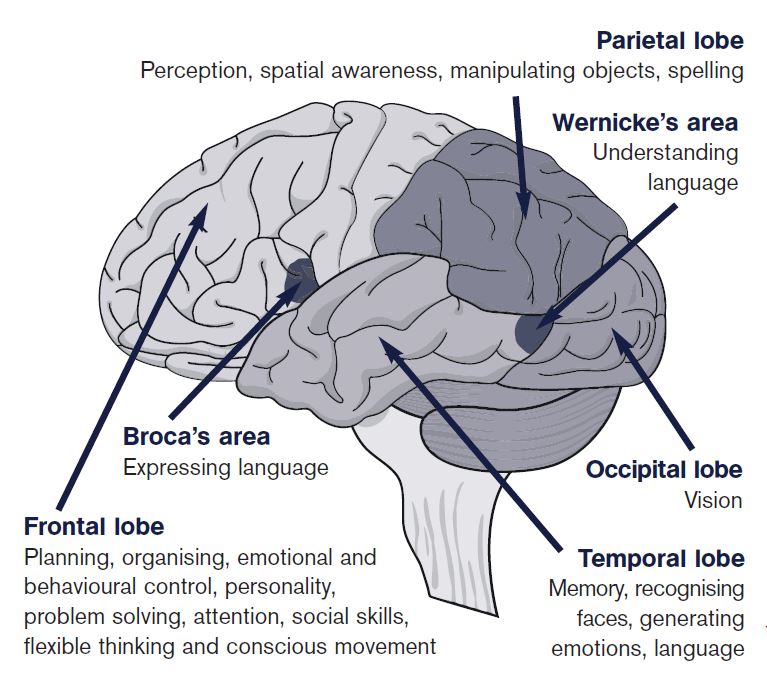
1. Prefrontal Cortex (PFC) — “thinking & decision center”


https://images.openai.com/static-rsc-3/CGZPN6q6m_9ABR1dmc3gzzcKcvm9qvUu0APd6I0Z7Wi-UDgWbEOePaHixpppeTeiArBYZRv27HY_bLzYJErMcyNYHPoaCGIvYKGk-ED0Bqo?purpose=fullsize&v=1

https://www.headway.org.uk/media/2790/cerebralcortex.jpg

https://images-provider.frontiersin.org/api/ipx/w%3D1200%26f%3Dpng/https%3A//www.frontiersin.org/files/Articles/327922/fpsyg-09-00401-HTML/image_m/fpsyg-09-00401-g001.jpg


Role​

  • reasoning, planning
  • working memory
  • focus and impulse control

How to improve it:​


  • Active recall (Anki, QCM, teaching others) forces thinking
  • Deep work (no distractions) strengthens focus circuits
  • Problem-solving (not passive reading)

2. Hippocampus “memory formation”


https://images.openai.com/static-rsc-3/SQ4b7c8IxFL3rh5TpByt9YIyiaNkWGrKWRBjl4R69E0pLgm1RVkFWcu5_9_82iSjG6rOtKqhIqRPiOwZKhxAI8-GAdk3z_RlWb2q9z4sL14?purpose=fullsize&v=1

https://media.springernature.com/full/springer-static/image/art%3A10.1038%2Fnn.4661/MediaObjects/41593_2017_Article_BFnn4661_Fig1_HTML.jpg


Role:​

  • converts short-term long-term memory ( you remember more material wich probbably makes you smarter depending on what the material is )
  • spatial + contextual memory

How to improve it:​

  • Spaced repetition ( J method that is based on the forgetting curve)
  • Sleep (critical: memories consolidate during sleep)
  • Linking info (schemas, mind maps)
Optimising this leads to understand subjects with less effort

3. Parietal Lobes — “logic & integration”


https://images.openai.com/static-rsc-3/RJOEAIxlB3ChrFYKqBqf7qiATKwfL1EFTqC7Q2z3s4ynhcBTwpc693nETk1IfunzjYpNUufAnxTvDt6hWBjqJxeuqrk5ZNifJslX2HKgBv0?purpose=fullsize&v=1

https://www.researchgate.net/publication/232875303/figure/fig1/AS%3A300414999252992%401448635925161/Key-brain-regions-proposed-to-be-involved-in-number-processing-Left-hemisphere.png


Role:​


  • math, logic, spatial reasoning
  • integrating sensory information

How to improve it:​

  • Practice problems (not just theory)
  • Visual learning (diagrams, schemas)
  • Explaining concepts out loud ( if you can do that it means the job is done )

4. Anterior Cingulate Cortex (ACC) — “focus & error detection”


https://ars.els-cdn.com/content/image/1-s2.0-S0149763423004724-gr7.jpg

https://www.researchgate.net/publication/265736324/figure/fig3/AS%3A11431281252220755%401718637914343/The-frontoparietal-network-and-the-pivotal-role-of-the-ACC-in-information-processing-and.tif

https://substackcdn.com/image/fetch/%24s_%21cNhW%21%2Cf_auto%2Cq_auto%3Agood%2Cfl_progressive%3Asteep/https%3A%2F%2Fsubstack-post-media.s3.amazonaws.com%2Fpublic%2Fimages%2F9539fd06-ed33-4bb4-8a30-f64683be4ec7_1024x598.png


Role:​

  • detects mistakes
  • maintains attention
  • mental effort regulation

How to improve it:​

  • Deliberate practice (correcting mistakes actively)
  • Testing yourself often
  • Studying slightly above your level (desirable difficulty)

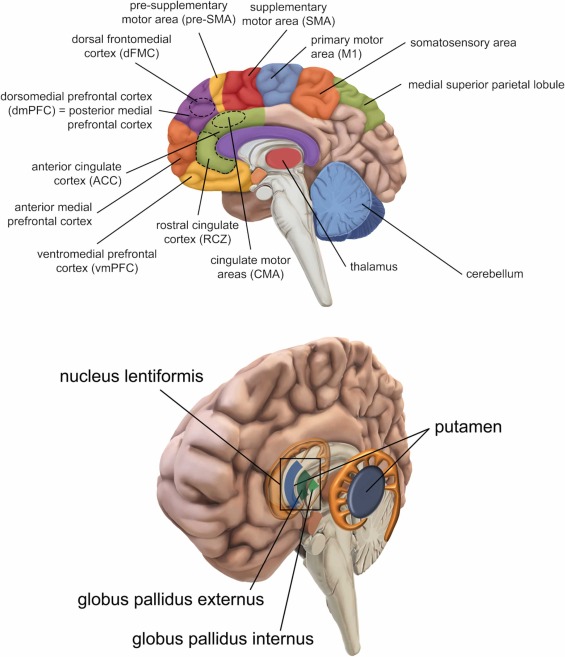
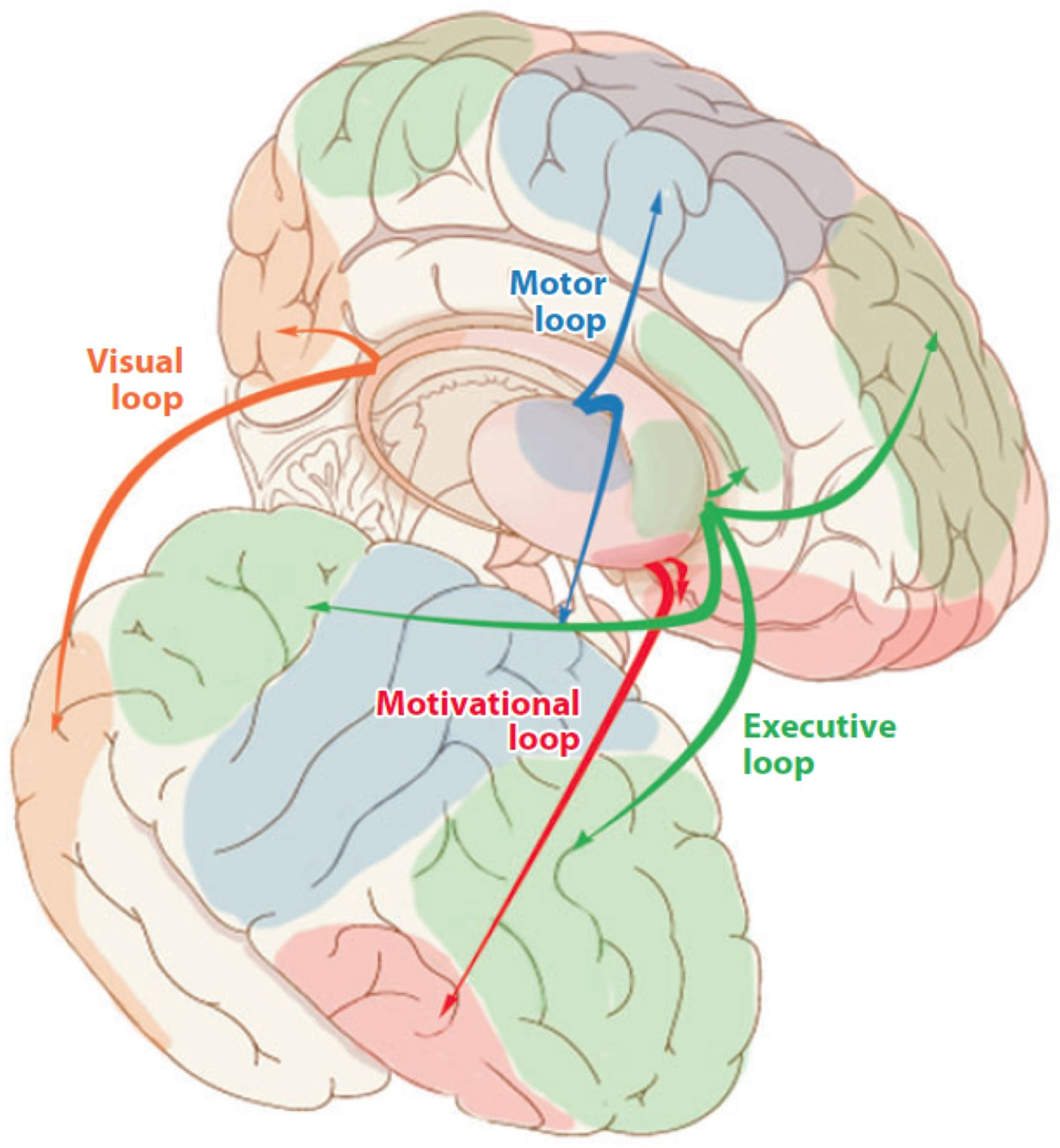
5. Basal Ganglia “habits & automation”


https://www.frontiersin.org/files/Articles/9748/xml-images/fnsys-05-00066-g002.webp

https://uw.pressbooks.pub/app/uploads/sites/493/2022/01/2-Motor-Loop.png

https://media.licdn.com/dms/image/v2/D4D22AQEcjL0rxd7LdQ/feedshare-shrink_800/B4DZYvfqtSGwAg-/0/1744553557889?e=2147483647&t=e9avX6IpeCKa89zQHo1CcXuqXgUR9uDw-dsMraYdzsQ&v=beta


Role:​

  • turns actions into habits
  • automates skills

How to improve it:​


  • Consistent routine (same study hours daily)
  • repetition until tasks become automatic

6. Dopamine System — “motivation & learning signal”


https://images.openai.com/static-rsc-3/ybNUMtRT_DVplRA9I6b4ZdnkzjAXAd0PetoyyR7Y2qsVi5iwBEiTGrVrW0teJFZURzKZkbplu0GNgoijvQdKETuwVs3vitMTqJPNkbrMwBk?purpose=fullsize&v=1

https://images.openai.com/static-rsc-3/p3oG08u4j9lGrEVwDT3sy6kl4z10tw_ihIaar1-rjiz4XKRzAhBg396NqpprYN7rFL1YeF6RZcx5MaLAaVAowE7koiCbplUR2LqrRcPUrj8?purpose=fullsize&v=1

https://images.openai.com/static-rsc-3/g7Yr7sr6g8FUt1NB_DNq3ngZ4XBDTRBBguiX8osu0DastqThurarlf8dVLjl1bTxl4H9TMg-7XQAoS_rkGitIbil9mdjnmQkjYsLnhQ3y0k?purpose=fullsize&v=1


Role:​

  • motivation
  • reinforcement learning

How to optimize it:​

  • reduce constant stimulation (TikTok, scrolling)
  • use effort reward cycles (study or do a productive activity then break)
  • set clear goals (rank, targets)
Too much easy dopamine = lower focus + weaker learning and a fried brain

7. Cerebellum “precision & efficiency”


https://images.openai.com/static-rsc-3/QB-L_9ZvG_ZjchsfMgee15to1Vl8iTo6Blybx0sUVkP9NXdg-nCbeCwV2uGzhYqbDJfeTnvIe2geFsqsG8a0YPLRxKDuNnr85efz4uRoH2g?purpose=fullsize&v=1

https://images.openai.com/static-rsc-3/euVGVEDWMDnOsWLLLzH_qT5uoyK1P9gdT41LcJDnvY2Rl99cUB91oN-ez45tMN2OVmRSm8IrctRQU4QJRowF74VE7DLDnHcKMm1ViEpCJDw?purpose=fullsize&v=1

https://www.jneurosci.org/content/jneuro/43/45/7554/F1.large.jpg


Role:​

  • fine-tunes skills
  • makes thinking faster and smoother

How to improve it:​

  • repetition + correction
  • practice until speed increases


The key principle​


Intelligence = neural connections + efficiency

You become “smarter” when:
  • connections are stronger (repetition)
  • connections are faster (practice)
  • connections are better organized (understanding)

non academic activities that have the same outcome


Prefrontal Cortex (focus, reasoning)
  • Chess / strategy games
  • Debating (arguing a position logically)
  • Learning a new language (actively speaking)
  • Planning something complex (trip, project, budget)
Hippocampus (memory)
  • Navigating without GPS
  • Memorizing song lyrics or poetry
  • Learning dance choreographies
  • Playing memory-based games (cards, sequences)

basically you get smarter by
  • challenging your brain
  • forcing effort
  • building memory + focus systems
Parietal Lobes (logic, spatial reasoning)
  • Puzzles (Rubik’s cube, geometry puzzles)
  • Drawing / sketching from observation
  • 3D video games (navigation, aiming)
  • DIY / building things (IKEA, crafts)
Anterior Cingulate Cortex (focus, error detection)
  • Meditation (especially focused attention)
  • Cold exposure (cold shower)
  • Doing boring tasks without distraction
  • Skill practice with feedback (e.g., music instrument)
Basal Ganglia (habits)
  • Daily routines (same wake-up, same schedule)
  • Gym training
  • Practicing a skill every day (instrument, drawing)
Dopamine System (motivation)
  • working out
  • Setting goals and achieving them ( starting with small ones of course )
  • Sunlight exposure (morning light)
cerebellum ( efficiency)
  • Learning an instrument
  • Sports with coordination (tennis, boxing)
  • Typing fast / handwriting drills
 

Becoming smarter is mostly about training your brain so here :​

1. Prefrontal Cortex (PFC) — “thinking & decision center”


https://images.openai.com/static-rsc-3/CGZPN6q6m_9ABR1dmc3gzzcKcvm9qvUu0APd6I0Z7Wi-UDgWbEOePaHixpppeTeiArBYZRv27HY_bLzYJErMcyNYHPoaCGIvYKGk-ED0Bqo?purpose=fullsize&v=1

https://www.headway.org.uk/media/2790/cerebralcortex.jpg

https://images-provider.frontiersin.org/api/ipx/w%3D1200%26f%3Dpng/https%3A//www.frontiersin.org/files/Articles/327922/fpsyg-09-00401-HTML/image_m/fpsyg-09-00401-g001.jpg


Role​

  • reasoning, planning
  • working memory
  • focus and impulse control

How to improve it:​


  • Active recall (Anki, QCM, teaching others) forces thinking
  • Deep work (no distractions) strengthens focus circuits
  • Problem-solving (not passive reading)

2. Hippocampus “memory formation”


https://images.openai.com/static-rsc-3/SQ4b7c8IxFL3rh5TpByt9YIyiaNkWGrKWRBjl4R69E0pLgm1RVkFWcu5_9_82iSjG6rOtKqhIqRPiOwZKhxAI8-GAdk3z_RlWb2q9z4sL14?purpose=fullsize&v=1

https://media.springernature.com/full/springer-static/image/art%3A10.1038%2Fnn.4661/MediaObjects/41593_2017_Article_BFnn4661_Fig1_HTML.jpg


Role:​

  • converts short-term long-term memory ( you remember more material wich probbably makes you smarter depending on what the material is )
  • spatial + contextual memory

How to improve it:​

  • Spaced repetition ( J method that is based on the forgetting curve)
  • Sleep (critical: memories consolidate during sleep)
  • Linking info (schemas, mind maps)
Optimising this leads to understand subjects with less effort

3. Parietal Lobes — “logic & integration”


https://images.openai.com/static-rsc-3/RJOEAIxlB3ChrFYKqBqf7qiATKwfL1EFTqC7Q2z3s4ynhcBTwpc693nETk1IfunzjYpNUufAnxTvDt6hWBjqJxeuqrk5ZNifJslX2HKgBv0?purpose=fullsize&v=1

https://www.researchgate.net/publication/232875303/figure/fig1/AS%3A300414999252992%401448635925161/Key-brain-regions-proposed-to-be-involved-in-number-processing-Left-hemisphere.png


Role:​


  • math, logic, spatial reasoning
  • integrating sensory information

How to improve it:​

  • Practice problems (not just theory)
  • Visual learning (diagrams, schemas)
  • Explaining concepts out loud ( if you can do that it means the job is done )

4. Anterior Cingulate Cortex (ACC) — “focus & error detection”


https://ars.els-cdn.com/content/image/1-s2.0-S0149763423004724-gr7.jpg

https://www.researchgate.net/publication/265736324/figure/fig3/AS%3A11431281252220755%401718637914343/The-frontoparietal-network-and-the-pivotal-role-of-the-ACC-in-information-processing-and.tif

https://substackcdn.com/image/fetch/%24s_%21cNhW%21%2Cf_auto%2Cq_auto%3Agood%2Cfl_progressive%3Asteep/https%3A%2F%2Fsubstack-post-media.s3.amazonaws.com%2Fpublic%2Fimages%2F9539fd06-ed33-4bb4-8a30-f64683be4ec7_1024x598.png


Role:​

  • detects mistakes
  • maintains attention
  • mental effort regulation

How to improve it:​

  • Deliberate practice (correcting mistakes actively)
  • Testing yourself often
  • Studying slightly above your level (desirable difficulty)

5. Basal Ganglia “habits & automation”


https://www.frontiersin.org/files/Articles/9748/xml-images/fnsys-05-00066-g002.webp

https://uw.pressbooks.pub/app/uploads/sites/493/2022/01/2-Motor-Loop.png

https://media.licdn.com/dms/image/v2/D4D22AQEcjL0rxd7LdQ/feedshare-shrink_800/B4DZYvfqtSGwAg-/0/1744553557889?e=2147483647&t=e9avX6IpeCKa89zQHo1CcXuqXgUR9uDw-dsMraYdzsQ&v=beta


Role:​

  • turns actions into habits
  • automates skills

How to improve it:​


  • Consistent routine (same study hours daily)
  • repetition until tasks become automatic

6. Dopamine System — “motivation & learning signal”


https://images.openai.com/static-rsc-3/ybNUMtRT_DVplRA9I6b4ZdnkzjAXAd0PetoyyR7Y2qsVi5iwBEiTGrVrW0teJFZURzKZkbplu0GNgoijvQdKETuwVs3vitMTqJPNkbrMwBk?purpose=fullsize&v=1

https://images.openai.com/static-rsc-3/p3oG08u4j9lGrEVwDT3sy6kl4z10tw_ihIaar1-rjiz4XKRzAhBg396NqpprYN7rFL1YeF6RZcx5MaLAaVAowE7koiCbplUR2LqrRcPUrj8?purpose=fullsize&v=1

https://images.openai.com/static-rsc-3/g7Yr7sr6g8FUt1NB_DNq3ngZ4XBDTRBBguiX8osu0DastqThurarlf8dVLjl1bTxl4H9TMg-7XQAoS_rkGitIbil9mdjnmQkjYsLnhQ3y0k?purpose=fullsize&v=1


Role:​

  • motivation
  • reinforcement learning

How to optimize it:​

  • reduce constant stimulation (TikTok, scrolling)
  • use effort reward cycles (study or do a productive activity then break)
  • set clear goals (rank, targets)
Too much easy dopamine = lower focus + weaker learning and a fried brain

7. Cerebellum “precision & efficiency”


https://images.openai.com/static-rsc-3/QB-L_9ZvG_ZjchsfMgee15to1Vl8iTo6Blybx0sUVkP9NXdg-nCbeCwV2uGzhYqbDJfeTnvIe2geFsqsG8a0YPLRxKDuNnr85efz4uRoH2g?purpose=fullsize&v=1

https://images.openai.com/static-rsc-3/euVGVEDWMDnOsWLLLzH_qT5uoyK1P9gdT41LcJDnvY2Rl99cUB91oN-ez45tMN2OVmRSm8IrctRQU4QJRowF74VE7DLDnHcKMm1ViEpCJDw?purpose=fullsize&v=1

https://www.jneurosci.org/content/jneuro/43/45/7554/F1.large.jpg


Role:​

  • fine-tunes skills
  • makes thinking faster and smoother

How to improve it:​

  • repetition + correction
  • practice until speed increases


The key principle​


Intelligence = neural connections + efficiency

You become “smarter” when:
  • connections are stronger (repetition)
  • connections are faster (practice)
  • connections are better organized (understanding)

non academic activities that have the same outcome


Prefrontal Cortex (focus, reasoning)
  • Chess / strategy games
  • Debating (arguing a position logically)
  • Learning a new language (actively speaking)
  • Planning something complex (trip, project, budget)
Hippocampus (memory)
  • Navigating without GPS
  • Memorizing song lyrics or poetry
  • Learning dance choreographies
  • Playing memory-based games (cards, sequences)

basically you get smarter by
  • challenging your brain
  • forcing effort
  • building memory + focus systems
Parietal Lobes (logic, spatial reasoning)
  • Puzzles (Rubik’s cube, geometry puzzles)
  • Drawing / sketching from observation
  • 3D video games (navigation, aiming)
  • DIY / building things (IKEA, crafts)
Anterior Cingulate Cortex (focus, error detection)
  • Meditation (especially focused attention)
  • Cold exposure (cold shower)
  • Doing boring tasks without distraction
  • Skill practice with feedback (e.g., music instrument)
Basal Ganglia (habits)
  • Daily routines (same wake-up, same schedule)
  • Gym training
  • Practicing a skill every day (instrument, drawing)
Dopamine System (motivation)
  • working out
  • Setting goals and achieving them ( starting with small ones of course )
  • Sunlight exposure (morning light)
cerebellum ( efficiency)
  • Learning an instrument
  • Sports with coordination (tennis, boxing)
  • Typing fast / handwriting drills
yo I did not write alllllllllllllllllllll that for u to not read REAAAD!!!!( please)
 
tagging a smart person @Evilemofoid
being smart is unique for everyone
someone might be smart in memorizing or general knowledge

i personally am really good at spotting patterns in stuff
 
being smart is unique for everyone
someone might be smart in memorizing or general knowledge

i personally am really good at spotting patterns in stuff
yeah u really have to be born smart at certain things some people r just dumb forever u need to find a way to take advantage of that or find something that u r smart/good at
 
yeah u really have to be born smart at certain things some people r just dumb forever u need to find a way to take advantage of that or find something that u r smart/good at
people who arent smart are
retards

isnt that obvious

jfl
 

Users who are viewing this thread

Back
Top