- Joined
- Oct 1, 2023
- Messages
- 31,131
- Solutions
- 2
- Online time
- 18d 1h
- Reputation
- 64,090
- Location
- sLOVEnia - land of the femboys
- Guild
- Leader Of The Birds, GTC and ABOs Alike
Gonna gib me contributor frNext guide how to make dirt

Follow along with the video below to see how to install our site as a web app on your home screen.
Note: This feature may not be available in some browsers.
Gonna gib me contributor frNext guide how to make dirt

Some real shit in here innit @hghosttttt


This gonna be ecoli special frWater cluster - Wikipedia
en.wikipedia.org
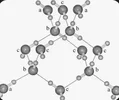
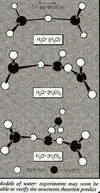
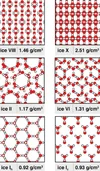
anyway heres some complicated molecule images of water to make you look 167 iq
no idea what a single word in here meansThis gonna be ecoli special fr
Bruh just pasting shit from Wikipediano idea what a single word in here means
Of particular interest are the cyclic clusters (H2O)n; these have been predicted to exist for n = 3 to 60.[9][10][11] At low temperatures, nearly 50% of water molecules are included in clusters.[12] With increasing cluster size the oxygen to oxygen distance is found to decrease which is attributed to so-called cooperative many-body interactions: due to a change in charge distribution the H-acceptor molecule becomes a better H-donor molecule with each expansion of the water assembly. Many isomeric forms seem to exist for the hexamer (H2O)6: from ring, book, bag, cage, to prism shape with nearly identical energy. Two cage-like isomers exist for heptamers (H2O)7, and octamers (H2O)8 are found either cyclic or in the shape of a cube.
Other theoretical studies predict clusters with more complex three-dimensional structures.[13] Examples include the fullerene-like cluster (H2O)28, named the water buckyball, and the 280-water-molecule monster icosahedral network (with each water molecule coordinate to 4 others). The latter, which is 3 nm in diameter, consists of nested icosahedral shells with 280 and 100 molecules.[14][15] There is also an augmented version with another shell of 320 molecules. There is increased stability with the addition of each shell.[16] There are theoretical models of water clusters of more than 700 water molecules,[17][18] but they have not been observed experimentally. One line of research uses graph invariants for generating hydrogen bond topologies and predicting physical properties of water clusters and ice. The utility of graph invariants was shown in a study considering the (H2O)6 cage and (H2O)20 dodecahedron, which are associated with roughly the same oxygen atom arrangements as in the solid and liquid phases of water.[19]
Experimental observations
Experimental study of any supramolecular structures in bulk water is difficult because of their short lifetime: the hydrogen bonds are continually breaking and reforming at timescales faster than 200 femtoseconds.[20]
Nevertheless, water clusters have been observed in the gas phase and in dilute mixtures of water and non-polar solvents like benzene and liquid helium.[21][22] The experimental detection and characterization of the clusters has been achieved by spectroscopy - far-infrared (FIR)[23] and vibration-rotation-tunneling (VRT)[24] - and by H-NMR[25][26] and neutron diffraction.[27] The hexamer is found to have planar geometry in liquid helium, a chair conformation in organic solvents, and a cage structure in the gas phase. Experiments combining IR spectroscopy with mass spectrometry reveal cubic configurations for clusters in the range n=(8-10).
When the water is part of a crystal structure as in a hydrate, x-ray diffraction can be used. Conformation of a water heptamer was determined (cyclic twisted nonplanar) using this method.[28][29] Further, multi-layered water clusters with formulae (H2O)100 trapped inside cavities of several polyoxometalate clusters were also reported by Mueller et al.[30][31]
It's kinda peak tbhno idea what a single word in here means
Of particular interest are the cyclic clusters (H2O)n; these have been predicted to exist for n = 3 to 60.[9][10][11] At low temperatures, nearly 50% of water molecules are included in clusters.[12] With increasing cluster size the oxygen to oxygen distance is found to decrease which is attributed to so-called cooperative many-body interactions: due to a change in charge distribution the H-acceptor molecule becomes a better H-donor molecule with each expansion of the water assembly. Many isomeric forms seem to exist for the hexamer (H2O)6: from ring, book, bag, cage, to prism shape with nearly identical energy. Two cage-like isomers exist for heptamers (H2O)7, and octamers (H2O)8 are found either cyclic or in the shape of a cube.
Other theoretical studies predict clusters with more complex three-dimensional structures.[13] Examples include the fullerene-like cluster (H2O)28, named the water buckyball, and the 280-water-molecule monster icosahedral network (with each water molecule coordinate to 4 others). The latter, which is 3 nm in diameter, consists of nested icosahedral shells with 280 and 100 molecules.[14][15] There is also an augmented version with another shell of 320 molecules. There is increased stability with the addition of each shell.[16] There are theoretical models of water clusters of more than 700 water molecules,[17][18] but they have not been observed experimentally. One line of research uses graph invariants for generating hydrogen bond topologies and predicting physical properties of water clusters and ice. The utility of graph invariants was shown in a study considering the (H2O)6 cage and (H2O)20 dodecahedron, which are associated with roughly the same oxygen atom arrangements as in the solid and liquid phases of water.[19]
Experimental observations
Experimental study of any supramolecular structures in bulk water is difficult because of their short lifetime: the hydrogen bonds are continually breaking and reforming at timescales faster than 200 femtoseconds.[20]
Nevertheless, water clusters have been observed in the gas phase and in dilute mixtures of water and non-polar solvents like benzene and liquid helium.[21][22] The experimental detection and characterization of the clusters has been achieved by spectroscopy - far-infrared (FIR)[23] and vibration-rotation-tunneling (VRT)[24] - and by H-NMR[25][26] and neutron diffraction.[27] The hexamer is found to have planar geometry in liquid helium, a chair conformation in organic solvents, and a cage structure in the gas phase. Experiments combining IR spectroscopy with mass spectrometry reveal cubic configurations for clusters in the range n=(8-10).
When the water is part of a crystal structure as in a hydrate, x-ray diffraction can be used. Conformation of a water heptamer was determined (cyclic twisted nonplanar) using this method.[28][29] Further, multi-layered water clusters with formulae (H2O)100 trapped inside cavities of several polyoxometalate clusters were also reported by Mueller et al.[30][31]

hello good morning@klyro come here mate, we talking water
Yohello good morning
Ffnext guide should be how to make cocain
U love it innit?