
- Joined
- Nov 8, 2023
- Messages
- 2,999
- Solutions
- 1
- Online time
- 6d 22h
- Reputation
- 7,686
THE ULTIMATE SLEEPMAXXING GUIDE
+ Analyzing sleep
I had rly long time to make a high iq thread so here it is. This one took me a 3h so if you say ''dnrd'' kys.
You will spend nearly 1/3 of your life in the realm of sleep, which is around 26 years for the average human. Yet, for most people, sleep is a mystery and they don't know the first thing about what is actually happening when they sleep. It's hard to improve something that you don't fundamentally understand. A good night's sleep can brighten the world with endless possibilities, while a bad night's sleep can turn simple tasks into overwhelming challenges. Overall, the better you sleep, the longer you live. Once you understand the sleep realm, you unlock all the secrets to a better night's sleep. You will discover the reasons why you had a good or bad night's sleep and how your sleep can be optimized.
This thread was inspired by Matthew Walker's amazing book "Why We Sleep." Im going to do a detailed summary and dive deep into topics like the Sleep Cycle, circadian rhythms, plus heaps more. Make sure to stick around until the end of the thread where I go step by step through how I've personally been using this book and how you can start applying it to your own sleep tonight.

Part One: What is Sleep?
Sleep is the single most effective thing we can do to reset our brain and body health each day. Mother Nature's best effort yet at conquering death, Matthew Walker's sleep architecture, lets go on a journey through the sleep cycle and become familiar with the stages and core components of sleep.
Every night when you close your eyes and gently drift away from the land of wakefulness into sleep, you go on a magical journey. A journey begins at the Gateway to Slumber, otherwise known as stage one—the lightest stage of sleep. Stage one occurs right after you fall asleep, and you will usually spend less than 10 minutes here. You are dipping your toes into the void of sleep. When you're here, you're in a very light sleep from which you can be awakened easily. Here, you experience the gentle transition from the world of wakefulness into the realm of sleep.
As we dive deeper, we reach stage two—the Fortress of Silence. Your body enters a more subdued state. Your temperature drops, your muscles become more relaxed, and your breathing and heart rate slow down. At the same time, your brainwaves show a new pattern, and your eye movement stops. When you're in stage two, overall brain activity slows, but there are short bursts of activity. Here, the brain produces sleep spindles and K complexes. These phenomena, like magic spells, not only help to decrease sensory inputs, protecting your sleep, but also aid in memory consolidation and information processing. Someone with a higher frequency of sleep spindles will be more resilient to outside noises and be awakened easily.
You then travel even deeper, where you reach the mysterious realms of stage three and stage four—the deepest stages of sleep. This is the land of restoration. Your brainwaves become even slower, your body tissues heal, your immune system restores, energy is replenished, and growth hormones are released. This is where your body heals and grows. If I were to wake you up right now, you would feel disoriented and groggy. If you don't spend enough time here in this stage, you will feel physically tired, your immune system will become weakened, and your cognitive function will decrease.
Finally, you travel up out of the deep depths of stage three and four, pass again through the land of stage two, and arrive at the most magical part of your journey—the theater of dreams, rapid eye movement sleep or REM sleep, where your dreams come alive. Here in REM, our brain activity is bustling with activity, creating the fantastical stories that you experience as dreams. Although dreams may occur in any sleep stage, this is where your dreams most frequently occur. The dreams in this stage are vivid and often bizarre. Your eyes are moving randomly and rapidly, your brainwaves become similar to those when you're awake, and the muscles in your body become paralyzed, which keeps you safe and prevents you from acting out your dream in your sleep.
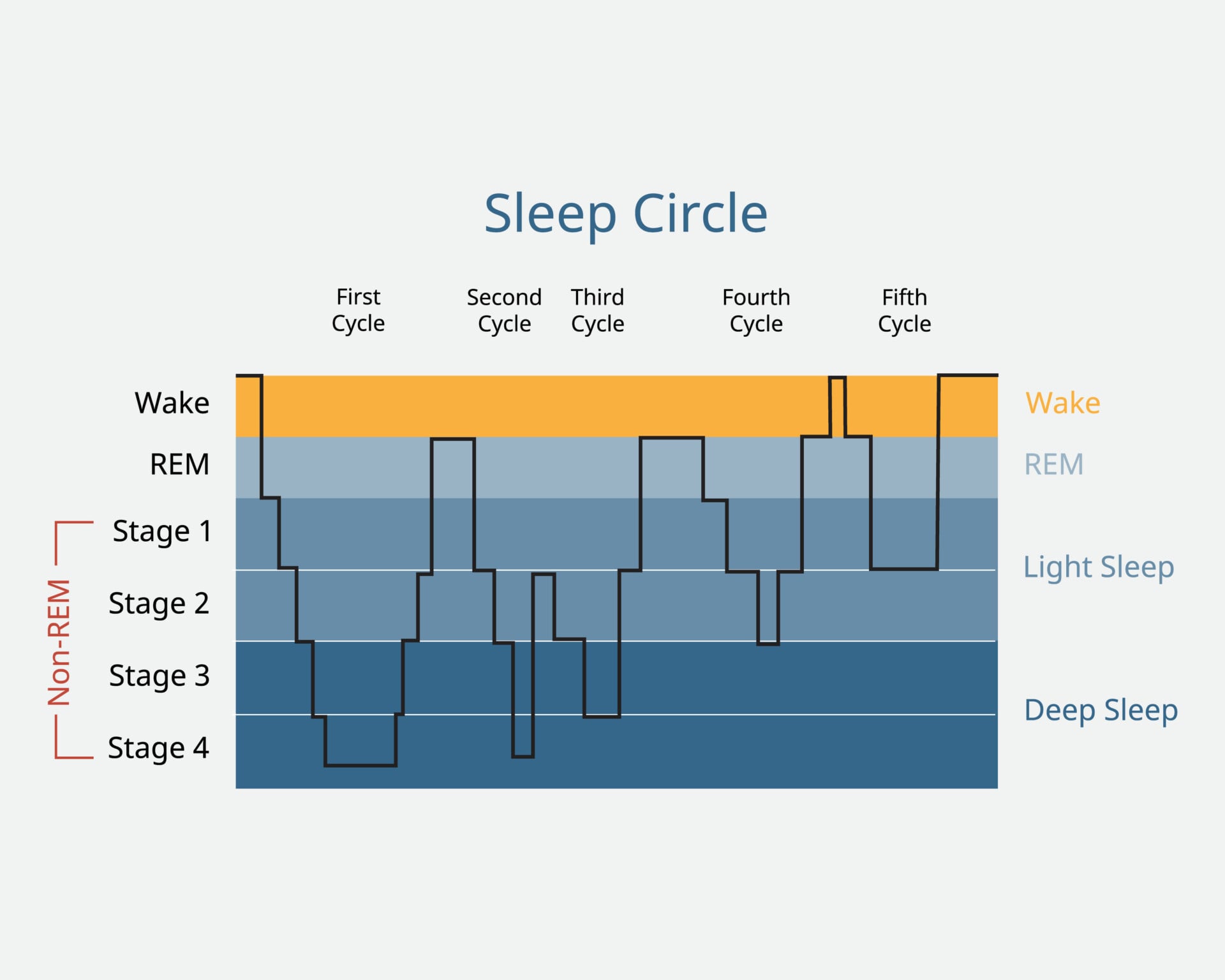
Scientists believe REM sleep is vital for memory consolidation, learning, mood regulation, and creativity. This is the end of the cycle, and just like that, a new cycle begins, taking you on a magical journey again and again. The cycle repeats itself around every 90 minutes until the morning light calls you back. If we look at five sleep cycles over 8 hours, it is important to notice the peculiar dynamic that occurs. The balance between deep sleep and REM sleep shifts over the course of the night. With each sleep cycle, deep sleep decreases, and REM sleep increases. Most of your REM sleep will occur in the last few hours before you wake up.
It is important to understand this dynamic because even a seemingly small reduction, say from 8 hours down to 6, could actually deprive you of up to 70% of your REM sleep. If you aren't spending enough time here in REM sleep, you can expect decreased concentration, irritability, mood swings, increased stress levels, reduced creativity, and reduced problem-solving ability. And that is the magical journey of a sleep cycle. Sleep isn't just a retreat from our busy lives but a vital journey our body undertakes to keep us healthy, sharp, and ready for each new day. So tonight, as you close your eyes, remember the incredible adventure that awaits.
Part Two: Rhythm

Two principal factors regulate your wakefulness and your need for sleep: your internal circadian rhythm, also known as your body's 24-hour clock, and a chemical known as adenosine. The circadian rhythm dictates rhythmic patterns, including moods, eating and drinking preferences, core body temperature, and hormone release, among other things. It even impacts processes like athletic performance and the timing of births and deaths.
This internal clock operates in an approximately 24-hour cycle and communicates its daily circadian rhythm signal to every region of the brain and every organ in the body. It is produced by the suprachiasmatic nucleus in the brain, which uses light levels to calibrate your body clock. Studies have shown that every animal species, including humans, possess an endogenous circadian rhythm. This innate rhythm may be slightly longer or shorter than 24 hours, depending on the species.
For example, humans' internal clock averages at about 24 hours and 15 minutes. However, the most reliable external cue, daylight, helps to reset our internal timepiece back to exactly 24 hours daily. This internal rhythm is controlled by melatonin, a hormone produced in your brain that regulates sleep and wakefulness. Its release into the bloodstream typically begins at dusk, signaling to your body to prepare for sleep. This release is gradually reduced throughout the night until the dawn sunlight cues your brain to halt the release.
While daylight is the most dependable resetting signal for our biological clock, other recurring signals such as temperature changes and social interactions can also serve this purpose. Genetics play a role as well. Your rhythm is not the same as mine. Our individual circadian rhythm differs due to our genetic makeup. Some people, referred to as morning larks, feel most energized in the morning, while others function best at night. The societal preference for daytime work often leads to misunderstandings about night owls, who may be misjudged as lazy. They often have to compensate for their unproductive workday by burning the midnight oil.
Adenosine is a second key factor in sleep regulation. It progressively accumulates while you're awake, resulting in sleep pressure after being awake for 12 to 18 hours. This pressure decreases as you sleep and is generally fully purged after 8 hours of sleep. The consumption of caffeine can mitigate the effects of adenosine, but it does not prevent the chemical buildup. This can lead to a dependency cycle, as you may feel worse once the effect of caffeine wears off. Moreover, consuming caffeine in the evening can disrupt your sleep, as 50% of it remains in your system 5 to 7 hours later.
Both the circadian rhythm and adenosine work independently, powering your wake drive and sleep drive, respectively, throughout the day. Adenosine levels increase as you sleep, and adenosine levels decrease. The combined effects make you feel wide awake at noon after a good night's sleep, as there's only a minor gap between the two drives. Conversely, a large gap between the two drives at 11:00 p.m. makes you feel the urge to sleep. The larger this gap becomes between the two drives, the more sleep pressure you will feel.
Understanding your sleep-wake cycle is paramount to maximizing your productivity and maintaining your health. Factors such as light exposure, caffeine intake, and awareness of your individual rhythm can significantly affect your sleep quality and overall well-being.
Architecture of the brain for sleep: Let's briefly take a look at seven parts of the brain that are related to sleep.
Matthew Walker on memory consolidation: Sleep plays an invaluable role in the consolidation of memory. Prior to learning, it refreshes our ability to form new memories. Post-learning, it solidifies these memories, reducing the likelihood of forgetting. At its core, sleep functions as a memory aid that operates on a daily cycle. Regarding memory and sleep within your brain, you can think of your hippocampus like a thumb drive with limited storage and your cortex as your main hard drive.
During the non-rapid eye movement (NREM) sleep stage, short-term memory is stored in the hippocampus, and unlimited capacity brain regions are shifted to the cortex, a larger capacity long-term memory store. This transfer process serves dual purposes: freeing up space for new information absorption and preserving valuable information for long-term use.
Motor task proficiency: The unique ability of sleep to consolidate and strengthen different types of memories extends to the domain of motor tasks, commonly known as muscle memory. In instances where a motor task proves challenging, such as executing a complex piano sequence, sleep aids the brain in practicing the skill and smoothing out the wrinkles. Therefore, waking up without sufficient sleep could lead to losing valuable sleep hours that contribute to the consolidation of these motor memories.
Creativity: Furthermore, sleep nurtures creativity by associating disparate memories, experiences, and skills, enabling the birth of fresh ideas and insights. This creative enhancement is particularly linked to the rapid eye movement (REM) sleep stage, often associated with dreaming, which functions as an informational alchemist merging diverse knowledge stores and facilitating innovative problem-solving abilities.
REM sleep's influence extends to some of the most transformative thinking in human history. Sleep deprivation: Sleep deprivation versus the body Here are five effects sleep deprivation can have on the body.
Despite all the information above, these are the best you can do to maximize sleep.
Create a Consistent Sleep Schedule:
Establish a regular sleep routine by going to bed and waking up at the same time every day, even on weekends. This helps regulate your body's internal clock, making it easier to fall asleep and wake up naturally.
Optimize Your Sleep Environment:Ensure your bedroom is conducive to sleep. Keep the room cool, dark, and quiet. Invest in a comfortable mattress and pillows that support a good night's sleep. Consider using blackout curtains and white noise machines if needed.
Limit Exposure to Screens Before Bed:The blue light emitted by phones, tablets, and computers can interfere with the production of the sleep hormone melatonin. Aim to turn off electronic devices at least an hour before bedtime.
Watch Your Diet:Avoid heavy meals, caffeine, and nicotine close to bedtime. These can disrupt sleep and make it harder to fall asleep. Opt for a light snack if you're hungry before bed.
Stay Active During the Day:Regular physical activity can promote better sleep. Engage in regular exercise, but try to finish your workout at least a few hours before bedtime.
Manage Stress:Practice stress-reducing techniques such as deep breathing, meditation, or yoga. Manage your workload and avoid tackling stressful tasks right before bedtime.
Limit Naps:While short naps can be refreshing, avoid long naps or napping late in the day, as this can interfere with your nighttime sleep.
Mind Your Mattress and Pillows:Invest in a comfortable mattress and pillows that support your sleeping posture. Replace them as needed, as worn-out bedding can contribute to discomfort and sleep disturbances.
Mindfulness and Relaxation Techniques:Incorporate mindfulness or relaxation exercises into your evening routine. This can help calm your mind and prepare your body for sleep.
I hope this helps. If you have any further questions or need additional clarifications, feel free to ask.
-Donsa

@pslgodduckz @Nihilus @Tim @David @Looksmaxlossus
---------------------------------------------------------------------------------------------------------------------------------------------------------

+ Analyzing sleep
I had rly long time to make a high iq thread so here it is. This one took me a 3h so if you say ''dnrd'' kys.
You will spend nearly 1/3 of your life in the realm of sleep, which is around 26 years for the average human. Yet, for most people, sleep is a mystery and they don't know the first thing about what is actually happening when they sleep. It's hard to improve something that you don't fundamentally understand. A good night's sleep can brighten the world with endless possibilities, while a bad night's sleep can turn simple tasks into overwhelming challenges. Overall, the better you sleep, the longer you live. Once you understand the sleep realm, you unlock all the secrets to a better night's sleep. You will discover the reasons why you had a good or bad night's sleep and how your sleep can be optimized.
This thread was inspired by Matthew Walker's amazing book "Why We Sleep." Im going to do a detailed summary and dive deep into topics like the Sleep Cycle, circadian rhythms, plus heaps more. Make sure to stick around until the end of the thread where I go step by step through how I've personally been using this book and how you can start applying it to your own sleep tonight.
Sleep is the single most effective thing we can do to reset our brain and body health each day. Mother Nature's best effort yet at conquering death, Matthew Walker's sleep architecture, lets go on a journey through the sleep cycle and become familiar with the stages and core components of sleep.
Every night when you close your eyes and gently drift away from the land of wakefulness into sleep, you go on a magical journey. A journey begins at the Gateway to Slumber, otherwise known as stage one—the lightest stage of sleep. Stage one occurs right after you fall asleep, and you will usually spend less than 10 minutes here. You are dipping your toes into the void of sleep. When you're here, you're in a very light sleep from which you can be awakened easily. Here, you experience the gentle transition from the world of wakefulness into the realm of sleep.
As we dive deeper, we reach stage two—the Fortress of Silence. Your body enters a more subdued state. Your temperature drops, your muscles become more relaxed, and your breathing and heart rate slow down. At the same time, your brainwaves show a new pattern, and your eye movement stops. When you're in stage two, overall brain activity slows, but there are short bursts of activity. Here, the brain produces sleep spindles and K complexes. These phenomena, like magic spells, not only help to decrease sensory inputs, protecting your sleep, but also aid in memory consolidation and information processing. Someone with a higher frequency of sleep spindles will be more resilient to outside noises and be awakened easily.
You then travel even deeper, where you reach the mysterious realms of stage three and stage four—the deepest stages of sleep. This is the land of restoration. Your brainwaves become even slower, your body tissues heal, your immune system restores, energy is replenished, and growth hormones are released. This is where your body heals and grows. If I were to wake you up right now, you would feel disoriented and groggy. If you don't spend enough time here in this stage, you will feel physically tired, your immune system will become weakened, and your cognitive function will decrease.
Finally, you travel up out of the deep depths of stage three and four, pass again through the land of stage two, and arrive at the most magical part of your journey—the theater of dreams, rapid eye movement sleep or REM sleep, where your dreams come alive. Here in REM, our brain activity is bustling with activity, creating the fantastical stories that you experience as dreams. Although dreams may occur in any sleep stage, this is where your dreams most frequently occur. The dreams in this stage are vivid and often bizarre. Your eyes are moving randomly and rapidly, your brainwaves become similar to those when you're awake, and the muscles in your body become paralyzed, which keeps you safe and prevents you from acting out your dream in your sleep.
Scientists believe REM sleep is vital for memory consolidation, learning, mood regulation, and creativity. This is the end of the cycle, and just like that, a new cycle begins, taking you on a magical journey again and again. The cycle repeats itself around every 90 minutes until the morning light calls you back. If we look at five sleep cycles over 8 hours, it is important to notice the peculiar dynamic that occurs. The balance between deep sleep and REM sleep shifts over the course of the night. With each sleep cycle, deep sleep decreases, and REM sleep increases. Most of your REM sleep will occur in the last few hours before you wake up.
It is important to understand this dynamic because even a seemingly small reduction, say from 8 hours down to 6, could actually deprive you of up to 70% of your REM sleep. If you aren't spending enough time here in REM sleep, you can expect decreased concentration, irritability, mood swings, increased stress levels, reduced creativity, and reduced problem-solving ability. And that is the magical journey of a sleep cycle. Sleep isn't just a retreat from our busy lives but a vital journey our body undertakes to keep us healthy, sharp, and ready for each new day. So tonight, as you close your eyes, remember the incredible adventure that awaits.
Part Two: Rhythm
Two principal factors regulate your wakefulness and your need for sleep: your internal circadian rhythm, also known as your body's 24-hour clock, and a chemical known as adenosine. The circadian rhythm dictates rhythmic patterns, including moods, eating and drinking preferences, core body temperature, and hormone release, among other things. It even impacts processes like athletic performance and the timing of births and deaths.
This internal clock operates in an approximately 24-hour cycle and communicates its daily circadian rhythm signal to every region of the brain and every organ in the body. It is produced by the suprachiasmatic nucleus in the brain, which uses light levels to calibrate your body clock. Studies have shown that every animal species, including humans, possess an endogenous circadian rhythm. This innate rhythm may be slightly longer or shorter than 24 hours, depending on the species.
For example, humans' internal clock averages at about 24 hours and 15 minutes. However, the most reliable external cue, daylight, helps to reset our internal timepiece back to exactly 24 hours daily. This internal rhythm is controlled by melatonin, a hormone produced in your brain that regulates sleep and wakefulness. Its release into the bloodstream typically begins at dusk, signaling to your body to prepare for sleep. This release is gradually reduced throughout the night until the dawn sunlight cues your brain to halt the release.
While daylight is the most dependable resetting signal for our biological clock, other recurring signals such as temperature changes and social interactions can also serve this purpose. Genetics play a role as well. Your rhythm is not the same as mine. Our individual circadian rhythm differs due to our genetic makeup. Some people, referred to as morning larks, feel most energized in the morning, while others function best at night. The societal preference for daytime work often leads to misunderstandings about night owls, who may be misjudged as lazy. They often have to compensate for their unproductive workday by burning the midnight oil.
Adenosine is a second key factor in sleep regulation. It progressively accumulates while you're awake, resulting in sleep pressure after being awake for 12 to 18 hours. This pressure decreases as you sleep and is generally fully purged after 8 hours of sleep. The consumption of caffeine can mitigate the effects of adenosine, but it does not prevent the chemical buildup. This can lead to a dependency cycle, as you may feel worse once the effect of caffeine wears off. Moreover, consuming caffeine in the evening can disrupt your sleep, as 50% of it remains in your system 5 to 7 hours later.
Both the circadian rhythm and adenosine work independently, powering your wake drive and sleep drive, respectively, throughout the day. Adenosine levels increase as you sleep, and adenosine levels decrease. The combined effects make you feel wide awake at noon after a good night's sleep, as there's only a minor gap between the two drives. Conversely, a large gap between the two drives at 11:00 p.m. makes you feel the urge to sleep. The larger this gap becomes between the two drives, the more sleep pressure you will feel.
Understanding your sleep-wake cycle is paramount to maximizing your productivity and maintaining your health. Factors such as light exposure, caffeine intake, and awareness of your individual rhythm can significantly affect your sleep quality and overall well-being.
Architecture of the brain for sleep: Let's briefly take a look at seven parts of the brain that are related to sleep.
- The suprachiasmatic nucleus (SCN), located in the hypothalamus: The SCN controls the circadian rhythm, regulating the sleep-wake cycle by signaling other parts of the brain to release hormones, control body temperature, and perform other functions that can make a person feel sleepy or awake.
- Pineal gland: Located deep in the center of the brain, the pineal gland produces the hormone melatonin when it's dark to help promote sleep.
- Thalamus: Think of your thalamus as the gatekeeper between wakefulness and sleep. During most stages of sleep, the thalamus becomes quiet, letting you tune out the external world. But during REM sleep, the thalamus is active, sending cortex images, sounds, and other sensations that fill our dreams.
- Hypothalamus: The hypothalamus contains neurons that control sleep and arousal and is an important part of the brain for sleep regulation.
- Pons: Located in the brainstem, the pons contains neural pathways that connect the brain and the spinal cord. It has a significant role in generating REM sleep and is involved in the regulation of breathing, hearing, and taste.
- Medulla: The medulla, also part of the brainstem, helps control autonomic functions like heart rate and blood pressure, which are essential for maintaining a state conducive to sleep.
- Basal forebrain: The basal forebrain promotes sleep and wakefulness. The release of adenosine by cells in the basal forebrain supports your sleep drive.
Matthew Walker on memory consolidation: Sleep plays an invaluable role in the consolidation of memory. Prior to learning, it refreshes our ability to form new memories. Post-learning, it solidifies these memories, reducing the likelihood of forgetting. At its core, sleep functions as a memory aid that operates on a daily cycle. Regarding memory and sleep within your brain, you can think of your hippocampus like a thumb drive with limited storage and your cortex as your main hard drive.
During the non-rapid eye movement (NREM) sleep stage, short-term memory is stored in the hippocampus, and unlimited capacity brain regions are shifted to the cortex, a larger capacity long-term memory store. This transfer process serves dual purposes: freeing up space for new information absorption and preserving valuable information for long-term use.
Motor task proficiency: The unique ability of sleep to consolidate and strengthen different types of memories extends to the domain of motor tasks, commonly known as muscle memory. In instances where a motor task proves challenging, such as executing a complex piano sequence, sleep aids the brain in practicing the skill and smoothing out the wrinkles. Therefore, waking up without sufficient sleep could lead to losing valuable sleep hours that contribute to the consolidation of these motor memories.
Creativity: Furthermore, sleep nurtures creativity by associating disparate memories, experiences, and skills, enabling the birth of fresh ideas and insights. This creative enhancement is particularly linked to the rapid eye movement (REM) sleep stage, often associated with dreaming, which functions as an informational alchemist merging diverse knowledge stores and facilitating innovative problem-solving abilities.
REM sleep's influence extends to some of the most transformative thinking in human history. Sleep deprivation: Sleep deprivation versus the body Here are five effects sleep deprivation can have on the body.
- Cardiovascular health: Research shows that unhealthy sleep leads to an unhealthy heart. The risk of developing and/or dying from coronary heart disease rises by 45% with progressively shorter sleep for adults age 45 and above. Sleeping fewer than 6 hours a night leads to a 200% increased likelihood of suffering a heart attack or stroke. This unhealthy sleep often results from an overreactive sympathetic nervous system that triggers a stressful fight-or-flight state, leading to increased heart rates, blood pressure, and cortisol levels.
- Metabolism: Sleep deprivation detrimentally affects metabolism, significantly contributing to weight gain and increasing the risk of type 2 diabetes. With sleep loss, your appetite increases due to changes in hunger and satiety hormones, leading to overeating and weight gain. Furthermore, lack of sleep can make your body less able to manage calorie intake effectively, extending to how the body processes blood sugar with compromised insulin reception after just a week of 4 to 5 hours of sleep per night.
- Reproductive system: Sleep deprivation affects the reproductive system, reducing testosterone levels in men equivalent to aging 10 to 15 years. Sleep-deprived women face fertility issues, including a 20% reduction in follicle-stimulating hormone (FSH) levels, a crucial hormone for reproduction.
- Immune system: Sleep deprivation weakens the immune system, increasing susceptibility to infections and impairing the body's ability to defend against viruses. Reduced sleep reduces the production of protective cytokines, immune cells, and antibodies, making it harder for the body to respond to infections. A study showed that individuals who slept less than 7 hours a night were three times more likely to develop a cold than those who slept 8 hours or more.
- Mental health: Sleep deprivation has profound effects on mental health, contributing to mood disorders such as depression and anxiety. Chronic sleep deprivation increases the risk of developing these disorders. Furthermore, the relationship is bidirectional, as mental health disorders can also disrupt sleep, creating a vicious cycle.
- Sleep in modern society: Despite the clear benefits of sleep, modern society often prioritizes productivity over rest. This prioritization leads to widespread sleep deprivation, as people sacrifice sleep to meet the demands of work, social life, and personal pursuits. Matthew Walker emphasizes the importance of recognizing sleep as a fundamental pillar of health, as critical as diet and exercise.
- Sleep and productivity: Sleep is a cornerstone of productivity and cognitive performance. Walker argues that the current societal norm of viewing sleep as negotiable or a luxury is misguided. Instead, he advocates for a paradigm shift where sleep is recognized as a non-negotiable biological necessity. Enhancing sleep quality and duration can improve decision-making, problem-solving, creativity, and emotional regulation.
- Sleep and education: Sleep is particularly crucial for students. Walker discusses the impact of sleep on academic performance, emphasizing that sleep is not a passive state but an active one where the brain consolidates information and forms new connections. He suggests reevaluating school start times to align with students' natural circadian rhythms, allowing for better sleep and improved learning outcomes.
- Sleep and societal change: Walker calls for a societal change in attitudes towards sleep, encouraging businesses, schools, and individuals to prioritize and respect sleep as a critical component of overall well-being. Implementing changes such back-shift schedules for night owls and adjusting school start times can align societal structures with the biological needs of individuals.
Despite all the information above, these are the best you can do to maximize sleep.
Create a Consistent Sleep Schedule:
Establish a regular sleep routine by going to bed and waking up at the same time every day, even on weekends. This helps regulate your body's internal clock, making it easier to fall asleep and wake up naturally.
Optimize Your Sleep Environment:Ensure your bedroom is conducive to sleep. Keep the room cool, dark, and quiet. Invest in a comfortable mattress and pillows that support a good night's sleep. Consider using blackout curtains and white noise machines if needed.
Limit Exposure to Screens Before Bed:The blue light emitted by phones, tablets, and computers can interfere with the production of the sleep hormone melatonin. Aim to turn off electronic devices at least an hour before bedtime.
Watch Your Diet:Avoid heavy meals, caffeine, and nicotine close to bedtime. These can disrupt sleep and make it harder to fall asleep. Opt for a light snack if you're hungry before bed.
Stay Active During the Day:Regular physical activity can promote better sleep. Engage in regular exercise, but try to finish your workout at least a few hours before bedtime.
Manage Stress:Practice stress-reducing techniques such as deep breathing, meditation, or yoga. Manage your workload and avoid tackling stressful tasks right before bedtime.
Limit Naps:While short naps can be refreshing, avoid long naps or napping late in the day, as this can interfere with your nighttime sleep.
Mind Your Mattress and Pillows:Invest in a comfortable mattress and pillows that support your sleeping posture. Replace them as needed, as worn-out bedding can contribute to discomfort and sleep disturbances.
Mindfulness and Relaxation Techniques:Incorporate mindfulness or relaxation exercises into your evening routine. This can help calm your mind and prepare your body for sleep.
I hope this helps. If you have any further questions or need additional clarifications, feel free to ask.
-Donsa
@pslgodduckz @Nihilus @Tim @David @Looksmaxlossus
---------------------------------------------------------------------------------------------------------------------------------------------------------
Attachments

Last edited: