Join 82,000+ Looksmaxxing Members!

Register a FREE account today to become a member. Once signed in, you'll be able to participate on this site by adding your own topics and posts, as well as connect with other members through your own private inbox.

  • DISCLAIMER: DO NOT ATTEMPT TREATMENT WITHOUT LICENCED MEDICAL CONSULTATION AND SUPERVISION

    This is a public discussion forum. The owners, staff, and users of this website ARE NOT engaged in rendering professional services to the individual reader. DO NOT use the content of this website as an alternative to personal examination and advice from licenced healthcare providers. DO NOT begin, delay, or discontinue treatments and/or exercises without licenced medical supervision. Learn more

Guide injection: ligament graphing

northka

on tha lockers w seraphiel
Reputable ★
Established ★
Joined
Aug 29, 2026
Messages
3,334
Solutions
2
Online time
9d 16h
Reputation
5,821
Location
in my supreme slides
this is a guide specifically on the mapping of certain positions in your hand, which can be helpful to make a model on other ligaments in the body
- when you inject, you gotta know where your ligaments are. certain chemicals in some solutions will pre-calcify the "supposed to be" stretchy ligaments.
before it starts: this is roughly how you change the formula to fit other parts of the body.
1) find constraints of equation: hl = hand ligament and xl = whatever ligament location, arm, leg, whatever
2) input values: hl(around 1.4)/xl length for your average age and gender range and whatever hl value in the other formula replace
3) graph on desmos and determine length on y axis
Screenshot 2026-09-08 at 7.16.17 PM.webp
= not what you want compounding on your ligaments! this is a form of calcium.

Screenshot 2026-09-08 at 7.14.20 PM.webp
= this is our reference photo for where the "ideal" ligament should be.
disclaimer: it doesn't matter if it's ideal or not because years of certain positioning of typing or drawing, craftsmanship can allow some ligaments to thicken "unideally", but it is just to help whatever action you usually do.

going to update in five minutes with graph photos: fini

!!so this is how you find it: grab the name of the ligament you are graphing, ill use s. trapezoidal ligament.
in this hypothetical, I am a painter which uses digits 1 & 2 copiously, so here's the equation:
(also copiously means you double force so force here would be 2.6 and on a usual digit it would be 1.4
h = how many times you hold this position a week, so for this situation 5 days, five then.
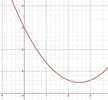
stl(x)=1(x-h)^2 + h-2


Screenshot 2026-09-08 at 7.26.32 PM.webp


aight so conversion factor: every 0.5 from the origin equates to 0.2mm added in thickness and or length.
  • Length: These intrinsic carpal ligaments are very short, typically measuring 1.0 mm to 3.5 mm in length.
  • Thickness/Width: Most measure between 1 mm and 3 mm.
  • Sex Differences: In adult males, the trapezoid bone itself measures roughly 8–14 mm in height and 9–17 mm in width, so the tiny ligaments bridging these small carpal bones remain just a few millimeters long.
thats the difference so on the graph there would be 2.8mm in total on the ligament, stay safe

also for these outer tendons of the hand that don't really latch metacarpal to another?
Screenshot 2026-09-08 at 7.31.09 PM.webp

Flexor Digitorum Profundus (FDP) & Superficialis (FDS): ( this is just one of the tendons I chose, you can see it if you flip your fingers up )
  • Total Tendon Length: Roughly 15 cm to 25 cm (6 to 10 inches) from the forearm muscle-tendon junction down to the fingertip.
  • Intra-hand Portion (Wrist to Fingertip): Measures about 8 cm to 12 cm in an adult male.
a very set condition begins to appear, which is what number stack means what????
- it grows differently, this is how.
f(x)-0.5= length grown, watch this.


Screenshot 2026-09-08 at 7.33.51 PM.webp

the lengthening happens once thickening happens and not very much because, theres not much of a reason to lengthen.
good luck!
 

Attachments
  • Screenshot 2026-09-08 at 7.32.07 PM.webp
    Screenshot 2026-09-08 at 7.32.07 PM.webp
    17.1 KB · Views: 9
Last edited:
tu es vraiment intelligente or smrh like that
 
I don't understand are you just trying to get bigger ga ds
you have to miss your ligaments and tendons if you inject in el hand (cuz of calcium compounds in some), and theres not really a visible way to tell where your metacarpal ligaments are so you check with math
 
this is a guide specifically on the mapping of certain positions in your hand, which can be helpful to make a model on other ligaments in the body
- when you inject, you gotta know where your ligaments are. certain chemicals in some solutions will pre-calcify the "supposed to be" stretchy ligaments.
before it starts: this is roughly how you change the formula to fit other parts of the body.
1) find constraints of equation: hl = hand ligament and xl = whatever ligament location, arm, leg, whatever
2) input values: hl(around 1.4)/xl length for your average age and gender range and whatever hl value in the other formula replace
3) graph on desmos and determine length on y axis
View attachment 418985 = not what you want compounding on your ligaments! this is a form of calcium.

View attachment 418983 = this is our reference photo for where the "ideal" ligament should be.
disclaimer: it doesn't matter if it's ideal or not because years of certain positioning of typing or drawing, craftsmanship can allow some ligaments to thicken "unideally", but it is just to help whatever action you usually do.

going to update in five minutes with graph photos: fini

!!so this is how you find it: grab the name of the ligament you are graphing, ill use s. trapezoidal ligament.
in this hypothetical, I am a painter which uses digits 1 & 2 copiously, so here's the equation:
(also copiously means you double force so force here would be 2.6 and on a usual digit it would be 1.4
h = how many times you hold this position a week, so for this situation 5 days, five then.
stl(x)=1(x-h)^2 + h-2


View attachment 418987

aight so conversion factor: every 0.5 from the origin equates to 0.2mm added in thickness and or length.
  • Length: These intrinsic carpal ligaments are very short, typically measuring 1.0 mm to 3.5 mm in length.
  • Thickness/Width: Most measure between 1 mm and 3 mm.
  • Sex Differences: In adult males, the trapezoid bone itself measures roughly 8–14 mm in height and 9–17 mm in width, so the tiny ligaments bridging these small carpal bones remain just a few millimeters long.
thats the difference so on the graph there would be 2.8mm in total on the ligament, stay safe

also for these outer tendons of the hand that don't really latch metacarpal to another?
View attachment 418989
Flexor Digitorum Profundus (FDP) & Superficialis (FDS): ( this is just one of the tendons I chose, you can see it if you flip your fingers up )
  • Total Tendon Length: Roughly 15 cm to 25 cm (6 to 10 inches) from the forearm muscle-tendon junction down to the fingertip.
  • Intra-hand Portion (Wrist to Fingertip): Measures about 8 cm to 12 cm in an adult male.
a very set condition begins to appear, which is what number stack means what????
- it grows differently, this is how.
f(x)-0.5= length grown, watch this.


View attachment 418993
the lengthening happens once thickening happens and not very much because, theres not much of a reason to lengthen.
good luck!
i wanna study like u but im an idiot 😢💔
 
this is a guide specifically on the mapping of certain positions in your hand, which can be helpful to make a model on other ligaments in the body
- when you inject, you gotta know where your ligaments are. certain chemicals in some solutions will pre-calcify the "supposed to be" stretchy ligaments.
before it starts: this is roughly how you change the formula to fit other parts of the body.
1) find constraints of equation: hl = hand ligament and xl = whatever ligament location, arm, leg, whatever
2) input values: hl(around 1.4)/xl length for your average age and gender range and whatever hl value in the other formula replace
3) graph on desmos and determine length on y axis
View attachment 418985 = not what you want compounding on your ligaments! this is a form of calcium.

View attachment 418983 = this is our reference photo for where the "ideal" ligament should be.
disclaimer: it doesn't matter if it's ideal or not because years of certain positioning of typing or drawing, craftsmanship can allow some ligaments to thicken "unideally", but it is just to help whatever action you usually do.

going to update in five minutes with graph photos: fini

!!so this is how you find it: grab the name of the ligament you are graphing, ill use s. trapezoidal ligament.
in this hypothetical, I am a painter which uses digits 1 & 2 copiously, so here's the equation:
(also copiously means you double force so force here would be 2.6 and on a usual digit it would be 1.4
h = how many times you hold this position a week, so for this situation 5 days, five then.
stl(x)=1(x-h)^2 + h-2


View attachment 418987

aight so conversion factor: every 0.5 from the origin equates to 0.2mm added in thickness and or length.
  • Length: These intrinsic carpal ligaments are very short, typically measuring 1.0 mm to 3.5 mm in length.
  • Thickness/Width: Most measure between 1 mm and 3 mm.
  • Sex Differences: In adult males, the trapezoid bone itself measures roughly 8–14 mm in height and 9–17 mm in width, so the tiny ligaments bridging these small carpal bones remain just a few millimeters long.
thats the difference so on the graph there would be 2.8mm in total on the ligament, stay safe

also for these outer tendons of the hand that don't really latch metacarpal to another?
View attachment 418989
Flexor Digitorum Profundus (FDP) & Superficialis (FDS): ( this is just one of the tendons I chose, you can see it if you flip your fingers up )
  • Total Tendon Length: Roughly 15 cm to 25 cm (6 to 10 inches) from the forearm muscle-tendon junction down to the fingertip.
  • Intra-hand Portion (Wrist to Fingertip): Measures about 8 cm to 12 cm in an adult male.
a very set condition begins to appear, which is what number stack means what????
- it grows differently, this is how.
f(x)-0.5= length grown, watch this.


View attachment 418993
the lengthening happens once thickening happens and not very much because, theres not much of a reason to lengthen.
good luck!
Nice graphs
 
this is a guide specifically on the mapping of certain positions in your hand, which can be helpful to make a model on other ligaments in the body
- when you inject, you gotta know where your ligaments are. certain chemicals in some solutions will pre-calcify the "supposed to be" stretchy ligaments.
before it starts: this is roughly how you change the formula to fit other parts of the body.
1) find constraints of equation: hl = hand ligament and xl = whatever ligament location, arm, leg, whatever
2) input values: hl(around 1.4)/xl length for your average age and gender range and whatever hl value in the other formula replace
3) graph on desmos and determine length on y axis
View attachment 418985 = not what you want compounding on your ligaments! this is a form of calcium.

View attachment 418983 = this is our reference photo for where the "ideal" ligament should be.
disclaimer: it doesn't matter if it's ideal or not because years of certain positioning of typing or drawing, craftsmanship can allow some ligaments to thicken "unideally", but it is just to help whatever action you usually do.

going to update in five minutes with graph photos: fini

!!so this is how you find it: grab the name of the ligament you are graphing, ill use s. trapezoidal ligament.
in this hypothetical, I am a painter which uses digits 1 & 2 copiously, so here's the equation:
(also copiously means you double force so force here would be 2.6 and on a usual digit it would be 1.4
h = how many times you hold this position a week, so for this situation 5 days, five then.
stl(x)=1(x-h)^2 + h-2


View attachment 418987

aight so conversion factor: every 0.5 from the origin equates to 0.2mm added in thickness and or length.
  • Length: These intrinsic carpal ligaments are very short, typically measuring 1.0 mm to 3.5 mm in length.
  • Thickness/Width: Most measure between 1 mm and 3 mm.
  • Sex Differences: In adult males, the trapezoid bone itself measures roughly 8–14 mm in height and 9–17 mm in width, so the tiny ligaments bridging these small carpal bones remain just a few millimeters long.
thats the difference so on the graph there would be 2.8mm in total on the ligament, stay safe

also for these outer tendons of the hand that don't really latch metacarpal to another?
View attachment 418989
Flexor Digitorum Profundus (FDP) & Superficialis (FDS): ( this is just one of the tendons I chose, you can see it if you flip your fingers up )
  • Total Tendon Length: Roughly 15 cm to 25 cm (6 to 10 inches) from the forearm muscle-tendon junction down to the fingertip.
  • Intra-hand Portion (Wrist to Fingertip): Measures about 8 cm to 12 cm in an adult male.
a very set condition begins to appear, which is what number stack means what????
- it grows differently, this is how.
f(x)-0.5= length grown, watch this.


View attachment 418993
the lengthening happens once thickening happens and not very much because, theres not much of a reason to lengthen.
good luck!
dnr because i wont understand but this is likely high iq
 
They're gonna ask what I was doing? What do I say? I can't get put in the ward again please just take the blame I have to tell them
u shoved a dildo in ur mouth and it ripped the sides of ur lips and made u couhg blood
 

Users who are viewing this thread

Back
Top