- Joined
- Jul 14, 2026
- Messages
- 8,163
- Solutions
- 3
- Online time
- 1mo 1d
- Reputation
- 23,687
What is osteotomy?
Facial osteotomy is a surgical procedure that involves cutting and repositioning facial bones to improve both appearance and function. I will be going over the most commonly performed osteotomy.
WARNING
YOU SHOULD BE CONSULTING WITH A SURGEON AND GETTING THE REQUIRED STEPS BEFORE GETTING THESE SURGERIES.
How it works
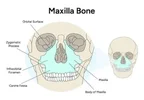
An opening is made inside of the mouth close to where the upper lip meets the gums. The opening is about 5 inches long, and the resulting scar will be completely hidden inside the mouth. Through this opening, the upper jaw will be accessed, separated, and repositioned by bringing it forward. The upper jaw is then securely fixed to its new position using a combination of plates and screws. The opening inside the mouth is then closed using stitches that will slowly dissolve.
What it treats
Malocclusion (misaligned teeth or jaw) such as Class II or III bite
Facial asymmetry from uneven growth or development of the upper jaw
Obstructive sleep apnea caused by a narrow or recessed maxilla
Maxillary atrophy (loss of upper jaw volume)
Aesthetic improvements to facial balance and profile
Before and After

Recovery Time
2-4 months
Price
US- $20,000-40,000
Abroad- $5000-15000
An opening is made inside of the mouth close to where the upper lip meets the gums. The opening is about 5 inches long, and the resulting scar will be completely hidden inside the mouth. Through this opening, the upper jaw will be accessed, separated, and repositioned by bringing it forward. The upper jaw is then securely fixed to its new position using a combination of plates and screws. The opening inside the mouth is then closed using stitches that will slowly dissolve.
What it treats
Malocclusion (misaligned teeth or jaw) such as Class II or III bite
Facial asymmetry from uneven growth or development of the upper jaw
Obstructive sleep apnea caused by a narrow or recessed maxilla
Maxillary atrophy (loss of upper jaw volume)
Aesthetic improvements to facial balance and profile
Before and After
Recovery Time
2-4 months
Price
US- $20,000-40,000
Abroad- $5000-15000
Target area
Maxilla, nasal bones, orbital rims

How it works
During the surgery, incisions are made within the mouth and sometimes in the nasal area, depending on the surgical plan. The surgeon carefully detaches the midfacial bones, including the upper jaw, nasal bridge, and orbital rims, and repositions them according to the preoperative plan. Plates and screws are then used to stabilize the bones in their new positions.
What it Treats
Congenital craniofacial syndromes causing midface retrusion
Midfacial hypoplasia affecting aesthetics and function
Severe facial trauma requiring reconstruction of the nasal and orbital regions
Functional issues such as breathing difficulties due to structural abnormalities
Before and After

Recovery Time
4-6 months
Price
US- $30000-50000
Abroad- $15000-30000
Maxilla, nasal bones, orbital rims
How it works
During the surgery, incisions are made within the mouth and sometimes in the nasal area, depending on the surgical plan. The surgeon carefully detaches the midfacial bones, including the upper jaw, nasal bridge, and orbital rims, and repositions them according to the preoperative plan. Plates and screws are then used to stabilize the bones in their new positions.
What it Treats
Congenital craniofacial syndromes causing midface retrusion
Midfacial hypoplasia affecting aesthetics and function
Severe facial trauma requiring reconstruction of the nasal and orbital regions
Functional issues such as breathing difficulties due to structural abnormalities
Before and After
Recovery Time
4-6 months
Price
US- $30000-50000
Abroad- $15000-30000
Target Area
Maxilla, orbital walls, zygomatic arch, skull base

How it Works
During Le Fort 3 osteotomy, incisions are made within the mouth and sometimes along the hairline to access the midfacial bones. The surgeon carefully detaches and repositions the entire midface, including the upper jaw, nasal bridge, cheekbones, and lower orbital rims. Plates and screws are used to secure the bones in their new positions, ensuring stability during the healing process.
What it Treats
Severe midfacial hypoplasia
Craniofacial syndromes: Conditions such as Apert syndrome, Crouzon syndrome, and Pfeiffer syndrome
Midface deformities from trauma
Obstructive sleep apnea: By expanding the upper airway, Le Fort 3 can improve breathing
Exorbitism: Reduces protruding eyes caused by small orbits
Facial symmetry: Restores balance between the upper and lower face
Underjet and dental alignment issues
Before and After

Recovery Time
8-12 months
Price
US: $50000-100000
Abroad: $25000-60000
Maxilla, orbital walls, zygomatic arch, skull base
How it Works
During Le Fort 3 osteotomy, incisions are made within the mouth and sometimes along the hairline to access the midfacial bones. The surgeon carefully detaches and repositions the entire midface, including the upper jaw, nasal bridge, cheekbones, and lower orbital rims. Plates and screws are used to secure the bones in their new positions, ensuring stability during the healing process.
What it Treats
Severe midfacial hypoplasia
Craniofacial syndromes: Conditions such as Apert syndrome, Crouzon syndrome, and Pfeiffer syndrome
Midface deformities from trauma
Obstructive sleep apnea: By expanding the upper airway, Le Fort 3 can improve breathing
Exorbitism: Reduces protruding eyes caused by small orbits
Facial symmetry: Restores balance between the upper and lower face
Underjet and dental alignment issues
Before and After
Recovery Time
8-12 months
Price
US: $50000-100000
Abroad: $25000-60000
Target Area
lower jaw (mandible)

How it Works
The surgeon makes cuts on both sides of the jaw along a sagittal plane, separates the bone segments, and repositions them. The jaw is then secured with plates, screws, or wires
What it Treats
Malocclusion – improper alignment of the upper and lower teeth, including overbites and underbites
Jaw size discrepancies – when the lower jaw is too large or too small compared to the upper jaw, causing functional or aesthetic imbalance
Recessed chin or underbite – where the chin appears too far back or the lower jaw protrudes too far
Protruding jaw – where the lower jaw is too far forward, often corrected by moving it backward
Jaw tilt or rotation – when the lower jaw is rotated to one side, affecting bite and facial symmetry
Before and After

Recovery Time
6-8 months
Price
US: $20000-50000
Abroad: $10000-30000
lower jaw (mandible)
How it Works
The surgeon makes cuts on both sides of the jaw along a sagittal plane, separates the bone segments, and repositions them. The jaw is then secured with plates, screws, or wires
What it Treats
Malocclusion – improper alignment of the upper and lower teeth, including overbites and underbites
Jaw size discrepancies – when the lower jaw is too large or too small compared to the upper jaw, causing functional or aesthetic imbalance
Recessed chin or underbite – where the chin appears too far back or the lower jaw protrudes too far
Protruding jaw – where the lower jaw is too far forward, often corrected by moving it backward
Jaw tilt or rotation – when the lower jaw is rotated to one side, affecting bite and facial symmetry
Before and After
Recovery Time
6-8 months
Price
US: $20000-50000
Abroad: $10000-30000
Target Area
mental protuberance (chin)

How it Works
Your surgeon cuts part of your chin bone. They reposition the bone forward, backward, or sideways to achieve the right chin shape. Your surgeon then secures the bone in place with plates and screws.
What it Treats
Retrogenia (receding chin) – when the chin is too far back, making the nose appear larger and the neck less defined
Prognathism (protruding chin) – when the chin is too forward or too long
Chin asymmetry – uneven chin position or shape
Vertical chin length imbalance – making the chin too short or too long
General chin deficiency – to create a more defined, balanced profile
Before and After

Recovery Time
3-6 Months
Prices
US: $5000-15000
Abroad: $2000-8000
mental protuberance (chin)
How it Works
Your surgeon cuts part of your chin bone. They reposition the bone forward, backward, or sideways to achieve the right chin shape. Your surgeon then secures the bone in place with plates and screws.
What it Treats
Retrogenia (receding chin) – when the chin is too far back, making the nose appear larger and the neck less defined
Prognathism (protruding chin) – when the chin is too forward or too long
Chin asymmetry – uneven chin position or shape
Vertical chin length imbalance – making the chin too short or too long
General chin deficiency – to create a more defined, balanced profile
Before and After
Recovery Time
3-6 Months
Prices
US: $5000-15000
Abroad: $2000-8000
Target Area
midpalatal suture

How it Works
Before surgery, an orthodontist places a palatal expander device, which may be tooth-borne or bone-anchored. During the procedure, the oral surgeon makes precise cuts in the bone, including a mid-palatal osteotomy to separate the inter-maxillary suture and sometimes a Le Fort I osteotomy.
What it Treats
Transverse maxillary hypoplasia – the upper jaw is too narrow for the lower jaw and teeth
Bilateral posterior crossbite (5 mm or more expansion needed)
Dental crowding due to lack of space in the upper arch
Prior failure of other expansion devices
Airway concerns linked to a narrow palate, including obstructive sleep apnea
Before and After

Recovery Time
2-4 Months
Price
US: $5000-10000
Abroad: $3000-6000
midpalatal suture
How it Works
Before surgery, an orthodontist places a palatal expander device, which may be tooth-borne or bone-anchored. During the procedure, the oral surgeon makes precise cuts in the bone, including a mid-palatal osteotomy to separate the inter-maxillary suture and sometimes a Le Fort I osteotomy.
What it Treats
Transverse maxillary hypoplasia – the upper jaw is too narrow for the lower jaw and teeth
Bilateral posterior crossbite (5 mm or more expansion needed)
Dental crowding due to lack of space in the upper arch
Prior failure of other expansion devices
Airway concerns linked to a narrow palate, including obstructive sleep apnea
Before and After
Recovery Time
2-4 Months
Price
US: $5000-10000
Abroad: $3000-6000
Target Area
Orbital bones

How it Works
This technique separates the frontal-orbital-zygomatic-maxillary complex from the skull base and removes a segment of bone between the medial nasal- orbital region and splits the palate down the middle—mobilization allows for a medialization and rotation of the orbits with lateralization and expansion of the maxillary arch and lengthening of the midface. Intended for younger children, but these children have a higher risk of reneeding surgery.
What it Treats
Hypertelorism — an increased distance between the bony orbits (true lateralization of the orbits)
Apert syndrome — a genetic disorder causing craniofacial malformations and syndactyly (webbed fingers/toes)
Crouzon syndrome — a genetic disorder with craniosynostosis and midface hypoplasia
Craniofrontonasal dysplasia — a rare genetic disorder affecting skull and facial development
Midfacial clefts — clefts involving the midface region
Frontonasal dysplasia — a spectrum of disorders affecting the frontonasal process
Before and After

Recovery Time
3-6 months
Price
US: $70000- 150,000
Abroad: $40000- 80000
Orbital bones
How it Works
This technique separates the frontal-orbital-zygomatic-maxillary complex from the skull base and removes a segment of bone between the medial nasal- orbital region and splits the palate down the middle—mobilization allows for a medialization and rotation of the orbits with lateralization and expansion of the maxillary arch and lengthening of the midface. Intended for younger children, but these children have a higher risk of reneeding surgery.
What it Treats
Hypertelorism — an increased distance between the bony orbits (true lateralization of the orbits)
Apert syndrome — a genetic disorder causing craniofacial malformations and syndactyly (webbed fingers/toes)
Crouzon syndrome — a genetic disorder with craniosynostosis and midface hypoplasia
Craniofrontonasal dysplasia — a rare genetic disorder affecting skull and facial development
Midfacial clefts — clefts involving the midface region
Frontonasal dysplasia — a spectrum of disorders affecting the frontonasal process
Before and After
Recovery Time
3-6 months
Price
US: $70000- 150,000
Abroad: $40000- 80000
Target Area
Zygomatic Bone

How it Works
(This one is going to be longer because I am fascinated with the steps)
A reciprocating saw was used to cut the junction of the frontal process of the zygoma/sphenoid for 35 mm (full length of blade) continuing the cut through the buttress and extending onto the anterior maxilla towards the lateral aspect of the infraorbital foramen. A micro saw was used to cut through the infra orbital rim immediately lateral to the infraorbital foramen, protecting the nerve and linking to the anterior maxillary cut. Then at right angles cut laterally, parallel to but 5 mm posterior to the orbital rim extending superolateral to just below the lateral canthus. Whilst protecting the eye, a cut was made at a right angle, horizontally across the posterosuperior surface of the lateral orbital wall, at approximately 3 mm below the ZF suture (Figure 2D), joining with the previous cut. And through this all, this procedure can be undone if the patients later regret getting it. To reverse the ZSO, the grafted bone can be carefully removed using angled cuts on either side of the graft. Once the graft is excised, the outer cheekbone segment naturally collapses back into place, closing the gap and restoring the original width. The area is then stabilized with a new plate and screws to ensure proper healing.

What it Treats
Facial Asymmetry
This procedure is mainly done for aesthetic and not medical reasons
And it is tricky, because 3D planning is not an option, and the outcome is up in the air. This is why many stray away from this procedure.
Recovery Time
4-7 Months
Price
US: $10000- 30000
Abroad: $10000- 20000
Zygomatic Bone
How it Works
(This one is going to be longer because I am fascinated with the steps)
A reciprocating saw was used to cut the junction of the frontal process of the zygoma/sphenoid for 35 mm (full length of blade) continuing the cut through the buttress and extending onto the anterior maxilla towards the lateral aspect of the infraorbital foramen. A micro saw was used to cut through the infra orbital rim immediately lateral to the infraorbital foramen, protecting the nerve and linking to the anterior maxillary cut. Then at right angles cut laterally, parallel to but 5 mm posterior to the orbital rim extending superolateral to just below the lateral canthus. Whilst protecting the eye, a cut was made at a right angle, horizontally across the posterosuperior surface of the lateral orbital wall, at approximately 3 mm below the ZF suture (Figure 2D), joining with the previous cut. And through this all, this procedure can be undone if the patients later regret getting it. To reverse the ZSO, the grafted bone can be carefully removed using angled cuts on either side of the graft. Once the graft is excised, the outer cheekbone segment naturally collapses back into place, closing the gap and restoring the original width. The area is then stabilized with a new plate and screws to ensure proper healing.
What it Treats
Facial Asymmetry
This procedure is mainly done for aesthetic and not medical reasons
And it is tricky, because 3D planning is not an option, and the outcome is up in the air. This is why many stray away from this procedure.
Recovery Time
4-7 Months
Price
US: $10000- 30000
Abroad: $10000- 20000
Target Area
Mandible

How it works
Two incisions are made, one on each side of the jaw. This is needed to separate the lower dental arch from the rest of the jaw without harming the soft tissues (especially the lower alveolar nerve). This enables the surgeon to reposition the lower jaw into a more ideal position, either by moving it forwards, backwards, or recentering it according to the orthodontist’s treatment plan. To secure everything together, screws and plates are used.
What it Treats
Facial asymmetry — especially when the mandibular angle is enlarged on one side, creating a “square” or “boxy” lower jaw appearance
Mandibular angle hypertrophy (MAH) — a condition where the lower jaw’s angle is abnormally wide, often seen in some Asian populations, and can affect facial harmony
Aesthetic concerns — to achieve a smoother, more tapered lower jaw profile, which is often desired in cosmetic or reconstructive surgery
Functional improvement — in some cases, correcting jaw imbalance that affects chewing, speaking, or swallowing
Before and After

Recovery Time
6-8 months
Price
US: $10000- 25000
Abroad: $5000- 15000
Mandible
How it works
Two incisions are made, one on each side of the jaw. This is needed to separate the lower dental arch from the rest of the jaw without harming the soft tissues (especially the lower alveolar nerve). This enables the surgeon to reposition the lower jaw into a more ideal position, either by moving it forwards, backwards, or recentering it according to the orthodontist’s treatment plan. To secure everything together, screws and plates are used.
What it Treats
Facial asymmetry — especially when the mandibular angle is enlarged on one side, creating a “square” or “boxy” lower jaw appearance
Mandibular angle hypertrophy (MAH) — a condition where the lower jaw’s angle is abnormally wide, often seen in some Asian populations, and can affect facial harmony
Aesthetic concerns — to achieve a smoother, more tapered lower jaw profile, which is often desired in cosmetic or reconstructive surgery
Functional improvement — in some cases, correcting jaw imbalance that affects chewing, speaking, or swallowing
Before and After
Recovery Time
6-8 months
Price
US: $10000- 25000
Abroad: $5000- 15000