Reason(s) to get surgery | Surgery recommendation |
Class II malocclusion
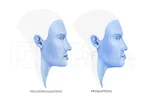
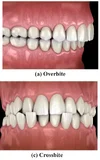
Retrognathic mandible, recessed lower jaw, overbite
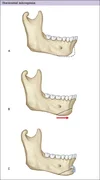
| BSSO (Bilateral Sagittal Split Osteotomy)A surgeon cuts the jawbone on both sides in a way that splits it lengthwise into two overlapping segments. That split lets the front part of the jaw (with the teeth) slide forward or backward independently of the back part, so the surgeon can reposition your bite without fully severing the bone. Once it's moved to the correct spot, it's fixed in place with small titanium plates and screws while it heals. It's the standard procedure for correcting a receding jaw (overbite) or a jaw that's too far forward (underbite).
|
Class III malocclusion
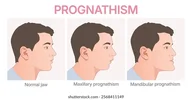
Prognathic mandible, mandibular excess
| BSSO (Mandibular setback)Same split technique as above, but here the front segment of the jaw is moved backward instead of forward, then secured with plates and screws. Used when the lower jaw has overgrown relative to the upper jaw, creating an underbite or a jaw that projects too far forward. |
Maxillary deficiency
| Le Fort I Osteotomy (Advancement)The upper jaw is fully separated from the skull base along a horizontal cut above the teeth, then moved forward to correct the flat or sunken midface. It's plated in its new position. Used for a set-back upper jaw, a concave facial profile, or a "sunken cheeks" appearance caused by skeletal deficiency rather than soft tissue.
|
Vertical maxillary excess / gummy smile / long face
| Le Fort I Osteotomy (Impaction)Same horizontal cut as the advancement version, but here the upper jaw is moved upward, shortening the space between the nose and upper lip. This shortens overall face height and reduces how much gum shows when smiling.
|
Anterior open bite
| Le Fort I & BSSOUsually the upper jaw is repositioned (rotated/impacted at the back) to close the gap in front where the teeth don't meet. The lower jaw is sometimes adjusted too if the open bite is severe. Braces close the remaining small gaps afterward. |
Skeletal asymmetry / facial canting
| Double Jaw (Bimaxillary) SurgeryBSSO and Le Fort I are performed together so both jaws can be independently repositioned in three dimension, which is necessary because a true skeletal asymmetry can't be corrected by moving just one jaw without leaving the other out of balance.
, |
Microgenia / weak chin (normal bite)
| Genioplasty (Chin Surgery)The chin bone alone is cut and moved forward (or reshaped), independent of the bite. Doesn't touch the jaw joints or tooth alignment. This is used when the bite is normal but the chin itself is underprojected.
|
| Narrow palate / borderline suture fusion | MARPE (Miniscrew-Assisted Rapid Palatal Expansion)A palatal expander is anchored directly into the bone with 4 small miniscrews instead of relying on tooth-borne pressure. This lets it widen the palate skeletally with no surgical cut, as long as the midpalatal suture isn't fully fused yet. It's the step tried before SARPE (typically in teens/young adults where the suture is only partially fused) and is skipped in favor of SARPE once the suture is confirmed fully closed on a CBCT scan. |
| Transverse maxillary deficiency / narrow palate | SARPE (Surgically Assisted Rapid Palatal Expansion)A small surgical cut weakens the fused midline suture of the upper jaw so an expander device can widen the palate gradually over several weeks. It's used in adults whose growth plates have already fused, where braces alone can't widen the arch. |
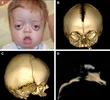
| Combined Class II / III with asymmetry or multiple skeletal issues stacked on top of each other | Bimax + GenioplastyAll three major skeletal structures are repositioned in a single surgery. The upper jaw (Le Fort I) is cut free from the skull base and moved to its ideal position, the lower jaw (BSSO) is split and moved independently to correct the bite, and the chin (genioplasty) is cut and repositioned separately from both jaws to balance the lower third of the face. All three are secured in their final position with titanium plates and screws before the incisions are closed. |