
Kindinternetman
Well-known member
- Joined
- Mar 9, 2025
- Messages
- 203
- Online time
- 15h 3m
- Reputation
- 354
ICD has to be one of the most useless measurements. I’ll explain why after I explain what it is.
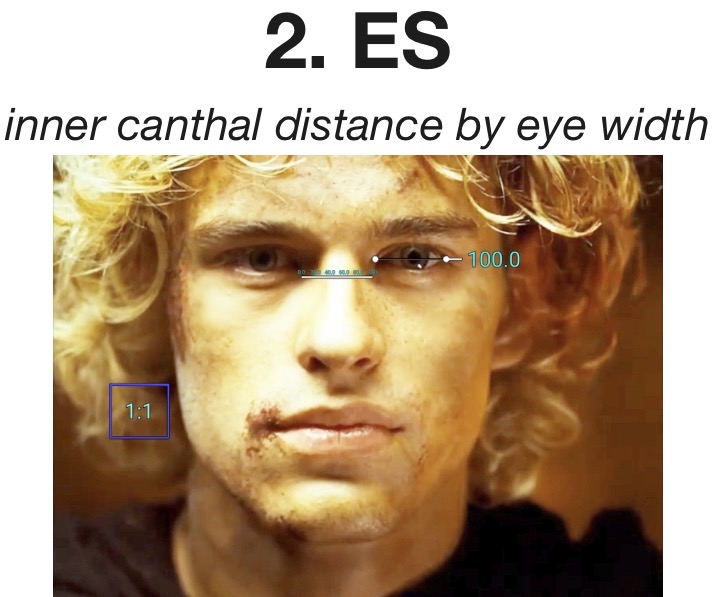
Here is the one eye apart test in action. As you can see a line has been drawn at the end of the medial canthus to the other medial canthus. This is the “width” in between your eyes. Then another line accompanying the first is the width of the eye. From medial canthus to lateral or (outer) canthus. Basically where the sclera ends in a sort of triangle. (Most of you know this stuff.)
So Kindintenetman, why is this test terribly useless?
1. Because it doesn’t tell us anything new
2. Because the way it’s formatted does not align with what humans perceive as the width of your eye nor the distance of the space between your eyes.
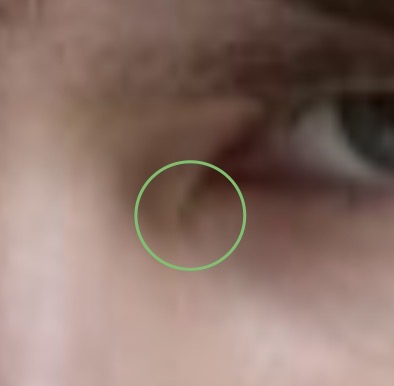
Take a look at Elias depoot’s medial canthus. A lot of people would end the measurement for pfl and start the measurement for the width in between his eyes where the pink ends. But this is highly deceptive and incorrect. It is impossible for the average viewer to not notice his incredibly pronounced medical canthus end, that continues beyond the pink of his eye by quite a bit.
-you need to measure all the way to the end for both parts of this measurement. Otherwise you are doing it wrong.
-you also need to measure beyond the outer canthus, if they have a crease (everyone has this) or if their lashes spread outwards.
Okay. So why does this test tell us nothing about a persons eye area.
First we have to look at what I consider to be the most important test for eye spacing and eye area aesthetics.
ESR:
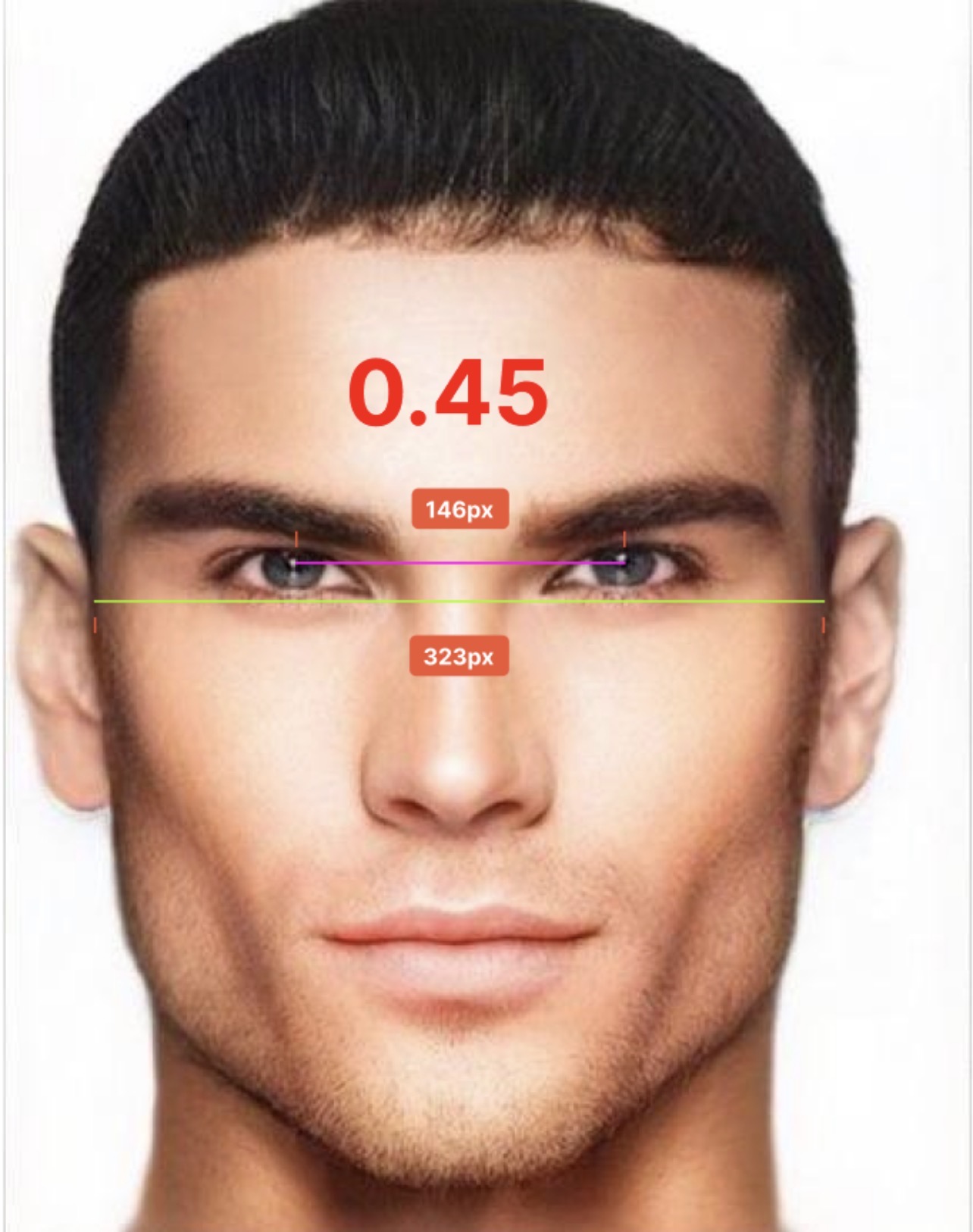
ESR is meaured by dividing inter-pupillary distance by your Bizygomatic width.
-if you pass this test (t2 or better) your eye spacing is almost 100 percent acceptable.
Compound this with your raw IPD. And we have most of the information the one eye apart test (Icd) gives us.
Raw PFL (the length of your eye) is enough to finish covering everything your one eye apart test would tell you.
Let me tell you some more interesting facts if you are not convinced already.
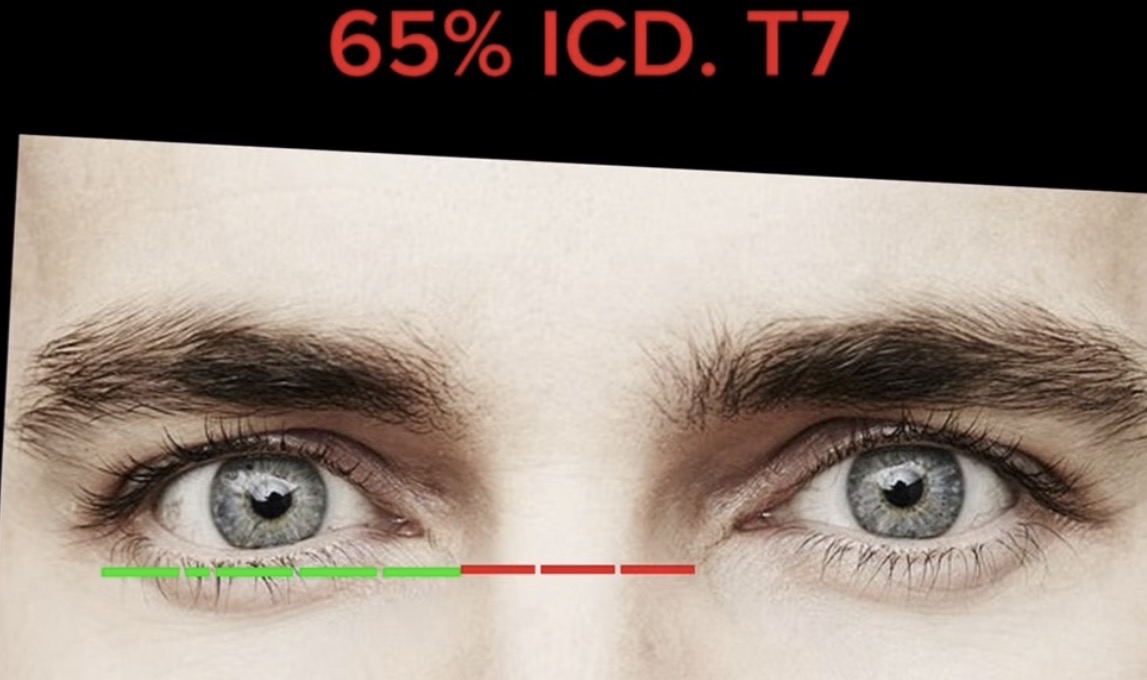
Matt bomer, has a ICD of 65 percent. Literally t6-t7 according to any rater you find.
But does his eye area look that bad? Is it obvious his spacing is bad? No. Not even close. Yes the width between his eyes is ever so slightly close, but not t7 worthy.
it’s easy to poke holes in a system, but solutions are more challenging.
Here are a few ideas.
1. Get rid of this test entirely. (Could be done but there are better solutions.)
If we get rid of this test we are left with a problem. ICD did something raw Ipd and raw PFL did not—it gave the chance for raters online to gauge how good someone’s pfl is without their raw measurements in mm. So perhaps option 2 is better.
2. Accept that we have been measuring pfl in a deceptive manner, and opt for a term I call “perceived pfl”. Where instead of inner to outer canthus we measure a bit further into the outer and make sure we measure all the way to the tip of the inner canthus.
3. If we go with option 2 we will also have to change the tier system to reflect our decision. And suddenly it will not longer be the one eye apart test. And the ideal will probably become a much bigger range than .93 to 1.7.
TLDR.
Below I have added a video that explains my findings in an easier to digest format. Thank you.
https://www.image2url.com/r2/default/videos/1792569457617-7b28a79b-4439-40e4-a6f2-1c1b96b79d4a.mov
Here is the one eye apart test in action. As you can see a line has been drawn at the end of the medial canthus to the other medial canthus. This is the “width” in between your eyes. Then another line accompanying the first is the width of the eye. From medial canthus to lateral or (outer) canthus. Basically where the sclera ends in a sort of triangle. (Most of you know this stuff.)
So Kindintenetman, why is this test terribly useless?
1. Because it doesn’t tell us anything new
2. Because the way it’s formatted does not align with what humans perceive as the width of your eye nor the distance of the space between your eyes.
Take a look at Elias depoot’s medial canthus. A lot of people would end the measurement for pfl and start the measurement for the width in between his eyes where the pink ends. But this is highly deceptive and incorrect. It is impossible for the average viewer to not notice his incredibly pronounced medical canthus end, that continues beyond the pink of his eye by quite a bit.
-you need to measure all the way to the end for both parts of this measurement. Otherwise you are doing it wrong.
-you also need to measure beyond the outer canthus, if they have a crease (everyone has this) or if their lashes spread outwards.
Okay. So why does this test tell us nothing about a persons eye area.
First we have to look at what I consider to be the most important test for eye spacing and eye area aesthetics.
ESR:
ESR is meaured by dividing inter-pupillary distance by your Bizygomatic width.
-if you pass this test (t2 or better) your eye spacing is almost 100 percent acceptable.
Compound this with your raw IPD. And we have most of the information the one eye apart test (Icd) gives us.
Raw PFL (the length of your eye) is enough to finish covering everything your one eye apart test would tell you.
Let me tell you some more interesting facts if you are not convinced already.
Matt bomer, has a ICD of 65 percent. Literally t6-t7 according to any rater you find.
But does his eye area look that bad? Is it obvious his spacing is bad? No. Not even close. Yes the width between his eyes is ever so slightly close, but not t7 worthy.
it’s easy to poke holes in a system, but solutions are more challenging.
Here are a few ideas.
1. Get rid of this test entirely. (Could be done but there are better solutions.)
If we get rid of this test we are left with a problem. ICD did something raw Ipd and raw PFL did not—it gave the chance for raters online to gauge how good someone’s pfl is without their raw measurements in mm. So perhaps option 2 is better.
2. Accept that we have been measuring pfl in a deceptive manner, and opt for a term I call “perceived pfl”. Where instead of inner to outer canthus we measure a bit further into the outer and make sure we measure all the way to the tip of the inner canthus.
3. If we go with option 2 we will also have to change the tier system to reflect our decision. And suddenly it will not longer be the one eye apart test. And the ideal will probably become a much bigger range than .93 to 1.7.
TLDR.
Below I have added a video that explains my findings in an easier to digest format. Thank you.
https://www.image2url.com/r2/default/videos/1792569457617-7b28a79b-4439-40e4-a6f2-1c1b96b79d4a.mov