

FYBROSIS BY 𝔄𝔖𝔎ℑ𝔑𝔒𝔙
So fibrosis comes in two types localized skin fibrosis and medical fibrosis which is caused by skin condition and autoimmune diseases ,
Note : These medical fibrosis are uncontrolled and this requires a medical supervision so asking me about this won't help you .
And now clearing this stuff we can actually move on to the main topic
Step 1 ; at 1st the skin experiences a damage any kind of damage it may be major or minor
Damaged epithelial cells (keratinocytes) and endothelial cells (lining local blood vessels) release inflammatory molecules called damage-associated molecular patterns (DAMPs)
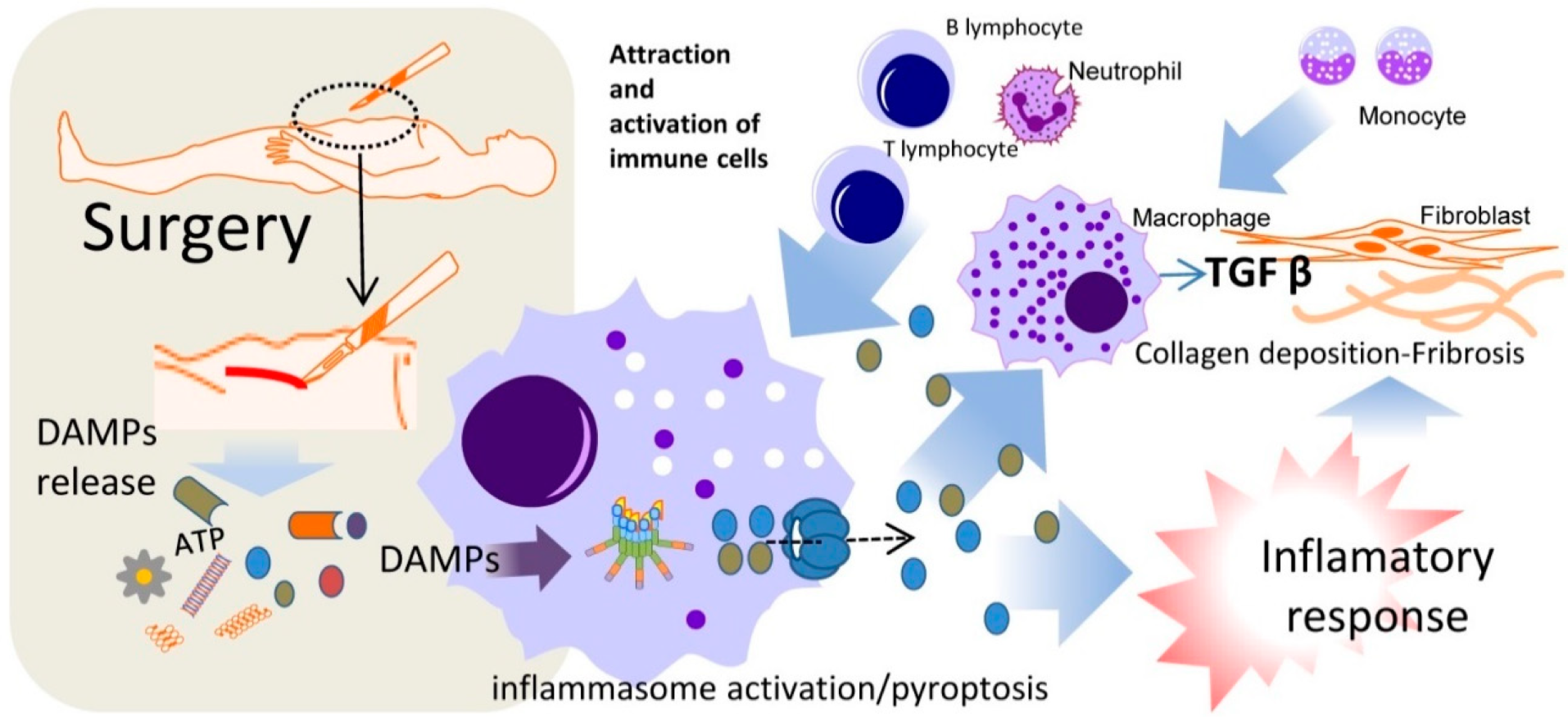
2. Influx of Profibrotic Macrophages
The cellular alarm signals recruit inflammatory white blood cells, mainly M2 macrophages.
In normal healing, M1 macrophages clean the wound and then switch to M2 cells to lay down a repair patch.
In fibrosis, these M2 macrophages stay locked in place, continuously secreting massive amounts of cytokines (cell-signaling proteins).
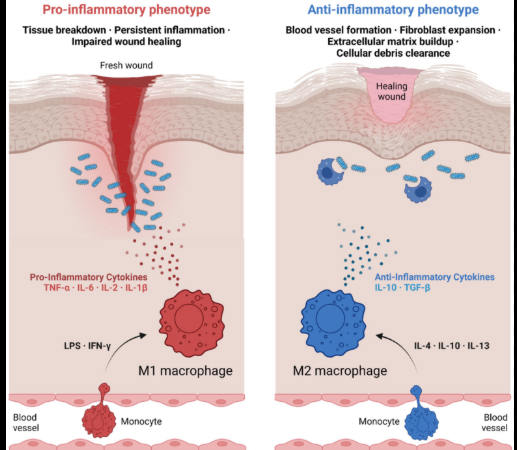
3. TGF-β Hyper-Activation Loop
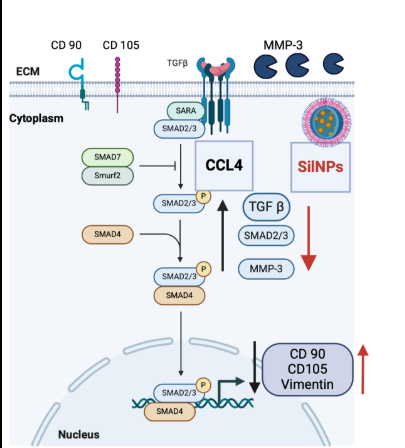
The most critical driver of fibrosis is a master-regulator protein called Transforming Growth Factor-Beta 1 (TGF-β1).
M2 macrophages and damaged cells flood the area with latent TGF-β1.
Mechanical tension in the stiffening tissue activates this latent TGF-β1.
Once active, TGF-β1 binds to receptor proteins on the surface of local resting cells, initiating an intense internal signaling cascade (primarily through the Smad2/3 pathway).
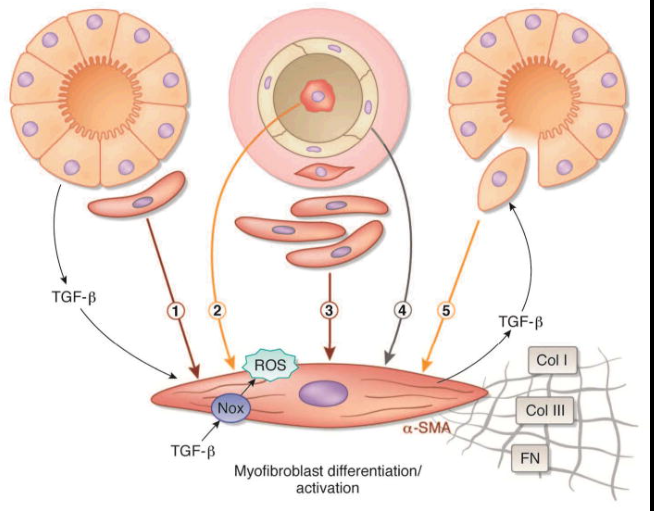
Step4 ; Phenotypic Phenotype Switch: Myofibroblast Differentiation
The TGF-β1 signaling forces local fibroblasts to undergo a dramatic genetic change. They differentiate into myofibroblasts.
Myofibroblasts express a protein called Alpha-Smooth Muscle Actin (α-SMA).
α-SMA gives cells internal muscle-like cables, allowing them to physically grip the surrounding tissue and pull it tightly together.
This cell contraction creates a cycle: more tissue tension → more TGF-β1 activation → more myofibroblasts.
Step5 ; Extracellular Matrix (ECM) Synthesis and Cross-Linking
The hyper-activated myofibroblasts begin synthesizing structural materials at a rate the body cannot keep up with, flooding the Extracellular Matrix (ECM).
Collagen Shift: Production of Collagen Type III drops which are replaced by massive quantitiy of rigid and dense Collagen Type I.
Cross-Linking: Cells secrete an enzyme called Lysyl Oxidase (LOX). LOX chemically cross-linking the parallel
collagen fibers tightly that the body's natural recycling enzymes MMPs can no longer break them down.
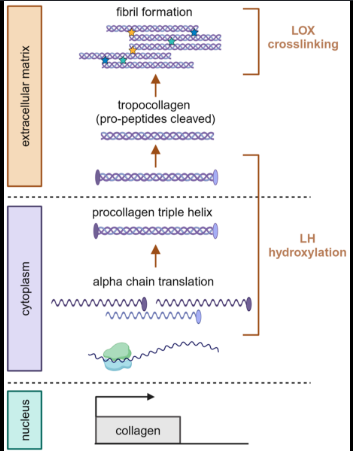
6. Structural Rigidity and Loss of Function
As the densely cross-linked Collagen Type I crowd out the normal cellular space, the microenvironment becomes choked. Blood capillaries are compressed, leading to localized hypoxia (low oxygen), which triggers even more TGF-β1 release.
The normal cellular geometry is permanently replaced by a rigid, inelastic matrix, resulting in the clinically dense, unyielding structure of fibrotic skin.
And now given this with micro trauma you can sort of create a hard tissue formation via hypertrophic fibrosis which happens after repeated micro trauma you need to do micro damage it overtime to create a hypertrophic scar tissue which is hard and give volume
TLDR
Trauma activates DAMP which activates M2 which sits longer at scar tissue and activate cytokines and TGF -β1 which They differentiate into myofibroblasts which expresses a protein called lpha-Smooth Muscle Actin (α-SMA) which grip and surrounding tissue which creates a cycle: more tissue tension → more TGF-β1 activation → more myofibroblasts. Myofibroblasts floods body with ECM and now the work done
APPLICATIONs ?
With repeated micro trauma you can create a scar tissue hypertrophic scar tissue which will harden and give volume in the skin
example shaloin monks
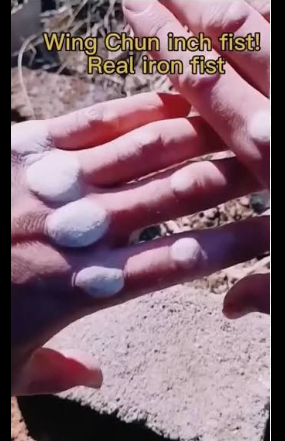
and what i believe is using this method in lip cutting and increasing collagen in lip area so this guy is doing regular cutting which in over time in lip to create a scar tissue which will give the looks of wide lips ( theory )
So to get what i want we need other way of increasing collagen just pure collagen which is discussed in forum
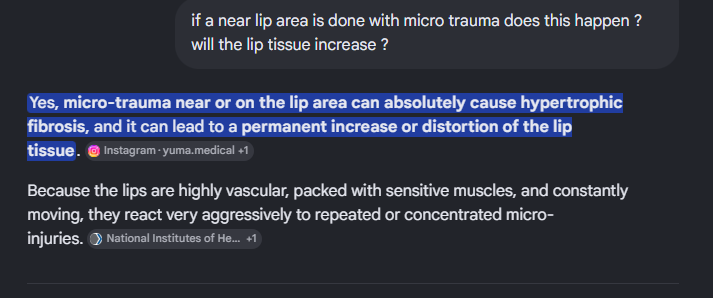
Lip and perioral trauma - PubMed
https://www.sciencedirect.com/topics/medicine-and-dentistry/skin-fibrosis
and final source conor murphy and a nga from org

