Join 75,000+ Looksmaxxing Members!

Register a FREE account today to become a member. Once signed in, you'll be able to participate on this site by adding your own topics and posts, as well as connect with other members through your own private inbox.

  • DISCLAIMER: DO NOT ATTEMPT TREATMENT WITHOUT LICENCED MEDICAL CONSULTATION AND SUPERVISION

    This is a public discussion forum. The owners, staff, and users of this website ARE NOT engaged in rendering professional services to the individual reader. DO NOT use the content of this website as an alternative to personal examination and advice from licenced healthcare providers. DO NOT begin, delay, or discontinue treatments and/or exercises without licenced medical supervision. Learn more

Guide How to know which jaw surgery to get

bye

Well-known member
Established
Joined
Jan 19, 2024
Messages
627
Solutions
1
Online time
1d 18h
Reputation
1,212

How to know which jaw surgery to get​

This guide should help you identify if you should get jaw surgery/what you should get without having to see a doctor. When you decide to get surgery, your doctor will image your jaw, identify what's wrong, and recommend a surgery. Listen to your doctor over this guide, if you decide to go pursue surgery!

Let me know if there's anything I should change, or improve about the thread.

Reason(s) to get surgery​

Surgery recommendation​

Class II malocclusion
1788044255362.webp

Retrognathic mandible, recessed lower jaw, overbite
1788044160514.webp

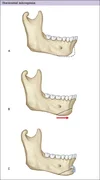
BSSO (Bilateral Sagittal Split Osteotomy)

A surgeon cuts the jawbone on both sides in a way that splits it lengthwise into two overlapping segments. That split lets the front part of the jaw (with the teeth) slide forward or backward independently of the back part, so the surgeon can reposition your bite without fully severing the bone. Once it's moved to the correct spot, it's fixed in place with small titanium plates and screws while it heals. It's the standard procedure for correcting a receding jaw (overbite) or a jaw that's too far forward (underbite).
1788044308906.webp
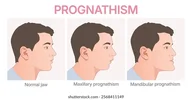
Class III malocclusion
1788045044284.webp

Prognathic mandible, mandibular excess
1788045062872.webp

BSSO (Mandibular setback)​

Same split technique as above, but here the front segment of the jaw is moved backward instead of forward, then secured with plates and screws. Used when the lower jaw has overgrown relative to the upper jaw, creating an underbite or a jaw that projects too far forward.
Maxillary deficiency
1788045393100.webp

Le Fort I Osteotomy (Advancement)​

The upper jaw is fully separated from the skull base along a horizontal cut above the teeth, then moved forward to correct the flat or sunken midface. It's plated in its new position. Used for a set-back upper jaw, a concave facial profile, or a "sunken cheeks" appearance caused by skeletal deficiency rather than soft tissue.
1788045455643.webp

1788045460224.webp
Vertical maxillary excess / gummy smile / long face
1788045429565.webp

Le Fort I Osteotomy (Impaction)​

Same horizontal cut as the advancement version, but here the upper jaw is moved upward, shortening the space between the nose and upper lip. This shortens overall face height and reduces how much gum shows when smiling.
1788045404487.webp
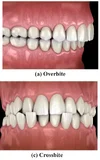
Anterior open bite
1788045505731.webp

Le Fort I & BSSO​

Usually the upper jaw is repositioned (rotated/impacted at the back) to close the gap in front where the teeth don't meet. The lower jaw is sometimes adjusted too if the open bite is severe. Braces close the remaining small gaps afterward.
Skeletal asymmetry / facial canting
1788045526872.webp

Double Jaw (Bimaxillary) Surgery​

BSSO and Le Fort I are performed together so both jaws can be independently repositioned in three dimension, which is necessary because a true skeletal asymmetry can't be corrected by moving just one jaw without leaving the other out of balance.
1788045533039.webp
,
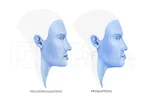
Microgenia / weak chin (normal bite)
1788045550847.webp

Genioplasty (Chin Surgery)​

The chin bone alone is cut and moved forward (or reshaped), independent of the bite. Doesn't touch the jaw joints or tooth alignment. This is used when the bite is normal but the chin itself is underprojected.
1788045558403.webp
Narrow palate / borderline suture fusion

MARPE (Miniscrew-Assisted Rapid Palatal Expansion)​

A palatal expander is anchored directly into the bone with 4 small miniscrews instead of relying on tooth-borne pressure. This lets it widen the palate skeletally with no surgical cut, as long as the midpalatal suture isn't fully fused yet. It's the step tried before SARPE (typically in teens/young adults where the suture is only partially fused) and is skipped in favor of SARPE once the suture is confirmed fully closed on a CBCT scan.
Transverse maxillary deficiency / narrow palate

SARPE (Surgically Assisted Rapid Palatal Expansion)​

A small surgical cut weakens the fused midline suture of the upper jaw so an expander device can widen the palate gradually over several weeks. It's used in adults whose growth plates have already fused, where braces alone can't widen the arch.
Combined Class II / III with asymmetry or multiple skeletal issues stacked on top of each other

Bimax + Genioplasty​

All three major skeletal structures are repositioned in a single surgery. The upper jaw (Le Fort I) is cut free from the skull base and moved to its ideal position, the lower jaw (BSSO) is split and moved independently to correct the bite, and the chin (genioplasty) is cut and repositioned separately from both jaws to balance the lower third of the face. All three are secured in their final position with titanium plates and screws before the incisions are closed.
 

Attachments

  • 1788045123663.webp
    1788045123663.webp
    27.7 KB · Views: 1
  • 1788045180319.webp
    1788045180319.webp
    26.9 KB · Views: 2
  • 1788045221994.webp
    1788045221994.webp
    11.6 KB · Views: 2
  • 1788045500097.webp
    1788045500097.webp
    56 KB · Views: 2
  • 1788045542505.webp
    1788045542505.webp
    16.1 KB · Views: 1
Register to hide this ad
learned i have a retrognathic mandible making this💔
prob getting bsso + genioplasty
 
Last edited:

How to know which jaw surgery to get​

This guide should help you identify if you should get jaw surgery/what you should get without having to see a doctor. When you decide to get surgery, your doctor will image your jaw, identify what's wrong, and recommend a surgery. Listen to your doctor over this guide, if you decide to go pursue surgery!

Let me know if there's anything I should change, or improve about the thread.

Reason(s) to get surgery​

Surgery recommendation​

Class II malocclusion
View attachment 414445
Retrognathic mandible, recessed lower jaw, overbite
View attachment 414442

BSSO (Bilateral Sagittal Split Osteotomy)

A surgeon cuts the jawbone on both sides in a way that splits it lengthwise into two overlapping segments. That split lets the front part of the jaw (with the teeth) slide forward or backward independently of the back part, so the surgeon can reposition your bite without fully severing the bone. Once it's moved to the correct spot, it's fixed in place with small titanium plates and screws while it heals. It's the standard procedure for correcting a receding jaw (overbite) or a jaw that's too far forward (underbite).
View attachment 414448
Class III malocclusion
View attachment 414453
Prognathic mandible, mandibular excess
View attachment 414454

BSSO (Mandibular setback)​

Same split technique as above, but here the front segment of the jaw is moved backward instead of forward, then secured with plates and screws. Used when the lower jaw has overgrown relative to the upper jaw, creating an underbite or a jaw that projects too far forward.
Maxillary deficiency
View attachment 414459

Le Fort I Osteotomy (Advancement)​

The upper jaw is fully separated from the skull base along a horizontal cut above the teeth, then moved forward to correct the flat or sunken midface. It's plated in its new position. Used for a set-back upper jaw, a concave facial profile, or a "sunken cheeks" appearance caused by skeletal deficiency rather than soft tissue.
View attachment 414462
View attachment 414463
Vertical maxillary excess / gummy smile / long face
View attachment 414461

Le Fort I Osteotomy (Impaction)​

Same horizontal cut as the advancement version, but here the upper jaw is moved upward, shortening the space between the nose and upper lip. This shortens overall face height and reduces how much gum shows when smiling.
View attachment 414460
Anterior open bite
View attachment 414465

Le Fort I & BSSO​

Usually the upper jaw is repositioned (rotated/impacted at the back) to close the gap in front where the teeth don't meet. The lower jaw is sometimes adjusted too if the open bite is severe. Braces close the remaining small gaps afterward.
Skeletal asymmetry / facial canting
View attachment 414466

Double Jaw (Bimaxillary) Surgery​

BSSO and Le Fort I are performed together so both jaws can be independently repositioned in three dimension, which is necessary because a true skeletal asymmetry can't be corrected by moving just one jaw without leaving the other out of balance.
View attachment 414467,
Microgenia / weak chin (normal bite)
View attachment 414469

Genioplasty (Chin Surgery)​

The chin bone alone is cut and moved forward (or reshaped), independent of the bite. Doesn't touch the jaw joints or tooth alignment. This is used when the bite is normal but the chin itself is underprojected.
View attachment 414470
Narrow palate / borderline suture fusion

MARPE (Miniscrew-Assisted Rapid Palatal Expansion)​

A palatal expander is anchored directly into the bone with 4 small miniscrews instead of relying on tooth-borne pressure. This lets it widen the palate skeletally with no surgical cut, as long as the midpalatal suture isn't fully fused yet. It's the step tried before SARPE (typically in teens/young adults where the suture is only partially fused) and is skipped in favor of SARPE once the suture is confirmed fully closed on a CBCT scan.
Transverse maxillary deficiency / narrow palate

SARPE (Surgically Assisted Rapid Palatal Expansion)​

A small surgical cut weakens the fused midline suture of the upper jaw so an expander device can widen the palate gradually over several weeks. It's used in adults whose growth plates have already fused, where braces alone can't widen the arch.
Combined Class II / III with asymmetry or multiple skeletal issues stacked on top of each other

Bimax + Genioplasty​

All three major skeletal structures are repositioned in a single surgery. The upper jaw (Le Fort I) is cut free from the skull base and moved to its ideal position, the lower jaw (BSSO) is split and moved independently to correct the bite, and the chin (genioplasty) is cut and repositioned separately from both jaws to balance the lower third of the face. All three are secured in their final position with titanium plates and screws before the incisions are closed.
must reads worthy
 
bump bc i think more ppl could benefit from this
must reads worthy? @junebug
 

Users who are viewing this thread

Back
Top