Join 83,000+ Looksmaxxing Members!

Register a FREE account today to become a member. Once signed in, you'll be able to participate on this site by adding your own topics and posts, as well as connect with other members through your own private inbox.

  • DISCLAIMER: DO NOT ATTEMPT TREATMENT WITHOUT LICENCED MEDICAL CONSULTATION AND SUPERVISION

    This is a public discussion forum. The owners, staff, and users of this website ARE NOT engaged in rendering professional services to the individual reader. DO NOT use the content of this website as an alternative to personal examination and advice from licenced healthcare providers. DO NOT begin, delay, or discontinue treatments and/or exercises without licenced medical supervision. Learn more

Guide ULTIMATE HAIR GUIDE!!!

gatetoheaven

I see the good in people
Reputable ★
Established
Joined
Dec 7, 2025
Messages
1,489
Solutions
6
Online time
11d 22h
Reputation
5,485
Guild
I believe in love
Hi everyone! Welcome to my first thread 😍 Today’s thread will be all about hair; hence making it the…
ULTIMATE HAIR GUIDE!​
Is your hair…
  • Dull, never shiny?
  • Greasy and oily?
  • Long once and never again?
You have come to the right place!

Table Of Contents​
  1. My hair
  2. What is hair?
  3. All about hair (hair length, hair type, hair porosity, hair density, hair shape, and hair color)
  4. It's on the inside that counts
  5. Prepping (and growing!) hair
  6. How to properly wash your hair
  7. How to dry your hair
  8. How to style your hair
  9. Other helpful tips
1. My hair​
To start off, I will proudly say I love my hair. Maybe I wasn’t the prettiest in life, but the second best thing to come for me was my hair. I constantly get compliments with my hair and people always ask how I maintain it, and so that is why I have written this guide today. My hair is very long (longest: 35in (89cm), currently 25in (63.5cm), I have 2b-3b wave-curls naturally, low porosity, very thick, my current hairstyle is long layers with a v cut and my hair is virgin black.

2. What is hair?​
Science-wise, hair is a specialized structure made mostly of a tough protein called keratin: the exact same material found in your fingernails and animal horns/cloves.

Hair is DEAD 😱
Only the very bottom part of your hair (hidden inside your skin in a pocket called the hair follicle) is alive and growing. Once the cells are pushed up and out of the skin, they die and harden into the hair strand you see and touch. That's why getting a haircut doesn't hurt!

Anatomy of a Hair Strand
Imagine slicing a single strand of hair right down the middle and looking at it under a microscope. Here is what it looks like:
1793739858309.webp

The Cuticle (The Armor)
What it is:
The outermost layer, made of tiny, transparent cells overlapping each other like shingles on a roof or scales on a fish.
What it does: It protects the inside of the hair. When your cuticle is flat, your hair looks shiny and smooth. When it gets damaged or lifts up, hair looks frizzy and dry.

The Cortex (The Muscle & Color)
What it is:
The thickest middle layer, making up most of the hair strand. It is packed with keratin fibers twisted together like ropes.
What it does: It gives hair its strength, flexibility, and color. Tiny pigment cells called melanin live here: more melanin means darker hair, while little to no melanin means gray or white hair.

The Medulla (The Core)
What it is:
The innermost, soft center of the hair shaft.
What it does: It’s basically a tiny channel running up the middle. Interestingly, very fine or blonde hair often doesn't even have a medulla!

Quick Facts About Growth
The Root: The base of the hair follicle sits deep in your skin. Blood vessels feed the living root cells, telling them to multiply and push older cells upward.
Oil Glands: Attached to every follicle is a sebaceous (oil) gland that pumps out natural oils (sebum) to coat your hair and keep it waterproof and conditioned.

3. All about hair
(hair length, hair type, hair porosity, hair density, hair shape, and hair color)​

There are multiple hair lengths; the longest being 5.627 meters (18 feet 5.54 inches). If you want better hair, you must contribute to all aspects of hair health. Like most things with beauty, hair length is primarily genetic but that doesn’t mean you can’t unlock your potential.

How Genetics Control Hair Length
• The Anagen Phase:
Your DNA dictates how long your hair stays in its active growth stage (known as the anagen phase).
• Duration: This phase typically lasts anywhere from 2 to 7 years on the scalp, though some people have shorter or longer genetically programmed cycles.
• Terminal Length: Once the anagen phase ends, the follicle moves to resting and shedding phases. This sets your "terminal length"—the maximum length your hair can naturally reach before it stops growing and eventually sheds.
• Specific Genes: Research published in PMC highlights that specific genes, such as FGF5, play a crucial role in regulating hair growth cycles and fiber length in humans.
8 Reasons Your Hair Stops Growing After a Certain Length – Theradome + FGF5 is a crucial regulator of hair length in humans - PMC

Hair types
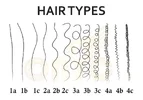
There are four main hair types in the standard classification system, which are further divided into subtypes (A, B, and C) based on the tightness or looseness of the pattern.

1793739868871-webp.441183


1. Type 1: Straight Hair
Straight hair has no natural curls or waves and tends to lay flat.
• 1a: Very straight, fine, and thin.
• 1b: Straight with a little bit of body or a slight flip at the ends.
• 1c: Straight, thick, and coarse.

2. Type 2: Wavy Hair
Wavy hair falls between straight and curly, featuring a gentle, loose "S" shape.
• 2a: Fine, loose, and barely-there waves.
• 2b: More defined "S"-shaped waves that can be prone to mild frizz.
• 2c: Thicker, well-defined waves that lean close to curls.

3. Type 3: Curly Hair
Curly hair forms bouncy ringlets, loops, or corkscrews with a clear 3D volume.
• 3a: Loose, big spiral curls.
• 3b: Tight, springy curls with more volume.
• 3c: Dense, tightly packed corkscrew or pencil-sized curls.

4. Type 4: Coily (or Kinky/Afro-textured) Hair
Coily hair features tight coils, sharp zig-zags, or small spring patterns that hold high volume and tend to experience shrinkage.
• 4a: Tight, defined springy coils.
• 4b: Sharp, zig-zag pattern coils.
• 4c: Very tight, dense coils with less visual definition and maximum shrinkage.

Hair porosity
Hair porosity is your hair's ability to absorb and retain moisture, which is controlled by the condition of your outermost cuticle layer.

You can find out your hair porosity by doing The Float Test (Water-Glass Method)!
• How to do it:
Drop a few clean, product-free strands of hair (from a brush or comb) into a clear glass of room-temperature water. Wait 3 to 5 minutes.

Results:
• Floats at the top:
Low porosity (tight cuticles resist water).
• Suspended in the middle: Medium porosity (balanced absorption and retention).
• Sinks quickly to the bottom: High porosity (raised or damaged cuticles let water in and out rapidly).

1. Low Porosity
• Cuticle State:
Tightly bound, flat, and closed.
• Characteristics: Water beads up on the surface, takes a long time to get wet or air-dry, and products tend to build up instead of absorbing.
• Best Care: Use lightweight, water-based products, apply conditioners to damp hair with warm water, and use a clarifying shampoo or heat cap to help ingredients penetrate.

2. Medium (Normal) Porosity
• Cuticle State:
Balanced: slightly raised with a smooth structure.
• Characteristics: Absorbs and retains moisture easily, holds styles well, and feels soft and manageable.
• Best Care: Maintain a balanced routine with regular moisture masks and gentle protection against heat or chemical damage.

3. High Porosity
• Cuticle State:
Gapped, lifted, or damaged (often from heat styling, bleaching, or chemical processing).
• Characteristics: Absorbs moisture very quickly, but loses it just as fast, leading to dryness, frizz, tangling, and fast color fading.
• Best Care: Use rich creams, leave-ins, protein treatments, sealing oils, and cool water rinses to lock in hydration.

Hair density
Hair density is the number one thing predetermined by genetics. It also lets you know if when older, you'll lose hair more and become thin. Hair density is the number of individual hair strands growing on your scalp per square inch or square centimeter.

Density vs. Thickness
• Density counts how many strands you have.
• Thickness (Diameter) measures how wide each individual strand is (fine, medium, or coarse). You can have high-density hair with very fine strands, or low-density hair with thick, coarse strands.


Categories of Hair Density
• Low Density:
The scalp is easily visible without parting or moving the hair. A dry ponytail circumference measures under 2 inches.
• Medium Density: The scalp is partially visible only when you part or move the hair. A dry ponytail circumference measures between 2 and 3–4 inches.
• High Density: The scalp is very hard to see, even when parted. A dry ponytail circumference measures 4 inches or more.

How to Measure Your Hair Density at Home
1. The Visual / Part Test:
Look at your dry, unstyled hair in a mirror. Notice how easily you can see your scalp underneath.
2. The Ponytail Test: Gather all your hair into a ponytail and measure around the base with a soft tape measure to check the circumference.
3. The Gold Standard: Dermatologists and clinics measure exact strand counts per square centimeter using specialized imaging like trichoscopy.

Care Tips by Density Type
• Low Density:
Use lightweight, water-based products, mousses, or volumizing sprays. Avoid heavy oils, thick butters, or rich creams that weigh the hair down.
• Medium Density: Versatile with most balanced routines and standard styling products.
• High Density: Requires thorough cleansing to prevent product buildup; may benefit from richer hydrators, layers, or cuts that remove excess bulk.

**You cannot make your hair thicker, but you can help it be healthier in order to decrease hairfall.

This last section will be quite quick, because hair shape and hair color depends on your face shape, coloring, and most importantly, what YOU want!
I recommend a layer cut to everybody and I advise not to color your hair, because once you color your hair once, it'll never be the same.


4. It's on the inside that counts​
Above all, what you feed yourself will show on your hair. Hair health starts in the follicle, which relies directly on nutrient intake, hormone balance, and blood circulation during its growing (anagen) phase.
CategoryKey FoodsVital NutrientsHow It Helps Hair
ProteinsEggs, lean poultry, salmon, tofu, lentilsKeratin building blocks, BiotinHair is made of ~90% protein. Biotin helps synthesize keratin.
Healthy FatsWild salmon, walnuts, chia seeds, avocadosOmega-3 fatty acids, Vitamin EHydrates the scalp, reduces inflammation, prevents brittle strands.
Leafy GreensSpinach, kale, Swiss chardIron, Folate, Vitamin A & CIron helps red blood cells deliver oxygen to follicles; Vitamin C boosts iron absorption.
Nuts & SeedsPumpkin seeds, almonds, Brazil nutsZinc, SeleniumPrevents hair shedding and supports follicle repair and tissue growth.
Color VegetablesSweet potatoes, bell peppers, carrotsBeta-carotene (Vitamin A)Encourages sebum creation, the natural oil keeping the scalp healthy.

Internal Habits & Cellular Support
• Hydrate Constantly:
Hair shafts are about 25% water. Dehydration slows follicle cell division, making strands weak and brittle. Aim for 2–3 liters daily.
• Manage Internal Cortisol: High stress triggers telogen effluvium, shifting follicles prematurely from the growing phase (Anagen) to the shedding phase (Exogen). Regular exercise, sleep, and breathwork help regulate cortisol.
• Prioritize Deep Sleep: Growth hormone (HGH) peaks during deep non-REM sleep, which accelerates cell reproduction and tissue repair at the hair bulb.
• Boost Scalp Blood Flow: Scalp massage or low-intensity cardio increases micro-circulation to the dermal papilla, maximizing oxygen and nutrient delivery to the roots.
• Support Gut Health: Fermented foods (yogurt, kimchi) and prebiotic fiber improve nutrient absorption, ensuring the vitamins you consume actually reach your hair roots.

5. Prepping (and growing!) hair​
We are now at my most favorite part! Prepping your hair!!! This is where all the magic happens externally. I ADORE oiling my hair. Depending on your hair type, porosity, and density, it's good to choose the correct hair oil. I use a mix of oils, but my holy grail is the Dabur Amla Hair Oil.

1. Choose the Right Oil for Your Hair Type:

Select oils based on whether your hair needs surface protection or deep penetration:
Penetrating Oils (Best for dry, damaged strands): Coconut oil, argan oil, and avocado oil pass through the cuticle to strengthen the inner cortex.
Sealing Oils (Best for locking in moisture): Jojoba oil, almond oil, and marula oil coat the outside of the hair shaft to lock in hydration.
Scalp Oils (Best for growth & circulation): Rosemary essential oil diluted in a carrier oil (like jojoba or pumpkin seed oil) helps stimulate hair growth.

2. Prep Your Scalp and Hair: Never apply oil directly to dry, tangled, or dirty hair.
Detangle completely: Gently brush your hair starting from the ends and working up to the roots using a wide-tooth comb to avoid breakage during oiling.
Ensure clean or semi-clean hair: Avoid oiling over heavy styling product buildup, which traps dirt and clogs follicles.
Dampen slightly (Optional for lengths): Lightly mist your mid-lengths and ends with water or a hydrating spray before applying sealing oils, so the oil traps the moisture inside.

Apply to the Scalp with Sectioning:
Part your hair into 4 equal sections. Using a dropper or fingertips, apply warm oil directly along the exposed scalp parts. Massaging in small circular motions using the pads of your fingers (never fingernails) for 5 to 10 minutes increases blood flow to the hair dermal papilla.

Coat the Lengths and Ends:
Take a few extra drops of oil between your palms and smooth them down the mid-lengths to the ends, paying extra attention to dry tips to prevent split ends. Avoid saturating the roots with heavy oil if you have fine hair.

Let It Soak (1 to 3 Hours):
Gather your hair loosely with a silk scrunchie or clip. Leave the treatment on for 1 to 3 hours.

Wash Out Thoroughly:

To remove oil cleanly without over-stripping:
1. Apply shampoo directly onto your dry/oiled scalp
before adding water to emulsify the oil first.
2. Rinse with warm water and shampoo a second time if needed.
3. Follow up with conditioner on your mid-lengths and ends as normal.


Very good oils include Jojoba, Argan, Coconut, Castor, Avocado, Olive, and Rosemary.

6. How to properly wash your hair​
A little controversial, but I do wash my hair everyday. I don't know what I'd do if I didn't 😬 If not everyday, you should still wash your hair every other day. When I oil my hair, I first use Head&Shoulders, then one set of shampoo and conditioner, and then a second set of shampoo and conditioner, and finally rinse out. Remember to always wash your hair first, then your body, and lastly face! It also depends if you have curls for example, will you be doing your hair in the shower? Here's a proper way to do so across all types of hair.

First, thoroughly soak your hair. Use warm water to open the hair cuticle so the shampoo can work.
Focus shampoo on the scalp only. Lather a quarter-sized amount into your roots and scalp using the pads of your fingers (not nails). The soap will naturally cleanse the rest of your hair when you rinse: scrubbing your ends causes friction and breakage.
Rinse completely. Ensure no shampoo remains, as leftover soap causes dullness and scalp itchiness.
Before applying conditioner, string out the ends of your hair multiple times to make sure it's pretty dry. Then apply a pearl sized amount to dry it out even more. After that, you may apply conditioner only to mid-lengths and ends. That's my little tip 😉 Keep the conditioner away from your scalp to avoid weighed-down, greasy roots. Leave it on for 3–5 minutes.
Thereafter, rinse with cool water. A cool rinse seals the hair cuticle to lock in moisture and add shine.
Pat dry softly. Squeeze out excess water with a microfiber towel or T-shirt instead of rubbing aggressively.


7. How to dry your hair​
I have very thick hair and so it's hard to dry at times, but always dry your hair compared to air drying! Drying your hair with a dryer will flatten and close the cuticle hence making your hair appear more smooth and less frizzy.
Before drying, I always apply a little bit of hair oil and heat protectant. I love the
TRESemmé Keratin Smooth Heat Protect Spray. I first dry my hair with no hands on low for 3 minutes. After that, I start moving my hair with my hands, continuing on low heat. For the last 5 minutes I put it on medium-to-high heat and even use a hair brush to ensure it gets fully dry. The whole process shouldn't take more than 10 minutes in total… You can also use a round brush to make soft curls or use the dyson airwrap to have a beautiful blowout!

NEVER GO TO SLEEP WITH WET HAIR!!! 🤬​

Universal Pre-Drying Prep (All Hair Types)
  • Never rub with a standard towel. Friction causes severe frizz, split ends, and breakage.
  • Squeeze with microfiber or a T-shirt. Gently press excess water out starting from the roots down to the ends.
  • Apply a heat protectant. If using any heat, apply a heat protectant spray or cream while hair is still damp.

Drying Methods by Hair Type
  1. Straight & Fine Hair
Air-Dry: Allow hair to air-dry 80% before brushing to prevent snapping fragile damp strands.
Blow-Dry: Point the dryer nozzle downward along the hair shaft to keep the cuticle flat and maximize shine.


  1. Wavy & Curly Hair
Air-Dry ("Plopping"): Wrap hair loosely in a cotton T-shirt on top of your head for 15–20 minutes to set curls without disrupting the natural wave pattern, then let it air-dry completely.
Blow-Dry (Use a Diffuser): Attach a diffuser to your hairdryer. Cup sections of hair from the ends moving upward toward the scalp using low heat and low speed. Do not touch or rake your fingers through curls while drying to prevent frizz.


  1. Coily & Kinky Hair
Air-Dry: Apply a leave-in conditioner or oil to lock in moisture, then dry in twists or braids to prevent extreme shrinkage and tangles.
Blow-Dry (Tension or Comb Attachment): Use a paddle brush or comb attachment on warm/medium heat while gently stretching sections to dry safely without heat damage.


8. How to style your hair
Last but not least; how to style your hair!!! 🥳​
Styling hair successfully comes down to understanding your hair's natural texture, using heat protection, and using the correct technique for your tools.

Part 1: General Styling Principles by Hair Type
Straight Hair (Type 1):
Tends to lie flat and lose volume easily. Apply a lightweight volumizing mousse to damp roots before drying, and use lightweight oils only on the very ends to avoid weighing it down.
Wavy Hair (Type 2): Benefits from enhancing natural texture. Use a sea-salt spray or lightweight curl cream on damp hair and scrunch upward to define waves without creating stiffness.
Curly Hair (Type 3): Requires hydration and anti-frizz control. Apply leave-in conditioners and curl gels using the "praying hands" technique while hair is soaking wet, then air-dry or diffuse.
Coily Hair (Type 4): Thrives on moisture retention and protective styling. Use the LOC/LCO method (Leave-in, Oil, Cream) to lock in hydration before doing protective styles like braids, twists, or sleek updos.

Part 2: How to Properly Straighten Hair
To achieve a smooth, long-lasting finish without causing heat damage or breakage:

1. Prep with Heat Protectant and Dry Completely: Required before any heat exposure.
Apply a heat protectant spray or cream evenly through damp or dry hair. Ensure your hair is **100% bone dry** before touching it with a flat iron. Ironing damp or wet hair boils the water inside the hair shaft, causing irreversible structural damage ("bubble hair").
Verification: Feel deep inside the interior sections near the nape of your neck to confirm there is zero dampness.

2. Section Your Hair:
Clip your hair into 4 manageable sections (two in front, two in back). Working in smaller sections ensures you only need to pass over each strip of hair once or twice.

3. Straighten in Thin Sub-Sections:
Take a thin strip of hair (no wider than the width of the flat iron plates). Place a fine-tooth comb directly in front of the flat iron and slowly glide both down the hair strand together from root to tip.
Verification: The comb aligns and separates the hair fibers right before the heat hits, resulting in a single smooth pass without repeating.

4. Seal and Set:
Once all sections are complete, apply a drop of lightweight hair oil or serum to mid-lengths and ends to tame flyaways and lock out humidity.

Part 3: How to Properly Curl Hair
Whether using a curling iron, wand, or flat iron, technique determines how well the curl holds.

1. Prep and Adjust Heat Settings: Set temperature based on hair texture.
Apply heat protectant to completely dry hair. Set your curling tool to the appropriate temperature:


Fine or bleach-damaged hair: 250°F–320°F (120°C–160°C)
Normal or wavy hair: 330°F–375°F (165°C–190°C)
Thick or coily hair: 380°F–410°F (190°C–210°C)

2. Wrap and Hold Away from the Face:
Section hair into 1-inch strips. Clamp or wrap the hair around the barrel, curling away from the face (clockwise on the right side, counter-clockwise on the left) for a modern, open look. Hold for 5 to 8 seconds.
Verification: The wrapped hair section should feel warm to the touch before releasing.

3. Cool and Set the Curl: Crucial for long-lasting curls.
Release the curl into the palm of your hand and hold it pinned or cupped for 3 seconds until it cools down completely before letting it drop.
Verification: Hair sets its hydrogen bonds as it cools; letting a hot curl hang immediately stretches it out into a loose wave.

4. Break Up the Curls:
Once the entire head is cool, gently rake your fingers or a wide-tooth comb through the curls to soften them into natural-looking waves. Finish with a light mist of flexible-hold hairspray.

9. Other helpful tips​

  • Always brush your hair thoroughly
  • Put your hair in a protective style such as a loose bun or braids
  • Wear a bonnet/wrap your hair before sleeping
  • Try to sleep on a silk pillowcase
  • Be kind to your hair 💝

THANK YOU FOR READING
I LOVE YOU ALL
TAKE CARE 💝
​
 

Attachments

  • 1793739868871.webp
    1793739868871.webp
    39.7 KB · Views: 46
Last edited:
I finally know how to style my hair! Thank you @gatetoheaven , I also finally know what hair is , thank you for the 2nd part too, I also know about YOUR hair so that’s amazing , nice thread
 
I finally know how to style my hair! Thank you @gatetoheaven , I also finally know what hair is , thank you for the 2nd part too, I also know about YOUR hair so that’s amazing , nice thread
thank you honey
ik its more female based but men can defo use it too !
 
Hi everyone! Welcome to my first thread 😍 Today’s thread will be all about hair; hence making it the…
ULTIMATE HAIR GUIDE!​
Is your hair…
  • Dull, never shiny?
  • Greasy and oily?
  • Long once and never again?
You have come to the right place!

Table Of Contents​
  1. My hair
  2. What is hair?
  3. All about hair (hair length, hair type, hair porosity, hair density, hair shape, and hair color)
  4. It's on the inside that counts
  5. Prepping (and growing!) hair
  6. How to properly wash your hair
  7. How to dry your hair
  8. How to style your hair
  9. Other helpful tips
1. My hair​
To start off, I will proudly say I love my hair. Maybe I wasn’t the prettiest in life, but the second best thing to come for me was my hair. I constantly get compliments with my hair and people always ask how I maintain it, and so that is why I have written this guide today. My hair is very long (longest: 35in (89cm), currently 25in (63.5cm), I have 2b-3b wave-curls naturally, low porosity, very thick, my current hairstyle is long layers with a v cut and my hair is virgin black.

2. What is hair?​
Science-wise, hair is a specialized structure made mostly of a tough protein called keratin: the exact same material found in your fingernails and animal horns/cloves.

Hair is DEAD 😱
Only the very bottom part of your hair (hidden inside your skin in a pocket called the hair follicle) is alive and growing. Once the cells are pushed up and out of the skin, they die and harden into the hair strand you see and touch. That's why getting a haircut doesn't hurt!

Anatomy of a Hair Strand
Imagine slicing a single strand of hair right down the middle and looking at it under a microscope. Here is what it looks like:
View attachment 441182

The Cuticle (The Armor)
What it is:
The outermost layer, made of tiny, transparent cells overlapping each other like shingles on a roof or scales on a fish.
What it does: It protects the inside of the hair. When your cuticle is flat, your hair looks shiny and smooth. When it gets damaged or lifts up, hair looks frizzy and dry.

The Cortex (The Muscle & Color)
What it is:
The thickest middle layer, making up most of the hair strand. It is packed with keratin fibers twisted together like ropes.
What it does: It gives hair its strength, flexibility, and color. Tiny pigment cells called melanin live here: more melanin means darker hair, while little to no melanin means gray or white hair.

The Medulla (The Core)
What it is:
The innermost, soft center of the hair shaft.
What it does: It’s basically a tiny channel running up the middle. Interestingly, very fine or blonde hair often doesn't even have a medulla!

Quick Facts About Growth
The Root: The base of the hair follicle sits deep in your skin. Blood vessels feed the living root cells, telling them to multiply and push older cells upward.
Oil Glands: Attached to every follicle is a sebaceous (oil) gland that pumps out natural oils (sebum) to coat your hair and keep it waterproof and conditioned.

3. All about hair
(hair length, hair type, hair porosity, hair density, hair shape, and hair color)​

There are multiple hair lengths; the longest being 5.627 meters (18 feet 5.54 inches). If you want better hair, you must contribute to all aspects of hair health. Like most things with beauty, hair length is primarily genetic but that doesn’t mean you can’t unlock your potential.

How Genetics Control Hair Length
• The Anagen Phase:
Your DNA dictates how long your hair stays in its active growth stage (known as the anagen phase).
• Duration: This phase typically lasts anywhere from 2 to 7 years on the scalp, though some people have shorter or longer genetically programmed cycles.
• Terminal Length: Once the anagen phase ends, the follicle moves to resting and shedding phases. This sets your "terminal length"—the maximum length your hair can naturally reach before it stops growing and eventually sheds.
• Specific Genes: Research published in PMC highlights that specific genes, such as FGF5, play a crucial role in regulating hair growth cycles and fiber length in humans.
8 Reasons Your Hair Stops Growing After a Certain Length – Theradome + FGF5 is a crucial regulator of hair length in humans - PMC

Hair types
There are four main hair types in the standard classification system, which are further divided into subtypes (A, B, and C) based on the tightness or looseness of the pattern.

1793739868871-webp.441183


1. Type 1: Straight Hair
Straight hair has no natural curls or waves and tends to lay flat.
• 1a: Very straight, fine, and thin.
• 1b: Straight with a little bit of body or a slight flip at the ends.
• 1c: Straight, thick, and coarse.

2. Type 2: Wavy Hair
Wavy hair falls between straight and curly, featuring a gentle, loose "S" shape.
• 2a: Fine, loose, and barely-there waves.
• 2b: More defined "S"-shaped waves that can be prone to mild frizz.
• 2c: Thicker, well-defined waves that lean close to curls.

3. Type 3: Curly Hair
Curly hair forms bouncy ringlets, loops, or corkscrews with a clear 3D volume.
• 3a: Loose, big spiral curls.
• 3b: Tight, springy curls with more volume.
• 3c: Dense, tightly packed corkscrew or pencil-sized curls.

4. Type 4: Coily (or Kinky/Afro-textured) Hair
Coily hair features tight coils, sharp zig-zags, or small spring patterns that hold high volume and tend to experience shrinkage.
• 4a: Tight, defined springy coils.
• 4b: Sharp, zig-zag pattern coils.
• 4c: Very tight, dense coils with less visual definition and maximum shrinkage.

Hair porosity
Hair porosity is your hair's ability to absorb and retain moisture, which is controlled by the condition of your outermost cuticle layer.

You can find out your hair porosity by doing The Float Test (Water-Glass Method)!
• How to do it:
Drop a few clean, product-free strands of hair (from a brush or comb) into a clear glass of room-temperature water. Wait 3 to 5 minutes.

Results:
• Floats at the top:
Low porosity (tight cuticles resist water).
• Suspended in the middle: Medium porosity (balanced absorption and retention).
• Sinks quickly to the bottom: High porosity (raised or damaged cuticles let water in and out rapidly).

1. Low Porosity
• Cuticle State:
Tightly bound, flat, and closed.
• Characteristics: Water beads up on the surface, takes a long time to get wet or air-dry, and products tend to build up instead of absorbing.
• Best Care: Use lightweight, water-based products, apply conditioners to damp hair with warm water, and use a clarifying shampoo or heat cap to help ingredients penetrate.

2. Medium (Normal) Porosity
• Cuticle State:
Balanced: slightly raised with a smooth structure.
• Characteristics: Absorbs and retains moisture easily, holds styles well, and feels soft and manageable.
• Best Care: Maintain a balanced routine with regular moisture masks and gentle protection against heat or chemical damage.

3. High Porosity
• Cuticle State:
Gapped, lifted, or damaged (often from heat styling, bleaching, or chemical processing).
• Characteristics: Absorbs moisture very quickly, but loses it just as fast, leading to dryness, frizz, tangling, and fast color fading.
• Best Care: Use rich creams, leave-ins, protein treatments, sealing oils, and cool water rinses to lock in hydration.

Hair density
Hair density is the number one thing predetermined by genetics. It also lets you know if when older, you'll lose hair more and become thin. Hair density is the number of individual hair strands growing on your scalp per square inch or square centimeter.

Density vs. Thickness
• Density counts how many strands you have.
• Thickness (Diameter) measures how wide each individual strand is (fine, medium, or coarse). You can have high-density hair with very fine strands, or low-density hair with thick, coarse strands.


Categories of Hair Density
• Low Density:
The scalp is easily visible without parting or moving the hair. A dry ponytail circumference measures under 2 inches.
• Medium Density: The scalp is partially visible only when you part or move the hair. A dry ponytail circumference measures between 2 and 3–4 inches.
• High Density: The scalp is very hard to see, even when parted. A dry ponytail circumference measures 4 inches or more.

How to Measure Your Hair Density at Home
1. The Visual / Part Test:
Look at your dry, unstyled hair in a mirror. Notice how easily you can see your scalp underneath.
2. The Ponytail Test: Gather all your hair into a ponytail and measure around the base with a soft tape measure to check the circumference.
3. The Gold Standard: Dermatologists and clinics measure exact strand counts per square centimeter using specialized imaging like trichoscopy.

Care Tips by Density Type
• Low Density:
Use lightweight, water-based products, mousses, or volumizing sprays. Avoid heavy oils, thick butters, or rich creams that weigh the hair down.
• Medium Density: Versatile with most balanced routines and standard styling products.
• High Density: Requires thorough cleansing to prevent product buildup; may benefit from richer hydrators, layers, or cuts that remove excess bulk.

**You cannot make your hair thicker, but you can help it be healthier in order to decrease hairfall.

This last section will be quite quick, because hair shape and hair color depends on your face shape, coloring, and most importantly, what YOU want!
I recommend a layer cut to everybody and I advise not to color your hair, because once you color your hair once, it'll never be the same.


4. It's on the inside that counts​
Above all, what you feed yourself will show on your hair. Hair health starts in the follicle, which relies directly on nutrient intake, hormone balance, and blood circulation during its growing (anagen) phase.
CategoryKey FoodsVital NutrientsHow It Helps Hair
ProteinsEggs, lean poultry, salmon, tofu, lentilsKeratin building blocks, BiotinHair is made of ~90% protein. Biotin helps synthesize keratin.
Healthy FatsWild salmon, walnuts, chia seeds, avocadosOmega-3 fatty acids, Vitamin EHydrates the scalp, reduces inflammation, prevents brittle strands.
Leafy GreensSpinach, kale, Swiss chardIron, Folate, Vitamin A & CIron helps red blood cells deliver oxygen to follicles; Vitamin C boosts iron absorption.
Nuts & SeedsPumpkin seeds, almonds, Brazil nutsZinc, SeleniumPrevents hair shedding and supports follicle repair and tissue growth.
Color VegetablesSweet potatoes, bell peppers, carrotsBeta-carotene (Vitamin A)Encourages sebum creation, the natural oil keeping the scalp healthy.

Internal Habits & Cellular Support
• Hydrate Constantly:
Hair shafts are about 25% water. Dehydration slows follicle cell division, making strands weak and brittle. Aim for 2–3 liters daily.
• Manage Internal Cortisol: High stress triggers telogen effluvium, shifting follicles prematurely from the growing phase (Anagen) to the shedding phase (Exogen). Regular exercise, sleep, and breathwork help regulate cortisol.
• Prioritize Deep Sleep: Growth hormone (HGH) peaks during deep non-REM sleep, which accelerates cell reproduction and tissue repair at the hair bulb.
• Boost Scalp Blood Flow: Scalp massage or low-intensity cardio increases micro-circulation to the dermal papilla, maximizing oxygen and nutrient delivery to the roots.
• Support Gut Health: Fermented foods (yogurt, kimchi) and prebiotic fiber improve nutrient absorption, ensuring the vitamins you consume actually reach your hair roots.

5. Prepping (and growing!) hair​
We are now at my most favorite part! Prepping your hair!!! This is where all the magic happens externally. I ADORE oiling my hair. Depending on your hair type, porosity, and density, it's good to choose the correct hair oil. I use a mix of oils, but my holy grail is the Dabur Amla Hair Oil.

1. Choose the Right Oil for Your Hair Type:

Select oils based on whether your hair needs surface protection or deep penetration:
Penetrating Oils (Best for dry, damaged strands): Coconut oil, argan oil, and avocado oil pass through the cuticle to strengthen the inner cortex.
Sealing Oils (Best for locking in moisture): Jojoba oil, almond oil, and marula oil coat the outside of the hair shaft to lock in hydration.
Scalp Oils (Best for growth & circulation): Rosemary essential oil diluted in a carrier oil (like jojoba or pumpkin seed oil) helps stimulate hair growth.

2. Prep Your Scalp and Hair: Never apply oil directly to dry, tangled, or dirty hair.
Detangle completely: Gently brush your hair starting from the ends and working up to the roots using a wide-tooth comb to avoid breakage during oiling.
Ensure clean or semi-clean hair: Avoid oiling over heavy styling product buildup, which traps dirt and clogs follicles.
Dampen slightly (Optional for lengths): Lightly mist your mid-lengths and ends with water or a hydrating spray before applying sealing oils, so the oil traps the moisture inside.

Apply to the Scalp with Sectioning:
Part your hair into 4 equal sections. Using a dropper or fingertips, apply warm oil directly along the exposed scalp parts. Massaging in small circular motions using the pads of your fingers (never fingernails) for 5 to 10 minutes increases blood flow to the hair dermal papilla.

Coat the Lengths and Ends:
Take a few extra drops of oil between your palms and smooth them down the mid-lengths to the ends, paying extra attention to dry tips to prevent split ends. Avoid saturating the roots with heavy oil if you have fine hair.

Let It Soak (1 to 3 Hours):
Gather your hair loosely with a silk scrunchie or clip. Leave the treatment on for 1 to 3 hours.

Wash Out Thoroughly:

To remove oil cleanly without over-stripping:
1. Apply shampoo directly onto your dry/oiled scalp
before adding water to emulsify the oil first.
2. Rinse with warm water and shampoo a second time if needed.
3. Follow up with conditioner on your mid-lengths and ends as normal.


Very good oils include Jojoba, Argan, Coconut, Castor, Avocado, Olive, and Rosemary.

6. How to properly wash your hair​
A little controversial, but I do wash my hair everyday. I don't know what I'd do if I didn't 😬 If not everyday, you should still wash your hair every other day. When I oil my hair, I first use Head&Shoulders, then one set of shampoo and conditioner, and then a second set of shampoo and conditioner, and finally rinse out. Remember to always wash your hair first, then your body, and lastly face! It also depends if you have curls for example, will you be doing your hair in the shower? Here's a proper way to do so across all types of hair.

First, thoroughly soak your hair. Use warm water to open the hair cuticle so the shampoo can work.
Focus shampoo on the scalp only. Lather a quarter-sized amount into your roots and scalp using the pads of your fingers (not nails). The soap will naturally cleanse the rest of your hair when you rinse: scrubbing your ends causes friction and breakage.
Rinse completely. Ensure no shampoo remains, as leftover soap causes dullness and scalp itchiness.
Before applying conditioner, string out the ends of your hair multiple times to make sure it's pretty dry. Then apply a pearl sized amount to dry it out even more. After that, you may apply conditioner only to mid-lengths and ends. That's my little tip 😉 Keep the conditioner away from your scalp to avoid weighed-down, greasy roots. Leave it on for 3–5 minutes.
Thereafter, rinse with cool water. A cool rinse seals the hair cuticle to lock in moisture and add shine.
Pat dry softly. Squeeze out excess water with a microfiber towel or T-shirt instead of rubbing aggressively.


7. How to dry your hair​
I have very thick hair and so it's hard to dry at times, but always dry your hair compared to air drying! Drying your hair with a dryer will flatten and close the cuticle hence making your hair appear more smooth and less frizzy.
Before drying, I always apply a little bit of hair oil and heat protectant. I love the
TRESemmé Keratin Smooth Heat Protect Spray. I first dry my hair with no hands on low for 3 minutes. After that, I start moving my hair with my hands, continuing on low heat. For the last 5 minutes I put it on medium-to-high heat and even use a hair brush to ensure it gets fully dry. The whole process shouldn't take more than 10 minutes in total… You can also use a round brush to make soft curls or use the dyson airwrap to have a beautiful blowout!

NEVER GO TO SLEEP WITH WET HAIR!!! 🤬​

Universal Pre-Drying Prep (All Hair Types)
  • Never rub with a standard towel. Friction causes severe frizz, split ends, and breakage.
  • Squeeze with microfiber or a T-shirt. Gently press excess water out starting from the roots down to the ends.
  • Apply a heat protectant. If using any heat, apply a heat protectant spray or cream while hair is still damp.

Drying Methods by Hair Type
  1. Straight & Fine Hair
Air-Dry: Allow hair to air-dry 80% before brushing to prevent snapping fragile damp strands.
Blow-Dry: Point the dryer nozzle downward along the hair shaft to keep the cuticle flat and maximize shine.


  1. Wavy & Curly Hair
Air-Dry ("Plopping"): Wrap hair loosely in a cotton T-shirt on top of your head for 15–20 minutes to set curls without disrupting the natural wave pattern, then let it air-dry completely.
Blow-Dry (Use a Diffuser): Attach a diffuser to your hairdryer. Cup sections of hair from the ends moving upward toward the scalp using low heat and low speed. Do not touch or rake your fingers through curls while drying to prevent frizz.


  1. Coily & Kinky Hair
Air-Dry: Apply a leave-in conditioner or oil to lock in moisture, then dry in twists or braids to prevent extreme shrinkage and tangles.
Blow-Dry (Tension or Comb Attachment): Use a paddle brush or comb attachment on warm/medium heat while gently stretching sections to dry safely without heat damage.


8. How to style your hair
Last but not least; how to style your hair!!! 🥳​
Styling hair successfully comes down to understanding your hair's natural texture, using heat protection, and using the correct technique for your tools.

Part 1: General Styling Principles by Hair Type
Straight Hair (Type 1):
Tends to lie flat and lose volume easily. Apply a lightweight volumizing mousse to damp roots before drying, and use lightweight oils only on the very ends to avoid weighing it down.
Wavy Hair (Type 2): Benefits from enhancing natural texture. Use a sea-salt spray or lightweight curl cream on damp hair and scrunch upward to define waves without creating stiffness.
Curly Hair (Type 3): Requires hydration and anti-frizz control. Apply leave-in conditioners and curl gels using the "praying hands" technique while hair is soaking wet, then air-dry or diffuse.
Coily Hair (Type 4): Thrives on moisture retention and protective styling. Use the LOC/LCO method (Leave-in, Oil, Cream) to lock in hydration before doing protective styles like braids, twists, or sleek updos.

Part 2: How to Properly Straighten Hair
To achieve a smooth, long-lasting finish without causing heat damage or breakage:

1. Prep with Heat Protectant and Dry Completely: Required before any heat exposure.
Apply a heat protectant spray or cream evenly through damp or dry hair. Ensure your hair is **100% bone dry** before touching it with a flat iron. Ironing damp or wet hair boils the water inside the hair shaft, causing irreversible structural damage ("bubble hair").
Verification: Feel deep inside the interior sections near the nape of your neck to confirm there is zero dampness.

2. Section Your Hair:
Clip your hair into 4 manageable sections (two in front, two in back). Working in smaller sections ensures you only need to pass over each strip of hair once or twice.

3. Straighten in Thin Sub-Sections:
Take a thin strip of hair (no wider than the width of the flat iron plates). Place a fine-tooth comb directly in front of the flat iron and slowly glide both down the hair strand together from root to tip.
Verification: The comb aligns and separates the hair fibers right before the heat hits, resulting in a single smooth pass without repeating.

4. Seal and Set:
Once all sections are complete, apply a drop of lightweight hair oil or serum to mid-lengths and ends to tame flyaways and lock out humidity.

Part 3: How to Properly Curl Hair
Whether using a curling iron, wand, or flat iron, technique determines how well the curl holds.

1. Prep and Adjust Heat Settings: Set temperature based on hair texture.
Apply heat protectant to completely dry hair. Set your curling tool to the appropriate temperature:


Fine or bleach-damaged hair: 250°F–320°F (120°C–160°C)
Normal or wavy hair: 330°F–375°F (165°C–190°C)
Thick or coily hair: 380°F–410°F (190°C–210°C)

2. Wrap and Hold Away from the Face:
Section hair into 1-inch strips. Clamp or wrap the hair around the barrel, curling away from the face (clockwise on the right side, counter-clockwise on the left) for a modern, open look. Hold for 5 to 8 seconds.
Verification: The wrapped hair section should feel warm to the touch before releasing.

3. Cool and Set the Curl: Crucial for long-lasting curls.
Release the curl into the palm of your hand and hold it pinned or cupped for 3 seconds until it cools down completely before letting it drop.
Verification: Hair sets its hydrogen bonds as it cools; letting a hot curl hang immediately stretches it out into a loose wave.

4. Break Up the Curls:
Once the entire head is cool, gently rake your fingers or a wide-tooth comb through the curls to soften them into natural-looking waves. Finish with a light mist of flexible-hold hairspray.

9. Other helpful tips​

  • Always brush your hair thoroughly
  • Put your hair in a protective style such as a loose bun or braids
  • Wear a bonnet/wrap your hair before sleeping
  • Try to sleep on a silk pillowcase
  • Be kind to your hair 💝

THANK YOU FOR READING
I LOVE YOU ALL
TAKE CARE 💝
​
high iq good writeup (y)
 
Hi everyone! Welcome to my first thread 😍 Today’s thread will be all about hair; hence making it the…
ULTIMATE HAIR GUIDE!​
Is your hair…
  • Dull, never shiny?
  • Greasy and oily?
  • Long once and never again?
You have come to the right place!

Table Of Contents​
  1. My hair
  2. What is hair?
  3. All about hair (hair length, hair type, hair porosity, hair density, hair shape, and hair color)
  4. It's on the inside that counts
  5. Prepping (and growing!) hair
  6. How to properly wash your hair
  7. How to dry your hair
  8. How to style your hair
  9. Other helpful tips
1. My hair​
To start off, I will proudly say I love my hair. Maybe I wasn’t the prettiest in life, but the second best thing to come for me was my hair. I constantly get compliments with my hair and people always ask how I maintain it, and so that is why I have written this guide today. My hair is very long (longest: 35in (89cm), currently 25in (63.5cm), I have 2b-3b wave-curls naturally, low porosity, very thick, my current hairstyle is long layers with a v cut and my hair is virgin black.

2. What is hair?​
Science-wise, hair is a specialized structure made mostly of a tough protein called keratin: the exact same material found in your fingernails and animal horns/cloves.

Hair is DEAD 😱
Only the very bottom part of your hair (hidden inside your skin in a pocket called the hair follicle) is alive and growing. Once the cells are pushed up and out of the skin, they die and harden into the hair strand you see and touch. That's why getting a haircut doesn't hurt!

Anatomy of a Hair Strand
Imagine slicing a single strand of hair right down the middle and looking at it under a microscope. Here is what it looks like:
View attachment 441182

The Cuticle (The Armor)
What it is:
The outermost layer, made of tiny, transparent cells overlapping each other like shingles on a roof or scales on a fish.
What it does: It protects the inside of the hair. When your cuticle is flat, your hair looks shiny and smooth. When it gets damaged or lifts up, hair looks frizzy and dry.

The Cortex (The Muscle & Color)
What it is:
The thickest middle layer, making up most of the hair strand. It is packed with keratin fibers twisted together like ropes.
What it does: It gives hair its strength, flexibility, and color. Tiny pigment cells called melanin live here: more melanin means darker hair, while little to no melanin means gray or white hair.

The Medulla (The Core)
What it is:
The innermost, soft center of the hair shaft.
What it does: It’s basically a tiny channel running up the middle. Interestingly, very fine or blonde hair often doesn't even have a medulla!

Quick Facts About Growth
The Root: The base of the hair follicle sits deep in your skin. Blood vessels feed the living root cells, telling them to multiply and push older cells upward.
Oil Glands: Attached to every follicle is a sebaceous (oil) gland that pumps out natural oils (sebum) to coat your hair and keep it waterproof and conditioned.

3. All about hair
(hair length, hair type, hair porosity, hair density, hair shape, and hair color)​

There are multiple hair lengths; the longest being 5.627 meters (18 feet 5.54 inches). If you want better hair, you must contribute to all aspects of hair health. Like most things with beauty, hair length is primarily genetic but that doesn’t mean you can’t unlock your potential.

How Genetics Control Hair Length
• The Anagen Phase:
Your DNA dictates how long your hair stays in its active growth stage (known as the anagen phase).
• Duration: This phase typically lasts anywhere from 2 to 7 years on the scalp, though some people have shorter or longer genetically programmed cycles.
• Terminal Length: Once the anagen phase ends, the follicle moves to resting and shedding phases. This sets your "terminal length"—the maximum length your hair can naturally reach before it stops growing and eventually sheds.
• Specific Genes: Research published in PMC highlights that specific genes, such as FGF5, play a crucial role in regulating hair growth cycles and fiber length in humans.
8 Reasons Your Hair Stops Growing After a Certain Length – Theradome + FGF5 is a crucial regulator of hair length in humans - PMC

Hair types
There are four main hair types in the standard classification system, which are further divided into subtypes (A, B, and C) based on the tightness or looseness of the pattern.

1793739868871-webp.441183


1. Type 1: Straight Hair
Straight hair has no natural curls or waves and tends to lay flat.
• 1a: Very straight, fine, and thin.
• 1b: Straight with a little bit of body or a slight flip at the ends.
• 1c: Straight, thick, and coarse.

2. Type 2: Wavy Hair
Wavy hair falls between straight and curly, featuring a gentle, loose "S" shape.
• 2a: Fine, loose, and barely-there waves.
• 2b: More defined "S"-shaped waves that can be prone to mild frizz.
• 2c: Thicker, well-defined waves that lean close to curls.

3. Type 3: Curly Hair
Curly hair forms bouncy ringlets, loops, or corkscrews with a clear 3D volume.
• 3a: Loose, big spiral curls.
• 3b: Tight, springy curls with more volume.
• 3c: Dense, tightly packed corkscrew or pencil-sized curls.

4. Type 4: Coily (or Kinky/Afro-textured) Hair
Coily hair features tight coils, sharp zig-zags, or small spring patterns that hold high volume and tend to experience shrinkage.
• 4a: Tight, defined springy coils.
• 4b: Sharp, zig-zag pattern coils.
• 4c: Very tight, dense coils with less visual definition and maximum shrinkage.

Hair porosity
Hair porosity is your hair's ability to absorb and retain moisture, which is controlled by the condition of your outermost cuticle layer.

You can find out your hair porosity by doing The Float Test (Water-Glass Method)!
• How to do it:
Drop a few clean, product-free strands of hair (from a brush or comb) into a clear glass of room-temperature water. Wait 3 to 5 minutes.

Results:
• Floats at the top:
Low porosity (tight cuticles resist water).
• Suspended in the middle: Medium porosity (balanced absorption and retention).
• Sinks quickly to the bottom: High porosity (raised or damaged cuticles let water in and out rapidly).

1. Low Porosity
• Cuticle State:
Tightly bound, flat, and closed.
• Characteristics: Water beads up on the surface, takes a long time to get wet or air-dry, and products tend to build up instead of absorbing.
• Best Care: Use lightweight, water-based products, apply conditioners to damp hair with warm water, and use a clarifying shampoo or heat cap to help ingredients penetrate.

2. Medium (Normal) Porosity
• Cuticle State:
Balanced: slightly raised with a smooth structure.
• Characteristics: Absorbs and retains moisture easily, holds styles well, and feels soft and manageable.
• Best Care: Maintain a balanced routine with regular moisture masks and gentle protection against heat or chemical damage.

3. High Porosity
• Cuticle State:
Gapped, lifted, or damaged (often from heat styling, bleaching, or chemical processing).
• Characteristics: Absorbs moisture very quickly, but loses it just as fast, leading to dryness, frizz, tangling, and fast color fading.
• Best Care: Use rich creams, leave-ins, protein treatments, sealing oils, and cool water rinses to lock in hydration.

Hair density
Hair density is the number one thing predetermined by genetics. It also lets you know if when older, you'll lose hair more and become thin. Hair density is the number of individual hair strands growing on your scalp per square inch or square centimeter.

Density vs. Thickness
• Density counts how many strands you have.
• Thickness (Diameter) measures how wide each individual strand is (fine, medium, or coarse). You can have high-density hair with very fine strands, or low-density hair with thick, coarse strands.


Categories of Hair Density
• Low Density:
The scalp is easily visible without parting or moving the hair. A dry ponytail circumference measures under 2 inches.
• Medium Density: The scalp is partially visible only when you part or move the hair. A dry ponytail circumference measures between 2 and 3–4 inches.
• High Density: The scalp is very hard to see, even when parted. A dry ponytail circumference measures 4 inches or more.

How to Measure Your Hair Density at Home
1. The Visual / Part Test:
Look at your dry, unstyled hair in a mirror. Notice how easily you can see your scalp underneath.
2. The Ponytail Test: Gather all your hair into a ponytail and measure around the base with a soft tape measure to check the circumference.
3. The Gold Standard: Dermatologists and clinics measure exact strand counts per square centimeter using specialized imaging like trichoscopy.

Care Tips by Density Type
• Low Density:
Use lightweight, water-based products, mousses, or volumizing sprays. Avoid heavy oils, thick butters, or rich creams that weigh the hair down.
• Medium Density: Versatile with most balanced routines and standard styling products.
• High Density: Requires thorough cleansing to prevent product buildup; may benefit from richer hydrators, layers, or cuts that remove excess bulk.

**You cannot make your hair thicker, but you can help it be healthier in order to decrease hairfall.

This last section will be quite quick, because hair shape and hair color depends on your face shape, coloring, and most importantly, what YOU want!
I recommend a layer cut to everybody and I advise not to color your hair, because once you color your hair once, it'll never be the same.


4. It's on the inside that counts​
Above all, what you feed yourself will show on your hair. Hair health starts in the follicle, which relies directly on nutrient intake, hormone balance, and blood circulation during its growing (anagen) phase.
CategoryKey FoodsVital NutrientsHow It Helps Hair
ProteinsEggs, lean poultry, salmon, tofu, lentilsKeratin building blocks, BiotinHair is made of ~90% protein. Biotin helps synthesize keratin.
Healthy FatsWild salmon, walnuts, chia seeds, avocadosOmega-3 fatty acids, Vitamin EHydrates the scalp, reduces inflammation, prevents brittle strands.
Leafy GreensSpinach, kale, Swiss chardIron, Folate, Vitamin A & CIron helps red blood cells deliver oxygen to follicles; Vitamin C boosts iron absorption.
Nuts & SeedsPumpkin seeds, almonds, Brazil nutsZinc, SeleniumPrevents hair shedding and supports follicle repair and tissue growth.
Color VegetablesSweet potatoes, bell peppers, carrotsBeta-carotene (Vitamin A)Encourages sebum creation, the natural oil keeping the scalp healthy.

Internal Habits & Cellular Support
• Hydrate Constantly:
Hair shafts are about 25% water. Dehydration slows follicle cell division, making strands weak and brittle. Aim for 2–3 liters daily.
• Manage Internal Cortisol: High stress triggers telogen effluvium, shifting follicles prematurely from the growing phase (Anagen) to the shedding phase (Exogen). Regular exercise, sleep, and breathwork help regulate cortisol.
• Prioritize Deep Sleep: Growth hormone (HGH) peaks during deep non-REM sleep, which accelerates cell reproduction and tissue repair at the hair bulb.
• Boost Scalp Blood Flow: Scalp massage or low-intensity cardio increases micro-circulation to the dermal papilla, maximizing oxygen and nutrient delivery to the roots.
• Support Gut Health: Fermented foods (yogurt, kimchi) and prebiotic fiber improve nutrient absorption, ensuring the vitamins you consume actually reach your hair roots.

5. Prepping (and growing!) hair​
We are now at my most favorite part! Prepping your hair!!! This is where all the magic happens externally. I ADORE oiling my hair. Depending on your hair type, porosity, and density, it's good to choose the correct hair oil. I use a mix of oils, but my holy grail is the Dabur Amla Hair Oil.

1. Choose the Right Oil for Your Hair Type:

Select oils based on whether your hair needs surface protection or deep penetration:
Penetrating Oils (Best for dry, damaged strands): Coconut oil, argan oil, and avocado oil pass through the cuticle to strengthen the inner cortex.
Sealing Oils (Best for locking in moisture): Jojoba oil, almond oil, and marula oil coat the outside of the hair shaft to lock in hydration.
Scalp Oils (Best for growth & circulation): Rosemary essential oil diluted in a carrier oil (like jojoba or pumpkin seed oil) helps stimulate hair growth.

2. Prep Your Scalp and Hair: Never apply oil directly to dry, tangled, or dirty hair.
Detangle completely: Gently brush your hair starting from the ends and working up to the roots using a wide-tooth comb to avoid breakage during oiling.
Ensure clean or semi-clean hair: Avoid oiling over heavy styling product buildup, which traps dirt and clogs follicles.
Dampen slightly (Optional for lengths): Lightly mist your mid-lengths and ends with water or a hydrating spray before applying sealing oils, so the oil traps the moisture inside.

Apply to the Scalp with Sectioning:
Part your hair into 4 equal sections. Using a dropper or fingertips, apply warm oil directly along the exposed scalp parts. Massaging in small circular motions using the pads of your fingers (never fingernails) for 5 to 10 minutes increases blood flow to the hair dermal papilla.

Coat the Lengths and Ends:
Take a few extra drops of oil between your palms and smooth them down the mid-lengths to the ends, paying extra attention to dry tips to prevent split ends. Avoid saturating the roots with heavy oil if you have fine hair.

Let It Soak (1 to 3 Hours):
Gather your hair loosely with a silk scrunchie or clip. Leave the treatment on for 1 to 3 hours.

Wash Out Thoroughly:

To remove oil cleanly without over-stripping:
1. Apply shampoo directly onto your dry/oiled scalp
before adding water to emulsify the oil first.
2. Rinse with warm water and shampoo a second time if needed.
3. Follow up with conditioner on your mid-lengths and ends as normal.


Very good oils include Jojoba, Argan, Coconut, Castor, Avocado, Olive, and Rosemary.

6. How to properly wash your hair​
A little controversial, but I do wash my hair everyday. I don't know what I'd do if I didn't 😬 If not everyday, you should still wash your hair every other day. When I oil my hair, I first use Head&Shoulders, then one set of shampoo and conditioner, and then a second set of shampoo and conditioner, and finally rinse out. Remember to always wash your hair first, then your body, and lastly face! It also depends if you have curls for example, will you be doing your hair in the shower? Here's a proper way to do so across all types of hair.

First, thoroughly soak your hair. Use warm water to open the hair cuticle so the shampoo can work.
Focus shampoo on the scalp only. Lather a quarter-sized amount into your roots and scalp using the pads of your fingers (not nails). The soap will naturally cleanse the rest of your hair when you rinse: scrubbing your ends causes friction and breakage.
Rinse completely. Ensure no shampoo remains, as leftover soap causes dullness and scalp itchiness.
Before applying conditioner, string out the ends of your hair multiple times to make sure it's pretty dry. Then apply a pearl sized amount to dry it out even more. After that, you may apply conditioner only to mid-lengths and ends. That's my little tip 😉 Keep the conditioner away from your scalp to avoid weighed-down, greasy roots. Leave it on for 3–5 minutes.
Thereafter, rinse with cool water. A cool rinse seals the hair cuticle to lock in moisture and add shine.
Pat dry softly. Squeeze out excess water with a microfiber towel or T-shirt instead of rubbing aggressively.


7. How to dry your hair​
I have very thick hair and so it's hard to dry at times, but always dry your hair compared to air drying! Drying your hair with a dryer will flatten and close the cuticle hence making your hair appear more smooth and less frizzy.
Before drying, I always apply a little bit of hair oil and heat protectant. I love the
TRESemmé Keratin Smooth Heat Protect Spray. I first dry my hair with no hands on low for 3 minutes. After that, I start moving my hair with my hands, continuing on low heat. For the last 5 minutes I put it on medium-to-high heat and even use a hair brush to ensure it gets fully dry. The whole process shouldn't take more than 10 minutes in total… You can also use a round brush to make soft curls or use the dyson airwrap to have a beautiful blowout!

NEVER GO TO SLEEP WITH WET HAIR!!! 🤬​

Universal Pre-Drying Prep (All Hair Types)
  • Never rub with a standard towel. Friction causes severe frizz, split ends, and breakage.
  • Squeeze with microfiber or a T-shirt. Gently press excess water out starting from the roots down to the ends.
  • Apply a heat protectant. If using any heat, apply a heat protectant spray or cream while hair is still damp.

Drying Methods by Hair Type
  1. Straight & Fine Hair
Air-Dry: Allow hair to air-dry 80% before brushing to prevent snapping fragile damp strands.
Blow-Dry: Point the dryer nozzle downward along the hair shaft to keep the cuticle flat and maximize shine.


  1. Wavy & Curly Hair
Air-Dry ("Plopping"): Wrap hair loosely in a cotton T-shirt on top of your head for 15–20 minutes to set curls without disrupting the natural wave pattern, then let it air-dry completely.
Blow-Dry (Use a Diffuser): Attach a diffuser to your hairdryer. Cup sections of hair from the ends moving upward toward the scalp using low heat and low speed. Do not touch or rake your fingers through curls while drying to prevent frizz.


  1. Coily & Kinky Hair
Air-Dry: Apply a leave-in conditioner or oil to lock in moisture, then dry in twists or braids to prevent extreme shrinkage and tangles.
Blow-Dry (Tension or Comb Attachment): Use a paddle brush or comb attachment on warm/medium heat while gently stretching sections to dry safely without heat damage.


8. How to style your hair
Last but not least; how to style your hair!!! 🥳​
Styling hair successfully comes down to understanding your hair's natural texture, using heat protection, and using the correct technique for your tools.

Part 1: General Styling Principles by Hair Type
Straight Hair (Type 1):
Tends to lie flat and lose volume easily. Apply a lightweight volumizing mousse to damp roots before drying, and use lightweight oils only on the very ends to avoid weighing it down.
Wavy Hair (Type 2): Benefits from enhancing natural texture. Use a sea-salt spray or lightweight curl cream on damp hair and scrunch upward to define waves without creating stiffness.
Curly Hair (Type 3): Requires hydration and anti-frizz control. Apply leave-in conditioners and curl gels using the "praying hands" technique while hair is soaking wet, then air-dry or diffuse.
Coily Hair (Type 4): Thrives on moisture retention and protective styling. Use the LOC/LCO method (Leave-in, Oil, Cream) to lock in hydration before doing protective styles like braids, twists, or sleek updos.

Part 2: How to Properly Straighten Hair
To achieve a smooth, long-lasting finish without causing heat damage or breakage:

1. Prep with Heat Protectant and Dry Completely: Required before any heat exposure.
Apply a heat protectant spray or cream evenly through damp or dry hair. Ensure your hair is **100% bone dry** before touching it with a flat iron. Ironing damp or wet hair boils the water inside the hair shaft, causing irreversible structural damage ("bubble hair").
Verification: Feel deep inside the interior sections near the nape of your neck to confirm there is zero dampness.

2. Section Your Hair:
Clip your hair into 4 manageable sections (two in front, two in back). Working in smaller sections ensures you only need to pass over each strip of hair once or twice.

3. Straighten in Thin Sub-Sections:
Take a thin strip of hair (no wider than the width of the flat iron plates). Place a fine-tooth comb directly in front of the flat iron and slowly glide both down the hair strand together from root to tip.
Verification: The comb aligns and separates the hair fibers right before the heat hits, resulting in a single smooth pass without repeating.

4. Seal and Set:
Once all sections are complete, apply a drop of lightweight hair oil or serum to mid-lengths and ends to tame flyaways and lock out humidity.

Part 3: How to Properly Curl Hair
Whether using a curling iron, wand, or flat iron, technique determines how well the curl holds.

1. Prep and Adjust Heat Settings: Set temperature based on hair texture.
Apply heat protectant to completely dry hair. Set your curling tool to the appropriate temperature:


Fine or bleach-damaged hair: 250°F–320°F (120°C–160°C)
Normal or wavy hair: 330°F–375°F (165°C–190°C)
Thick or coily hair: 380°F–410°F (190°C–210°C)

2. Wrap and Hold Away from the Face:
Section hair into 1-inch strips. Clamp or wrap the hair around the barrel, curling away from the face (clockwise on the right side, counter-clockwise on the left) for a modern, open look. Hold for 5 to 8 seconds.
Verification: The wrapped hair section should feel warm to the touch before releasing.

3. Cool and Set the Curl: Crucial for long-lasting curls.
Release the curl into the palm of your hand and hold it pinned or cupped for 3 seconds until it cools down completely before letting it drop.
Verification: Hair sets its hydrogen bonds as it cools; letting a hot curl hang immediately stretches it out into a loose wave.

4. Break Up the Curls:
Once the entire head is cool, gently rake your fingers or a wide-tooth comb through the curls to soften them into natural-looking waves. Finish with a light mist of flexible-hold hairspray.

9. Other helpful tips​

  • Always brush your hair thoroughly
  • Put your hair in a protective style such as a loose bun or braids
  • Wear a bonnet/wrap your hair before sleeping
  • Try to sleep on a silk pillowcase
  • Be kind to your hair 💝

THANK YOU FOR READING
I LOVE YOU ALL
TAKE CARE
​
TYSM BRO I LOVE YOU
 
Hi everyone! Welcome to my first thread 😍 Today’s thread will be all about hair; hence making it the…
ULTIMATE HAIR GUIDE!​
Is your hair…
  • Dull, never shiny?
  • Greasy and oily?
  • Long once and never again?
You have come to the right place!

Table Of Contents​
  1. My hair
  2. What is hair?
  3. All about hair (hair length, hair type, hair porosity, hair density, hair shape, and hair color)
  4. It's on the inside that counts
  5. Prepping (and growing!) hair
  6. How to properly wash your hair
  7. How to dry your hair
  8. How to style your hair
  9. Other helpful tips
1. My hair​
To start off, I will proudly say I love my hair. Maybe I wasn’t the prettiest in life, but the second best thing to come for me was my hair. I constantly get compliments with my hair and people always ask how I maintain it, and so that is why I have written this guide today. My hair is very long (longest: 35in (89cm), currently 25in (63.5cm), I have 2b-3b wave-curls naturally, low porosity, very thick, my current hairstyle is long layers with a v cut and my hair is virgin black.

2. What is hair?​
Science-wise, hair is a specialized structure made mostly of a tough protein called keratin: the exact same material found in your fingernails and animal horns/cloves.

Hair is DEAD 😱
Only the very bottom part of your hair (hidden inside your skin in a pocket called the hair follicle) is alive and growing. Once the cells are pushed up and out of the skin, they die and harden into the hair strand you see and touch. That's why getting a haircut doesn't hurt!

Anatomy of a Hair Strand
Imagine slicing a single strand of hair right down the middle and looking at it under a microscope. Here is what it looks like:
View attachment 441182

The Cuticle (The Armor)
What it is:
The outermost layer, made of tiny, transparent cells overlapping each other like shingles on a roof or scales on a fish.
What it does: It protects the inside of the hair. When your cuticle is flat, your hair looks shiny and smooth. When it gets damaged or lifts up, hair looks frizzy and dry.

The Cortex (The Muscle & Color)
What it is:
The thickest middle layer, making up most of the hair strand. It is packed with keratin fibers twisted together like ropes.
What it does: It gives hair its strength, flexibility, and color. Tiny pigment cells called melanin live here: more melanin means darker hair, while little to no melanin means gray or white hair.

The Medulla (The Core)
What it is:
The innermost, soft center of the hair shaft.
What it does: It’s basically a tiny channel running up the middle. Interestingly, very fine or blonde hair often doesn't even have a medulla!

Quick Facts About Growth
The Root: The base of the hair follicle sits deep in your skin. Blood vessels feed the living root cells, telling them to multiply and push older cells upward.
Oil Glands: Attached to every follicle is a sebaceous (oil) gland that pumps out natural oils (sebum) to coat your hair and keep it waterproof and conditioned.

3. All about hair
(hair length, hair type, hair porosity, hair density, hair shape, and hair color)​

There are multiple hair lengths; the longest being 5.627 meters (18 feet 5.54 inches). If you want better hair, you must contribute to all aspects of hair health. Like most things with beauty, hair length is primarily genetic but that doesn’t mean you can’t unlock your potential.

How Genetics Control Hair Length
• The Anagen Phase:
Your DNA dictates how long your hair stays in its active growth stage (known as the anagen phase).
• Duration: This phase typically lasts anywhere from 2 to 7 years on the scalp, though some people have shorter or longer genetically programmed cycles.
• Terminal Length: Once the anagen phase ends, the follicle moves to resting and shedding phases. This sets your "terminal length"—the maximum length your hair can naturally reach before it stops growing and eventually sheds.
• Specific Genes: Research published in PMC highlights that specific genes, such as FGF5, play a crucial role in regulating hair growth cycles and fiber length in humans.
8 Reasons Your Hair Stops Growing After a Certain Length – Theradome + FGF5 is a crucial regulator of hair length in humans - PMC

Hair types
There are four main hair types in the standard classification system, which are further divided into subtypes (A, B, and C) based on the tightness or looseness of the pattern.

1793739868871-webp.441183


1. Type 1: Straight Hair
Straight hair has no natural curls or waves and tends to lay flat.
• 1a: Very straight, fine, and thin.
• 1b: Straight with a little bit of body or a slight flip at the ends.
• 1c: Straight, thick, and coarse.

2. Type 2: Wavy Hair
Wavy hair falls between straight and curly, featuring a gentle, loose "S" shape.
• 2a: Fine, loose, and barely-there waves.
• 2b: More defined "S"-shaped waves that can be prone to mild frizz.
• 2c: Thicker, well-defined waves that lean close to curls.

3. Type 3: Curly Hair
Curly hair forms bouncy ringlets, loops, or corkscrews with a clear 3D volume.
• 3a: Loose, big spiral curls.
• 3b: Tight, springy curls with more volume.
• 3c: Dense, tightly packed corkscrew or pencil-sized curls.

4. Type 4: Coily (or Kinky/Afro-textured) Hair
Coily hair features tight coils, sharp zig-zags, or small spring patterns that hold high volume and tend to experience shrinkage.
• 4a: Tight, defined springy coils.
• 4b: Sharp, zig-zag pattern coils.
• 4c: Very tight, dense coils with less visual definition and maximum shrinkage.

Hair porosity
Hair porosity is your hair's ability to absorb and retain moisture, which is controlled by the condition of your outermost cuticle layer.

You can find out your hair porosity by doing The Float Test (Water-Glass Method)!
• How to do it:
Drop a few clean, product-free strands of hair (from a brush or comb) into a clear glass of room-temperature water. Wait 3 to 5 minutes.

Results:
• Floats at the top:
Low porosity (tight cuticles resist water).
• Suspended in the middle: Medium porosity (balanced absorption and retention).
• Sinks quickly to the bottom: High porosity (raised or damaged cuticles let water in and out rapidly).

1. Low Porosity
• Cuticle State:
Tightly bound, flat, and closed.
• Characteristics: Water beads up on the surface, takes a long time to get wet or air-dry, and products tend to build up instead of absorbing.
• Best Care: Use lightweight, water-based products, apply conditioners to damp hair with warm water, and use a clarifying shampoo or heat cap to help ingredients penetrate.

2. Medium (Normal) Porosity
• Cuticle State:
Balanced: slightly raised with a smooth structure.
• Characteristics: Absorbs and retains moisture easily, holds styles well, and feels soft and manageable.
• Best Care: Maintain a balanced routine with regular moisture masks and gentle protection against heat or chemical damage.

3. High Porosity
• Cuticle State:
Gapped, lifted, or damaged (often from heat styling, bleaching, or chemical processing).
• Characteristics: Absorbs moisture very quickly, but loses it just as fast, leading to dryness, frizz, tangling, and fast color fading.
• Best Care: Use rich creams, leave-ins, protein treatments, sealing oils, and cool water rinses to lock in hydration.

Hair density
Hair density is the number one thing predetermined by genetics. It also lets you know if when older, you'll lose hair more and become thin. Hair density is the number of individual hair strands growing on your scalp per square inch or square centimeter.

Density vs. Thickness
• Density counts how many strands you have.
• Thickness (Diameter) measures how wide each individual strand is (fine, medium, or coarse). You can have high-density hair with very fine strands, or low-density hair with thick, coarse strands.


Categories of Hair Density
• Low Density:
The scalp is easily visible without parting or moving the hair. A dry ponytail circumference measures under 2 inches.
• Medium Density: The scalp is partially visible only when you part or move the hair. A dry ponytail circumference measures between 2 and 3–4 inches.
• High Density: The scalp is very hard to see, even when parted. A dry ponytail circumference measures 4 inches or more.

How to Measure Your Hair Density at Home
1. The Visual / Part Test:
Look at your dry, unstyled hair in a mirror. Notice how easily you can see your scalp underneath.
2. The Ponytail Test: Gather all your hair into a ponytail and measure around the base with a soft tape measure to check the circumference.
3. The Gold Standard: Dermatologists and clinics measure exact strand counts per square centimeter using specialized imaging like trichoscopy.

Care Tips by Density Type
• Low Density:
Use lightweight, water-based products, mousses, or volumizing sprays. Avoid heavy oils, thick butters, or rich creams that weigh the hair down.
• Medium Density: Versatile with most balanced routines and standard styling products.
• High Density: Requires thorough cleansing to prevent product buildup; may benefit from richer hydrators, layers, or cuts that remove excess bulk.

**You cannot make your hair thicker, but you can help it be healthier in order to decrease hairfall.

This last section will be quite quick, because hair shape and hair color depends on your face shape, coloring, and most importantly, what YOU want!
I recommend a layer cut to everybody and I advise not to color your hair, because once you color your hair once, it'll never be the same.


4. It's on the inside that counts​
Above all, what you feed yourself will show on your hair. Hair health starts in the follicle, which relies directly on nutrient intake, hormone balance, and blood circulation during its growing (anagen) phase.
CategoryKey FoodsVital NutrientsHow It Helps Hair
ProteinsEggs, lean poultry, salmon, tofu, lentilsKeratin building blocks, BiotinHair is made of ~90% protein. Biotin helps synthesize keratin.
Healthy FatsWild salmon, walnuts, chia seeds, avocadosOmega-3 fatty acids, Vitamin EHydrates the scalp, reduces inflammation, prevents brittle strands.
Leafy GreensSpinach, kale, Swiss chardIron, Folate, Vitamin A & CIron helps red blood cells deliver oxygen to follicles; Vitamin C boosts iron absorption.
Nuts & SeedsPumpkin seeds, almonds, Brazil nutsZinc, SeleniumPrevents hair shedding and supports follicle repair and tissue growth.
Color VegetablesSweet potatoes, bell peppers, carrotsBeta-carotene (Vitamin A)Encourages sebum creation, the natural oil keeping the scalp healthy.

Internal Habits & Cellular Support
• Hydrate Constantly:
Hair shafts are about 25% water. Dehydration slows follicle cell division, making strands weak and brittle. Aim for 2–3 liters daily.
• Manage Internal Cortisol: High stress triggers telogen effluvium, shifting follicles prematurely from the growing phase (Anagen) to the shedding phase (Exogen). Regular exercise, sleep, and breathwork help regulate cortisol.
• Prioritize Deep Sleep: Growth hormone (HGH) peaks during deep non-REM sleep, which accelerates cell reproduction and tissue repair at the hair bulb.
• Boost Scalp Blood Flow: Scalp massage or low-intensity cardio increases micro-circulation to the dermal papilla, maximizing oxygen and nutrient delivery to the roots.
• Support Gut Health: Fermented foods (yogurt, kimchi) and prebiotic fiber improve nutrient absorption, ensuring the vitamins you consume actually reach your hair roots.

5. Prepping (and growing!) hair​
We are now at my most favorite part! Prepping your hair!!! This is where all the magic happens externally. I ADORE oiling my hair. Depending on your hair type, porosity, and density, it's good to choose the correct hair oil. I use a mix of oils, but my holy grail is the Dabur Amla Hair Oil.

1. Choose the Right Oil for Your Hair Type:

Select oils based on whether your hair needs surface protection or deep penetration:
Penetrating Oils (Best for dry, damaged strands): Coconut oil, argan oil, and avocado oil pass through the cuticle to strengthen the inner cortex.
Sealing Oils (Best for locking in moisture): Jojoba oil, almond oil, and marula oil coat the outside of the hair shaft to lock in hydration.
Scalp Oils (Best for growth & circulation): Rosemary essential oil diluted in a carrier oil (like jojoba or pumpkin seed oil) helps stimulate hair growth.

2. Prep Your Scalp and Hair: Never apply oil directly to dry, tangled, or dirty hair.
Detangle completely: Gently brush your hair starting from the ends and working up to the roots using a wide-tooth comb to avoid breakage during oiling.
Ensure clean or semi-clean hair: Avoid oiling over heavy styling product buildup, which traps dirt and clogs follicles.
Dampen slightly (Optional for lengths): Lightly mist your mid-lengths and ends with water or a hydrating spray before applying sealing oils, so the oil traps the moisture inside.

Apply to the Scalp with Sectioning:
Part your hair into 4 equal sections. Using a dropper or fingertips, apply warm oil directly along the exposed scalp parts. Massaging in small circular motions using the pads of your fingers (never fingernails) for 5 to 10 minutes increases blood flow to the hair dermal papilla.

Coat the Lengths and Ends:
Take a few extra drops of oil between your palms and smooth them down the mid-lengths to the ends, paying extra attention to dry tips to prevent split ends. Avoid saturating the roots with heavy oil if you have fine hair.

Let It Soak (1 to 3 Hours):
Gather your hair loosely with a silk scrunchie or clip. Leave the treatment on for 1 to 3 hours.

Wash Out Thoroughly:

To remove oil cleanly without over-stripping:
1. Apply shampoo directly onto your dry/oiled scalp
before adding water to emulsify the oil first.
2. Rinse with warm water and shampoo a second time if needed.
3. Follow up with conditioner on your mid-lengths and ends as normal.


Very good oils include Jojoba, Argan, Coconut, Castor, Avocado, Olive, and Rosemary.

6. How to properly wash your hair​
A little controversial, but I do wash my hair everyday. I don't know what I'd do if I didn't 😬 If not everyday, you should still wash your hair every other day. When I oil my hair, I first use Head&Shoulders, then one set of shampoo and conditioner, and then a second set of shampoo and conditioner, and finally rinse out. Remember to always wash your hair first, then your body, and lastly face! It also depends if you have curls for example, will you be doing your hair in the shower? Here's a proper way to do so across all types of hair.

First, thoroughly soak your hair. Use warm water to open the hair cuticle so the shampoo can work.
Focus shampoo on the scalp only. Lather a quarter-sized amount into your roots and scalp using the pads of your fingers (not nails). The soap will naturally cleanse the rest of your hair when you rinse: scrubbing your ends causes friction and breakage.
Rinse completely. Ensure no shampoo remains, as leftover soap causes dullness and scalp itchiness.
Before applying conditioner, string out the ends of your hair multiple times to make sure it's pretty dry. Then apply a pearl sized amount to dry it out even more. After that, you may apply conditioner only to mid-lengths and ends. That's my little tip 😉 Keep the conditioner away from your scalp to avoid weighed-down, greasy roots. Leave it on for 3–5 minutes.
Thereafter, rinse with cool water. A cool rinse seals the hair cuticle to lock in moisture and add shine.
Pat dry softly. Squeeze out excess water with a microfiber towel or T-shirt instead of rubbing aggressively.


7. How to dry your hair​
I have very thick hair and so it's hard to dry at times, but always dry your hair compared to air drying! Drying your hair with a dryer will flatten and close the cuticle hence making your hair appear more smooth and less frizzy.
Before drying, I always apply a little bit of hair oil and heat protectant. I love the
TRESemmé Keratin Smooth Heat Protect Spray. I first dry my hair with no hands on low for 3 minutes. After that, I start moving my hair with my hands, continuing on low heat. For the last 5 minutes I put it on medium-to-high heat and even use a hair brush to ensure it gets fully dry. The whole process shouldn't take more than 10 minutes in total… You can also use a round brush to make soft curls or use the dyson airwrap to have a beautiful blowout!

NEVER GO TO SLEEP WITH WET HAIR!!! 🤬​

Universal Pre-Drying Prep (All Hair Types)
  • Never rub with a standard towel. Friction causes severe frizz, split ends, and breakage.
  • Squeeze with microfiber or a T-shirt. Gently press excess water out starting from the roots down to the ends.
  • Apply a heat protectant. If using any heat, apply a heat protectant spray or cream while hair is still damp.

Drying Methods by Hair Type
  1. Straight & Fine Hair
Air-Dry: Allow hair to air-dry 80% before brushing to prevent snapping fragile damp strands.
Blow-Dry: Point the dryer nozzle downward along the hair shaft to keep the cuticle flat and maximize shine.


  1. Wavy & Curly Hair
Air-Dry ("Plopping"): Wrap hair loosely in a cotton T-shirt on top of your head for 15–20 minutes to set curls without disrupting the natural wave pattern, then let it air-dry completely.
Blow-Dry (Use a Diffuser): Attach a diffuser to your hairdryer. Cup sections of hair from the ends moving upward toward the scalp using low heat and low speed. Do not touch or rake your fingers through curls while drying to prevent frizz.


  1. Coily & Kinky Hair
Air-Dry: Apply a leave-in conditioner or oil to lock in moisture, then dry in twists or braids to prevent extreme shrinkage and tangles.
Blow-Dry (Tension or Comb Attachment): Use a paddle brush or comb attachment on warm/medium heat while gently stretching sections to dry safely without heat damage.


8. How to style your hair
Last but not least; how to style your hair!!! 🥳​
Styling hair successfully comes down to understanding your hair's natural texture, using heat protection, and using the correct technique for your tools.

Part 1: General Styling Principles by Hair Type
Straight Hair (Type 1):
Tends to lie flat and lose volume easily. Apply a lightweight volumizing mousse to damp roots before drying, and use lightweight oils only on the very ends to avoid weighing it down.
Wavy Hair (Type 2): Benefits from enhancing natural texture. Use a sea-salt spray or lightweight curl cream on damp hair and scrunch upward to define waves without creating stiffness.
Curly Hair (Type 3): Requires hydration and anti-frizz control. Apply leave-in conditioners and curl gels using the "praying hands" technique while hair is soaking wet, then air-dry or diffuse.
Coily Hair (Type 4): Thrives on moisture retention and protective styling. Use the LOC/LCO method (Leave-in, Oil, Cream) to lock in hydration before doing protective styles like braids, twists, or sleek updos.

Part 2: How to Properly Straighten Hair
To achieve a smooth, long-lasting finish without causing heat damage or breakage:

1. Prep with Heat Protectant and Dry Completely: Required before any heat exposure.
Apply a heat protectant spray or cream evenly through damp or dry hair. Ensure your hair is **100% bone dry** before touching it with a flat iron. Ironing damp or wet hair boils the water inside the hair shaft, causing irreversible structural damage ("bubble hair").
Verification: Feel deep inside the interior sections near the nape of your neck to confirm there is zero dampness.

2. Section Your Hair:
Clip your hair into 4 manageable sections (two in front, two in back). Working in smaller sections ensures you only need to pass over each strip of hair once or twice.

3. Straighten in Thin Sub-Sections:
Take a thin strip of hair (no wider than the width of the flat iron plates). Place a fine-tooth comb directly in front of the flat iron and slowly glide both down the hair strand together from root to tip.
Verification: The comb aligns and separates the hair fibers right before the heat hits, resulting in a single smooth pass without repeating.

4. Seal and Set:
Once all sections are complete, apply a drop of lightweight hair oil or serum to mid-lengths and ends to tame flyaways and lock out humidity.

Part 3: How to Properly Curl Hair
Whether using a curling iron, wand, or flat iron, technique determines how well the curl holds.

1. Prep and Adjust Heat Settings: Set temperature based on hair texture.
Apply heat protectant to completely dry hair. Set your curling tool to the appropriate temperature:


Fine or bleach-damaged hair: 250°F–320°F (120°C–160°C)
Normal or wavy hair: 330°F–375°F (165°C–190°C)
Thick or coily hair: 380°F–410°F (190°C–210°C)

2. Wrap and Hold Away from the Face:
Section hair into 1-inch strips. Clamp or wrap the hair around the barrel, curling away from the face (clockwise on the right side, counter-clockwise on the left) for a modern, open look. Hold for 5 to 8 seconds.
Verification: The wrapped hair section should feel warm to the touch before releasing.

3. Cool and Set the Curl: Crucial for long-lasting curls.
Release the curl into the palm of your hand and hold it pinned or cupped for 3 seconds until it cools down completely before letting it drop.
Verification: Hair sets its hydrogen bonds as it cools; letting a hot curl hang immediately stretches it out into a loose wave.

4. Break Up the Curls:
Once the entire head is cool, gently rake your fingers or a wide-tooth comb through the curls to soften them into natural-looking waves. Finish with a light mist of flexible-hold hairspray.

9. Other helpful tips​

  • Always brush your hair thoroughly
  • Put your hair in a protective style such as a loose bun or braids
  • Wear a bonnet/wrap your hair before sleeping
  • Try to sleep on a silk pillowcase
  • Be kind to your hair 💝

THANK YOU FOR READING
I LOVE YOU ALL
TAKE CARE 💝
​

bump
 
Hi everyone! Welcome to my first thread 😍 Today’s thread will be all about hair; hence making it the…
ULTIMATE HAIR GUIDE!​
Is your hair…
  • Dull, never shiny?
  • Greasy and oily?
  • Long once and never again?
You have come to the right place!

Table Of Contents​
  1. My hair
  2. What is hair?
  3. All about hair (hair length, hair type, hair porosity, hair density, hair shape, and hair color)
  4. It's on the inside that counts
  5. Prepping (and growing!) hair
  6. How to properly wash your hair
  7. How to dry your hair
  8. How to style your hair
  9. Other helpful tips
1. My hair​
To start off, I will proudly say I love my hair. Maybe I wasn’t the prettiest in life, but the second best thing to come for me was my hair. I constantly get compliments with my hair and people always ask how I maintain it, and so that is why I have written this guide today. My hair is very long (longest: 35in (89cm), currently 25in (63.5cm), I have 2b-3b wave-curls naturally, low porosity, very thick, my current hairstyle is long layers with a v cut and my hair is virgin black.

2. What is hair?​
Science-wise, hair is a specialized structure made mostly of a tough protein called keratin: the exact same material found in your fingernails and animal horns/cloves.

Hair is DEAD 😱
Only the very bottom part of your hair (hidden inside your skin in a pocket called the hair follicle) is alive and growing. Once the cells are pushed up and out of the skin, they die and harden into the hair strand you see and touch. That's why getting a haircut doesn't hurt!

Anatomy of a Hair Strand
Imagine slicing a single strand of hair right down the middle and looking at it under a microscope. Here is what it looks like:
View attachment 441182

The Cuticle (The Armor)
What it is:
The outermost layer, made of tiny, transparent cells overlapping each other like shingles on a roof or scales on a fish.
What it does: It protects the inside of the hair. When your cuticle is flat, your hair looks shiny and smooth. When it gets damaged or lifts up, hair looks frizzy and dry.

The Cortex (The Muscle & Color)
What it is:
The thickest middle layer, making up most of the hair strand. It is packed with keratin fibers twisted together like ropes.
What it does: It gives hair its strength, flexibility, and color. Tiny pigment cells called melanin live here: more melanin means darker hair, while little to no melanin means gray or white hair.

The Medulla (The Core)
What it is:
The innermost, soft center of the hair shaft.
What it does: It’s basically a tiny channel running up the middle. Interestingly, very fine or blonde hair often doesn't even have a medulla!

Quick Facts About Growth
The Root: The base of the hair follicle sits deep in your skin. Blood vessels feed the living root cells, telling them to multiply and push older cells upward.
Oil Glands: Attached to every follicle is a sebaceous (oil) gland that pumps out natural oils (sebum) to coat your hair and keep it waterproof and conditioned.

3. All about hair
(hair length, hair type, hair porosity, hair density, hair shape, and hair color)​

There are multiple hair lengths; the longest being 5.627 meters (18 feet 5.54 inches). If you want better hair, you must contribute to all aspects of hair health. Like most things with beauty, hair length is primarily genetic but that doesn’t mean you can’t unlock your potential.

How Genetics Control Hair Length
• The Anagen Phase:
Your DNA dictates how long your hair stays in its active growth stage (known as the anagen phase).
• Duration: This phase typically lasts anywhere from 2 to 7 years on the scalp, though some people have shorter or longer genetically programmed cycles.
• Terminal Length: Once the anagen phase ends, the follicle moves to resting and shedding phases. This sets your "terminal length"—the maximum length your hair can naturally reach before it stops growing and eventually sheds.
• Specific Genes: Research published in PMC highlights that specific genes, such as FGF5, play a crucial role in regulating hair growth cycles and fiber length in humans.
8 Reasons Your Hair Stops Growing After a Certain Length – Theradome + FGF5 is a crucial regulator of hair length in humans - PMC

Hair types
There are four main hair types in the standard classification system, which are further divided into subtypes (A, B, and C) based on the tightness or looseness of the pattern.

1793739868871-webp.441183


1. Type 1: Straight Hair
Straight hair has no natural curls or waves and tends to lay flat.
• 1a: Very straight, fine, and thin.
• 1b: Straight with a little bit of body or a slight flip at the ends.
• 1c: Straight, thick, and coarse.

2. Type 2: Wavy Hair
Wavy hair falls between straight and curly, featuring a gentle, loose "S" shape.
• 2a: Fine, loose, and barely-there waves.
• 2b: More defined "S"-shaped waves that can be prone to mild frizz.
• 2c: Thicker, well-defined waves that lean close to curls.

3. Type 3: Curly Hair
Curly hair forms bouncy ringlets, loops, or corkscrews with a clear 3D volume.
• 3a: Loose, big spiral curls.
• 3b: Tight, springy curls with more volume.
• 3c: Dense, tightly packed corkscrew or pencil-sized curls.

4. Type 4: Coily (or Kinky/Afro-textured) Hair
Coily hair features tight coils, sharp zig-zags, or small spring patterns that hold high volume and tend to experience shrinkage.
• 4a: Tight, defined springy coils.
• 4b: Sharp, zig-zag pattern coils.
• 4c: Very tight, dense coils with less visual definition and maximum shrinkage.

Hair porosity
Hair porosity is your hair's ability to absorb and retain moisture, which is controlled by the condition of your outermost cuticle layer.

You can find out your hair porosity by doing The Float Test (Water-Glass Method)!
• How to do it:
Drop a few clean, product-free strands of hair (from a brush or comb) into a clear glass of room-temperature water. Wait 3 to 5 minutes.

Results:
• Floats at the top:
Low porosity (tight cuticles resist water).
• Suspended in the middle: Medium porosity (balanced absorption and retention).
• Sinks quickly to the bottom: High porosity (raised or damaged cuticles let water in and out rapidly).

1. Low Porosity
• Cuticle State:
Tightly bound, flat, and closed.
• Characteristics: Water beads up on the surface, takes a long time to get wet or air-dry, and products tend to build up instead of absorbing.
• Best Care: Use lightweight, water-based products, apply conditioners to damp hair with warm water, and use a clarifying shampoo or heat cap to help ingredients penetrate.

2. Medium (Normal) Porosity
• Cuticle State:
Balanced: slightly raised with a smooth structure.
• Characteristics: Absorbs and retains moisture easily, holds styles well, and feels soft and manageable.
• Best Care: Maintain a balanced routine with regular moisture masks and gentle protection against heat or chemical damage.

3. High Porosity
• Cuticle State:
Gapped, lifted, or damaged (often from heat styling, bleaching, or chemical processing).
• Characteristics: Absorbs moisture very quickly, but loses it just as fast, leading to dryness, frizz, tangling, and fast color fading.
• Best Care: Use rich creams, leave-ins, protein treatments, sealing oils, and cool water rinses to lock in hydration.

Hair density
Hair density is the number one thing predetermined by genetics. It also lets you know if when older, you'll lose hair more and become thin. Hair density is the number of individual hair strands growing on your scalp per square inch or square centimeter.

Density vs. Thickness
• Density counts how many strands you have.
• Thickness (Diameter) measures how wide each individual strand is (fine, medium, or coarse). You can have high-density hair with very fine strands, or low-density hair with thick, coarse strands.


Categories of Hair Density
• Low Density:
The scalp is easily visible without parting or moving the hair. A dry ponytail circumference measures under 2 inches.
• Medium Density: The scalp is partially visible only when you part or move the hair. A dry ponytail circumference measures between 2 and 3–4 inches.
• High Density: The scalp is very hard to see, even when parted. A dry ponytail circumference measures 4 inches or more.

How to Measure Your Hair Density at Home
1. The Visual / Part Test:
Look at your dry, unstyled hair in a mirror. Notice how easily you can see your scalp underneath.
2. The Ponytail Test: Gather all your hair into a ponytail and measure around the base with a soft tape measure to check the circumference.
3. The Gold Standard: Dermatologists and clinics measure exact strand counts per square centimeter using specialized imaging like trichoscopy.

Care Tips by Density Type
• Low Density:
Use lightweight, water-based products, mousses, or volumizing sprays. Avoid heavy oils, thick butters, or rich creams that weigh the hair down.
• Medium Density: Versatile with most balanced routines and standard styling products.
• High Density: Requires thorough cleansing to prevent product buildup; may benefit from richer hydrators, layers, or cuts that remove excess bulk.

**You cannot make your hair thicker, but you can help it be healthier in order to decrease hairfall.

This last section will be quite quick, because hair shape and hair color depends on your face shape, coloring, and most importantly, what YOU want!
I recommend a layer cut to everybody and I advise not to color your hair, because once you color your hair once, it'll never be the same.


4. It's on the inside that counts​
Above all, what you feed yourself will show on your hair. Hair health starts in the follicle, which relies directly on nutrient intake, hormone balance, and blood circulation during its growing (anagen) phase.
CategoryKey FoodsVital NutrientsHow It Helps Hair
ProteinsEggs, lean poultry, salmon, tofu, lentilsKeratin building blocks, BiotinHair is made of ~90% protein. Biotin helps synthesize keratin.
Healthy FatsWild salmon, walnuts, chia seeds, avocadosOmega-3 fatty acids, Vitamin EHydrates the scalp, reduces inflammation, prevents brittle strands.
Leafy GreensSpinach, kale, Swiss chardIron, Folate, Vitamin A & CIron helps red blood cells deliver oxygen to follicles; Vitamin C boosts iron absorption.
Nuts & SeedsPumpkin seeds, almonds, Brazil nutsZinc, SeleniumPrevents hair shedding and supports follicle repair and tissue growth.
Color VegetablesSweet potatoes, bell peppers, carrotsBeta-carotene (Vitamin A)Encourages sebum creation, the natural oil keeping the scalp healthy.

Internal Habits & Cellular Support
• Hydrate Constantly:
Hair shafts are about 25% water. Dehydration slows follicle cell division, making strands weak and brittle. Aim for 2–3 liters daily.
• Manage Internal Cortisol: High stress triggers telogen effluvium, shifting follicles prematurely from the growing phase (Anagen) to the shedding phase (Exogen). Regular exercise, sleep, and breathwork help regulate cortisol.
• Prioritize Deep Sleep: Growth hormone (HGH) peaks during deep non-REM sleep, which accelerates cell reproduction and tissue repair at the hair bulb.
• Boost Scalp Blood Flow: Scalp massage or low-intensity cardio increases micro-circulation to the dermal papilla, maximizing oxygen and nutrient delivery to the roots.
• Support Gut Health: Fermented foods (yogurt, kimchi) and prebiotic fiber improve nutrient absorption, ensuring the vitamins you consume actually reach your hair roots.

5. Prepping (and growing!) hair​
We are now at my most favorite part! Prepping your hair!!! This is where all the magic happens externally. I ADORE oiling my hair. Depending on your hair type, porosity, and density, it's good to choose the correct hair oil. I use a mix of oils, but my holy grail is the Dabur Amla Hair Oil.

1. Choose the Right Oil for Your Hair Type:

Select oils based on whether your hair needs surface protection or deep penetration:
Penetrating Oils (Best for dry, damaged strands): Coconut oil, argan oil, and avocado oil pass through the cuticle to strengthen the inner cortex.
Sealing Oils (Best for locking in moisture): Jojoba oil, almond oil, and marula oil coat the outside of the hair shaft to lock in hydration.
Scalp Oils (Best for growth & circulation): Rosemary essential oil diluted in a carrier oil (like jojoba or pumpkin seed oil) helps stimulate hair growth.

2. Prep Your Scalp and Hair: Never apply oil directly to dry, tangled, or dirty hair.
Detangle completely: Gently brush your hair starting from the ends and working up to the roots using a wide-tooth comb to avoid breakage during oiling.
Ensure clean or semi-clean hair: Avoid oiling over heavy styling product buildup, which traps dirt and clogs follicles.
Dampen slightly (Optional for lengths): Lightly mist your mid-lengths and ends with water or a hydrating spray before applying sealing oils, so the oil traps the moisture inside.

Apply to the Scalp with Sectioning:
Part your hair into 4 equal sections. Using a dropper or fingertips, apply warm oil directly along the exposed scalp parts. Massaging in small circular motions using the pads of your fingers (never fingernails) for 5 to 10 minutes increases blood flow to the hair dermal papilla.

Coat the Lengths and Ends:
Take a few extra drops of oil between your palms and smooth them down the mid-lengths to the ends, paying extra attention to dry tips to prevent split ends. Avoid saturating the roots with heavy oil if you have fine hair.

Let It Soak (1 to 3 Hours):
Gather your hair loosely with a silk scrunchie or clip. Leave the treatment on for 1 to 3 hours.

Wash Out Thoroughly:

To remove oil cleanly without over-stripping:
1. Apply shampoo directly onto your dry/oiled scalp
before adding water to emulsify the oil first.
2. Rinse with warm water and shampoo a second time if needed.
3. Follow up with conditioner on your mid-lengths and ends as normal.


Very good oils include Jojoba, Argan, Coconut, Castor, Avocado, Olive, and Rosemary.

6. How to properly wash your hair​
A little controversial, but I do wash my hair everyday. I don't know what I'd do if I didn't 😬 If not everyday, you should still wash your hair every other day. When I oil my hair, I first use Head&Shoulders, then one set of shampoo and conditioner, and then a second set of shampoo and conditioner, and finally rinse out. Remember to always wash your hair first, then your body, and lastly face! It also depends if you have curls for example, will you be doing your hair in the shower? Here's a proper way to do so across all types of hair.

First, thoroughly soak your hair. Use warm water to open the hair cuticle so the shampoo can work.
Focus shampoo on the scalp only. Lather a quarter-sized amount into your roots and scalp using the pads of your fingers (not nails). The soap will naturally cleanse the rest of your hair when you rinse: scrubbing your ends causes friction and breakage.
Rinse completely. Ensure no shampoo remains, as leftover soap causes dullness and scalp itchiness.
Before applying conditioner, string out the ends of your hair multiple times to make sure it's pretty dry. Then apply a pearl sized amount to dry it out even more. After that, you may apply conditioner only to mid-lengths and ends. That's my little tip 😉 Keep the conditioner away from your scalp to avoid weighed-down, greasy roots. Leave it on for 3–5 minutes.
Thereafter, rinse with cool water. A cool rinse seals the hair cuticle to lock in moisture and add shine.
Pat dry softly. Squeeze out excess water with a microfiber towel or T-shirt instead of rubbing aggressively.


7. How to dry your hair​
I have very thick hair and so it's hard to dry at times, but always dry your hair compared to air drying! Drying your hair with a dryer will flatten and close the cuticle hence making your hair appear more smooth and less frizzy.
Before drying, I always apply a little bit of hair oil and heat protectant. I love the
TRESemmé Keratin Smooth Heat Protect Spray. I first dry my hair with no hands on low for 3 minutes. After that, I start moving my hair with my hands, continuing on low heat. For the last 5 minutes I put it on medium-to-high heat and even use a hair brush to ensure it gets fully dry. The whole process shouldn't take more than 10 minutes in total… You can also use a round brush to make soft curls or use the dyson airwrap to have a beautiful blowout!

NEVER GO TO SLEEP WITH WET HAIR!!! 🤬​

Universal Pre-Drying Prep (All Hair Types)
  • Never rub with a standard towel. Friction causes severe frizz, split ends, and breakage.
  • Squeeze with microfiber or a T-shirt. Gently press excess water out starting from the roots down to the ends.
  • Apply a heat protectant. If using any heat, apply a heat protectant spray or cream while hair is still damp.

Drying Methods by Hair Type
  1. Straight & Fine Hair
Air-Dry: Allow hair to air-dry 80% before brushing to prevent snapping fragile damp strands.
Blow-Dry: Point the dryer nozzle downward along the hair shaft to keep the cuticle flat and maximize shine.


  1. Wavy & Curly Hair
Air-Dry ("Plopping"): Wrap hair loosely in a cotton T-shirt on top of your head for 15–20 minutes to set curls without disrupting the natural wave pattern, then let it air-dry completely.
Blow-Dry (Use a Diffuser): Attach a diffuser to your hairdryer. Cup sections of hair from the ends moving upward toward the scalp using low heat and low speed. Do not touch or rake your fingers through curls while drying to prevent frizz.


  1. Coily & Kinky Hair
Air-Dry: Apply a leave-in conditioner or oil to lock in moisture, then dry in twists or braids to prevent extreme shrinkage and tangles.
Blow-Dry (Tension or Comb Attachment): Use a paddle brush or comb attachment on warm/medium heat while gently stretching sections to dry safely without heat damage.


8. How to style your hair
Last but not least; how to style your hair!!! 🥳​
Styling hair successfully comes down to understanding your hair's natural texture, using heat protection, and using the correct technique for your tools.

Part 1: General Styling Principles by Hair Type
Straight Hair (Type 1):
Tends to lie flat and lose volume easily. Apply a lightweight volumizing mousse to damp roots before drying, and use lightweight oils only on the very ends to avoid weighing it down.
Wavy Hair (Type 2): Benefits from enhancing natural texture. Use a sea-salt spray or lightweight curl cream on damp hair and scrunch upward to define waves without creating stiffness.
Curly Hair (Type 3): Requires hydration and anti-frizz control. Apply leave-in conditioners and curl gels using the "praying hands" technique while hair is soaking wet, then air-dry or diffuse.
Coily Hair (Type 4): Thrives on moisture retention and protective styling. Use the LOC/LCO method (Leave-in, Oil, Cream) to lock in hydration before doing protective styles like braids, twists, or sleek updos.

Part 2: How to Properly Straighten Hair
To achieve a smooth, long-lasting finish without causing heat damage or breakage:

1. Prep with Heat Protectant and Dry Completely: Required before any heat exposure.
Apply a heat protectant spray or cream evenly through damp or dry hair. Ensure your hair is **100% bone dry** before touching it with a flat iron. Ironing damp or wet hair boils the water inside the hair shaft, causing irreversible structural damage ("bubble hair").
Verification: Feel deep inside the interior sections near the nape of your neck to confirm there is zero dampness.

2. Section Your Hair:
Clip your hair into 4 manageable sections (two in front, two in back). Working in smaller sections ensures you only need to pass over each strip of hair once or twice.

3. Straighten in Thin Sub-Sections:
Take a thin strip of hair (no wider than the width of the flat iron plates). Place a fine-tooth comb directly in front of the flat iron and slowly glide both down the hair strand together from root to tip.
Verification: The comb aligns and separates the hair fibers right before the heat hits, resulting in a single smooth pass without repeating.

4. Seal and Set:
Once all sections are complete, apply a drop of lightweight hair oil or serum to mid-lengths and ends to tame flyaways and lock out humidity.

Part 3: How to Properly Curl Hair
Whether using a curling iron, wand, or flat iron, technique determines how well the curl holds.

1. Prep and Adjust Heat Settings: Set temperature based on hair texture.
Apply heat protectant to completely dry hair. Set your curling tool to the appropriate temperature:


Fine or bleach-damaged hair: 250°F–320°F (120°C–160°C)
Normal or wavy hair: 330°F–375°F (165°C–190°C)
Thick or coily hair: 380°F–410°F (190°C–210°C)

2. Wrap and Hold Away from the Face:
Section hair into 1-inch strips. Clamp or wrap the hair around the barrel, curling away from the face (clockwise on the right side, counter-clockwise on the left) for a modern, open look. Hold for 5 to 8 seconds.
Verification: The wrapped hair section should feel warm to the touch before releasing.

3. Cool and Set the Curl: Crucial for long-lasting curls.
Release the curl into the palm of your hand and hold it pinned or cupped for 3 seconds until it cools down completely before letting it drop.
Verification: Hair sets its hydrogen bonds as it cools; letting a hot curl hang immediately stretches it out into a loose wave.

4. Break Up the Curls:
Once the entire head is cool, gently rake your fingers or a wide-tooth comb through the curls to soften them into natural-looking waves. Finish with a light mist of flexible-hold hairspray.

9. Other helpful tips​

  • Always brush your hair thoroughly
  • Put your hair in a protective style such as a loose bun or braids
  • Wear a bonnet/wrap your hair before sleeping
  • Try to sleep on a silk pillowcase
  • Be kind to your hair 💝

THANK YOU FOR READING
I LOVE YOU ALL
TAKE CARE 💝
​
Very nice thread and shiet, mirin
 

Users who are viewing this thread

Back
Top